The Nine-Year-Old Spat in My Face Twice at Her School Gate, and the Reason She Feared Me Was Hidden Beneath the Insole of Her Shoe
Part 2
Ms. Torres called me that Tuesday morning, a little before eleven. She was the counselor at Oak Street Elementary, and we had worked with her school twice before. Our riding club helped a local family support organization with practical things: rides to appointments when an advocate requested them, donated supplies, and money for needs the organization could verify. We didn’t interview children, investigate families or make decisions about where anyone should go. Ms. Torres knew us because we had kept to those boundaries.
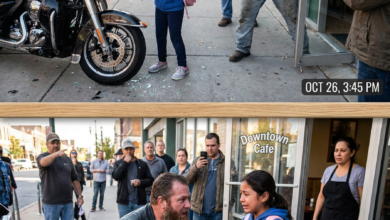
She told me a mother and her nine-year-old daughter might need help leaving a dangerous home. The school had already contacted the people responsible for child protection, and a domestic violence advocate was working with the mother. My possible job was small: be available with my truck if the advocate needed belongings moved from a location she chose. I was to meet Ms. Torres before dismissal for instructions. When an earlier delivery held me up, I called to say I would arrive late. She told me to wait for her. I reached the school as the first parents were gathering and made the mistake of taking “wait” to mean outside the gate.
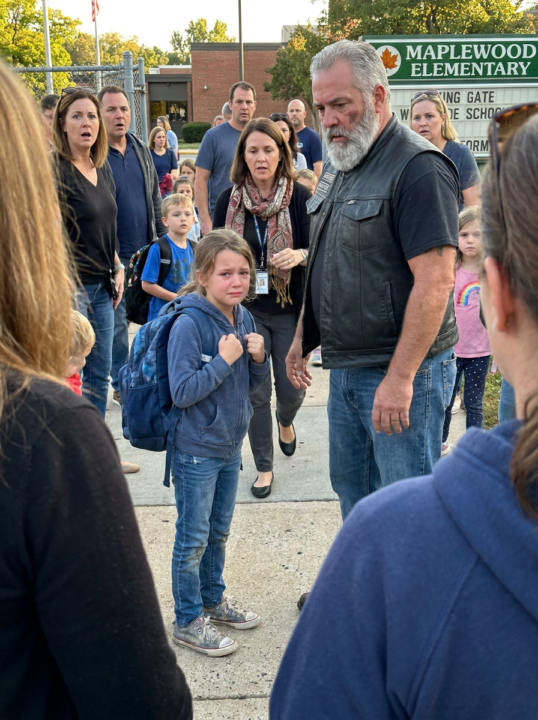
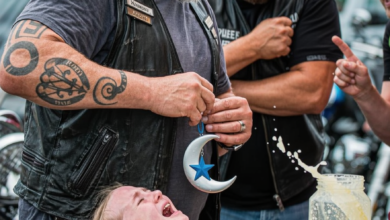
For a while I leaned against the brick wall and watched the crossing guard work. Then Maddie came toward me. After Mrs. Keene led her back into the building, Ms. Torres asked me to cross the street while she found out what had scared her. I sat on a bench outside a closed bakery and watched parents collect the last children. A few looked my way. I was still wiping my cheek with a tissue from my truck when Ms. Torres rang.
“Maddie thinks you know her stepfather,” she said.
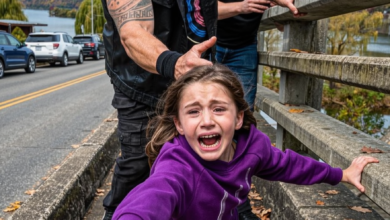
I asked why. Ms. Torres paused before answering, choosing what she could tell me. The stepfather had men visit the apartment on motorcycles. Maddie had seen leather vests, heavy boots and bikes parked outside late at night. When she saw me at her school, she thought he had sent someone to watch her. She had walked up and spat at me because she wanted me to leave before he came for her mother. She had expected me to punish her for it.
The information explained her face at the gate, but it also showed me how badly we had handled my arrival. Ms. Torres knew the family was frightened, and I knew I could look intimidating to a child. Neither of us had checked what Maddie had been told about the plan or how she would identify me. Ms. Torres said she had been called away from the front office and should have asked me to come inside. I told her I should have called before standing at the gate. We could settle that between ourselves later. For now, she would stay with Maddie.
I had joined the club’s volunteer work because another school counselor, years earlier, had told us how often families needed a ride or a few nights’ help with ordinary expenses. The club could offer those things without asking anyone to earn them by telling a painful story. I believed that before I met Maddie. Sitting on that bench, I realized I also had to accept that a child might see my vest and think of the people she was trying to escape.
The advocate arrived at the school in an unmarked car. I watched her go inside with a canvas bag over her shoulder. She didn’t come out for nearly an hour. Ms. Torres sent me a message to say they had reached Maddie’s mother, Ana, and that Ana was safe at the organization’s office. I hadn’t known where she was. I also didn’t know what she had told the counselor that morning. Those details were hers to share, if she ever wanted to.
When Ms. Torres called again, she said Maddie had agreed to look at me through her office window while standing beside Mrs. Keene. I walked back to the far side of the school parking lot, where they could see me without having to meet me. Ms. Torres had asked me to take off my vest, so I folded it and left it in the truck. Maddie appeared at the window for a moment and disappeared. I thought that was the end of my part in the day.
A few minutes later, Mrs. Keene came out to ask if I had a pencil. I found one in my truck’s glove box, short from being sharpened too often, and gave it to her. She thanked me and went back inside. I assumed a student needed to write something. Only much later did I learn that Maddie had already been writing, quietly and carefully, for two months.
Part 3
Ana met me the following week in the family support organization’s office. The advocate sat with us, and Ana chose how much to tell me. I was there because the club had offered to cover a few practical expenses through the organization. She wanted to know who had seen Maddie at the school gate and whether a video was being passed around. I told her I had seen one parent holding up a phone, but I hadn’t seen any footage posted. Ms. Torres was following up with the school families about protecting Maddie’s privacy.
Ana looked exhausted. She wore a green sweater although the office was warm, and she kept turning a paper cup in her hands. She thanked me for standing still. I told her Maddie didn’t owe me an apology. Ana lowered her eyes and said, “She thinks she does.” I said I would be glad to tell Maddie otherwise, if Maddie wanted to hear it. The advocate wrote something down and said they could leave that decision with her.
The first account I heard of Maddie’s explanation came from Ana, not from the child. Her husband, Daniel, had two friends who sometimes visited on motorcycles. Maddie couldn’t tell me whether they belonged to any club, and it didn’t matter. She remembered their boots in the kitchen, their vests over the backs of chairs and the way one of them laughed when Daniel shouted from the other room. She had heard Daniel say that people would know if Ana tried to leave. Seeing me at the gate, dressed as they had dressed, she believed that threat had reached her school.
Maddie had been told that her mother was speaking to people who could help them. She had not been told to expect me outside. According to Ana, she was afraid I had come early to report back to Daniel. The first time she spat, she hoped I would leave. When I stayed, she did it again. Ana spoke slowly as she explained this, as if she were still trying to understand how frightened her daughter must have been to do it in front of everyone.
I asked how Maddie was doing. Ana said she was eating and sleeping in short stretches and wanted to know whether she had been expelled. Mrs. Keene had told her she was not in trouble for telling adults she felt unsafe. The school still needed to address what happened at the gate, but the adults could do that without making her sit across from me. I was relieved. I remembered being nine and thinking every mistake was permanent; Maddie had far more to worry about than my feelings.
Then Ana asked the advocate if she could tell me about the shoe. The advocate looked to her, and Ana nodded. While Maddie was sitting with Ms. Torres after dismissal, she had kept rubbing her heel against the leg of the chair. Mrs. Keene asked whether her shoe hurt. Maddie said there was paper under the insole. She had put it there herself and wanted to show it to Ms. Torres. At first she couldn’t pull it free because the folded edges had caught against the lining. Mrs. Keene helped her loosen the insole, then let Maddie take the paper out.
Ana told me Maddie had written a letter. She had addressed it to “the person who can help my mom.” She hadn’t known that person’s name. At the top she had written that she was nine and that sometimes she remembered a day wrong when she was frightened, so she had started writing each event down after it happened. Some entries were only a line. Others took up most of a small page. She had folded the sheets together and carried them to school under her heel.
There were forty-one dated entries covering about two months. They described things Daniel had done to Ana and to Maddie. I didn’t ask to read them. Ana said the advocate had helped arrange for the letter to be handled with the other information in the case, and that Maddie would speak with a trained interviewer. My part was to listen to what Ana wanted me to know, not to ask Maddie to repeat any of it.
One thing Ana said has stayed with me. Maddie had been changing shoes when she got home and hiding the pair with the letter behind a laundry basket. Every morning she slipped the pages back under the insole before school. She had carried them for weeks without showing a friend or teacher. Once, she had stood outside Ms. Torres’s office and gone back to class because another child was waiting there with a bloody nose. Maddie thought her own problem could wait one more day.
Ana had found out about the letter only after they reached the office. She seemed wounded by that. “She thought I’d tell her to throw it away,” she said. The advocate reminded her that children often make plans from the small choices available to them. Ana wiped her face and nodded, but I could see she wished she had known. I wished Maddie had been able to hand it to somebody sooner too.
Before I left, I told Ana I could pay for their groceries through the organization that week and that one of our members had a truck available if the advocate needed it. Ana accepted the groceries. She said she would think about the truck. She didn’t have to explain that decision. That evening I told the club what I was authorized to tell them: a mother and child needed practical support, the organization would direct it, and no one was to seek them out or ask for details. Within an hour, six members had offered money. Two wanted to bring clothes. I asked them to wait for a list of sizes and needs.
I didn’t see Maddie that week. The image I had of her was still the child at the gate, staring at my hands. Now I knew that, beneath one sneaker, she had been standing on the pages she hoped might make an adult believe her.
Part 4
The first time Maddie chose to speak to me, we met in the organization’s meeting room with Ana and the advocate present. It was three weeks after the school gate. Ms. Torres had asked whether I would be willing, and I said I would come if Maddie wanted me there. I arrived in a plain work shirt. I left my vest and bike at home and drove my truck.
Maddie sat at the far end of the table with a paper cup of apple juice. She looked at me for a while before she said, “I spit on you.” I told her I remembered. She squeezed the cup until the lid bent. I said I wasn’t angry with her. She asked whether I was angry then. I told her I had been startled, and that I could see she was scared. Ana reached across the table, but Maddie kept both hands around the cup.
“I thought you were one of his,” she said.
“I know,” I answered. “Ms. Torres told me.”
“I was wrong.”
“You didn’t know who I was,” I said. “The adults should have made that clear before you saw me at the gate.”
Maddie looked toward the advocate, as if checking whether I was allowed to say that. The advocate gave her a small nod. Maddie didn’t run into my arms or suddenly become comfortable around me. She asked what I had been doing at the school, and I told her in simple terms: I had come to see whether her mother needed help carrying things, and I had waited in the wrong place. Then she asked whether I knew Daniel. I said no. She asked whether he could call me. I said he didn’t have my number and that I would not talk with him about her or her mother. Those answers seemed to matter more to her than my promise that I wasn’t angry.
We talked for about ten minutes. Maddie showed me a drawing she had made of a dog with six legs because she hadn’t liked where the first two were. When I got up to leave, she asked whether I would wear the vest again. I said I probably would. She said, “Just tell me first.” I promised I would. It was the first instruction she had given me, and I followed it every time I saw her after that.
Meanwhile, the adults handling the case were doing work I was mostly outside of. An advocate helped Ana find safe housing and understand the appointments ahead. A child protection worker and investigators dealt with the reports. Maddie spoke with a trained interviewer; neither I nor anyone from the club sat in. Ana gave permission for me to know occasional updates, but she did not owe us a running account. I learned to ask, “What do you need this week?” instead of “What happened next?”
There were complications. The first safe place Ana and Maddie reached was temporary. Maddie wanted her own blanket from the apartment, but retrieving belongings had to be planned around safety. I had a truck ready and expected to use it. The advocate found another way to collect what was needed, so I stayed home. A week later, Ana told me Maddie had the blanket. She also had her school library book, which she had been afraid she would be charged for losing. Ana laughed when she told me that, then began to cry. She said the book was the first thing Maddie had asked about after they left.
Our club paid the organization for groceries, a replacement school uniform and transport to appointments. Members brought items only when the advocate requested them. One afternoon a new rider suggested we park our bikes outside Daniel’s workplace so he would know Ana had people on her side. I told him to put his keys away. Ana and Maddie needed the people handling their case to set the safety plan; a line of motorcycles at his job would serve our tempers, not their needs. He apologized and sent money for a pair of shoes instead.
The shoes mattered to Maddie. She disliked the old pair after the letter was taken out. Ana said the heel had left a sore spot, though Maddie insisted they still fit. The advocate asked whether we could cover new sneakers. I bought a gift card in the right amount and passed it to the organization. Maddie picked a purple pair with white soles. The next time I saw her, she held one foot out to show me. I said they looked fast. She told me they were, and ran the length of the hallway to demonstrate.
I knew the letter had dates. I didn’t know the individual entries, and I didn’t need to. Later, when Ana was ready to talk about the case, she explained that the dates helped other people check where they had been and what records existed. A neighbor recalled an evening she had heard shouting and called for help. Ana had kept photographs from another day. There were school attendance notes, medical information and accounts from people who had noticed something was wrong. Maddie’s pages gave the investigators a chronology, but they still had to do the work of checking it.
That distinction was important to Ana. She wanted her daughter to be believed, and she also wanted Maddie to know the whole case was not resting on a nine-year-old’s pencil. When I repeated that to Maddie years later, she told me it was the first time she had heard the adults explain it that way. At nine, all she knew was that she had saved the pages and finally found someone she could give them to. She had imagined the letter would either fix everything at once or disappear into a drawer.
The months that followed gave her no simple answer. There were appointments she didn’t want, school days she missed and nights when Ana slept with the light on because Maddie asked her to. There were also ordinary afternoons. Maddie learned to ride a bicycle in a parking lot behind the organization’s office. Ana started working a few hours a week, then more. When I visited with a bag of groceries, Maddie sometimes came to the door and sometimes stayed in her room. I learned to be pleased with either choice.
Part 5
The case took longer than Maddie had expected. I knew because she asked about it every time I saw her for a while. She thought that once an adult had read the letter, Daniel would be made to answer for all forty-one entries at once. The people working on the case explained what they could in words she could understand. Sometimes there was no useful update. Ana had to live with that uncertainty while finding work, keeping appointments and helping her daughter feel settled enough to go to school.
One Saturday, several months after the gate, I ran into Ana at a grocery store. She was holding a list in one hand and comparing the prices of two jars of peanut butter with the other. I offered to take the cart while she looked. She said she had found a job at a medical supply warehouse. It was part-time, and she hoped to get more hours. The advocate had helped her prepare for the interview; a woman from our club had driven her there when the bus route fell short. Ana told me this while choosing the cheaper jar. She was proud of the job, and I was glad she wanted me to know.
Maddie was having a harder time at her new school. Some days she wanted to be introduced to everyone. Other days she worried that if people learned why she had moved, they would ask about Daniel or about what she had written. Her new counselor let her choose how much to say. I heard this from Ana when she wanted to talk; I never asked Maddie’s teachers for reports. At the grocery store, Ana told me Maddie had joined the library club because no one expected her to talk much while shelving books. She sounded relieved to have found a place she liked.
Before the court proceedings, Ana asked whether I would go with her on a day she expected to give evidence. I said yes. At the courthouse I sat on a bench beside her advocate, holding two coffees while Ana spoke to her attorney down the hall. Maddie was not with me. The lawyer came over afterward, introduced himself and thanked me for helping the family with rides and supplies. I told him most of that help had come from the organization and the club. He said he knew.
I learned more about the letter as the proceedings went on, always from Ana or her lawyer when they chose to share it. The pages had been handled as evidence, alongside testimony and records gathered during the investigation. Some entries were tied to other things people could verify. Others remained Maddie’s account of what she had seen or experienced. Her neat pencil dates helped the adults ask better questions. Ana told me one date had helped her remember that she had missed a shift at an earlier job. She had thought the absence happened the following week until she saw Maddie’s writing.
Daniel was convicted. I won’t pretend I remember every charge or every hour of the court proceedings, and I won’t put words in Maddie’s mouth about them. I remember Ana coming out through a side corridor with her lawyer and asking for a chair. I pulled one over. She sat down, pressed her palms against her knees and took a long breath. When I asked if she wanted me to call someone, she said she wanted to call Maddie herself.
I stepped away so she could have privacy. From the other end of the corridor, I saw her speak into the phone, listen and then cover her eyes. Later she told me Maddie’s first question had been whether they still had to move again. Ana had told her they would make that decision together with the people helping them. Maddie then asked whether she could go to the library club the next day. She went.
The conviction didn’t turn their lives back into what they had been before Daniel. Ana still checked locks when she came home. Maddie had days when the sound of a motorcycle outside made her stop what she was doing. I learned to call ahead before visiting and to park where she could see who had arrived. Once, two years after the school gate, I forgot. I pulled in on my bike, walked up the path and knocked. Maddie opened the door, looked at the vest and reminded me, “You said you’d tell me first.” I apologized. She made me wait on the porch while she went to ask Ana if I could come in.
That may have been the moment I understood how much trust she had given me. She wasn’t afraid to correct me. She expected me to listen when I got something wrong. I did. After that, I called before every visit, even when Ana had invited me earlier in the week.
The club kept helping while Ana found steady work, then stepped back as she asked us to. She liked buying Maddie’s school things herself. When a member offered to keep sending money, Ana thanked him and said there were other families the organization could use it for. We followed her lead. On Maddie’s twelfth birthday, she invited a few of us to a picnic in a public park. She had decided she wanted to see our bikes up close. I called the day before and told her I would bring mine. She asked me to park it by the swings so her friends could inspect it after cake.
Part 6
Eight years after the afternoon at the gate, Maddie came to the club’s annual food drive wearing a college sweatshirt. She was seventeen and taking introductory legal studies classes through an early enrollment program while finishing school. She had gotten interested in how evidence was collected and how people explained difficult things to children. She said she might go on to study law. I told her she had plenty of time to decide, and she said she knew.
By then, she was taller than Ana and spoke easily in front of a room when she wanted to. At the food drive, she helped sort donations and argued with me about how many cans belonged in a box. When I lifted one she had packed, the bottom sagged. She took it back and divided the cans between two boxes without conceding that I’d been right. I could still see the nine-year-old who had crossed the schoolyard toward me, but I was careful to let the girl in front of me be seventeen.
Her family’s lawyer had invited her and Ana to visit his office a few weeks earlier. With Maddie’s agreement, he kept a laminated copy of her pencil letter in a private room where he worked. Names and identifying details were covered on the copy. The original had been preserved with the case materials. Maddie told me she had stood in front of the copy for a long time. She was glad it mattered to him, she said, though she hoped people in his office also understood how much help came after she handed it over.
She was right. The letter could show what she had recorded; it couldn’t drive Ana to work, arrange a safe place to sleep or make every adult around Maddie patient on a hard day. Ana had done years of that work. So had the advocate, the counselors, the investigators and the people who had helped the two of them without asking for a story in return. I told Maddie I thought the lawyer understood. She said she planned to ask him.
Later that afternoon, when the last donation box was taped shut, Maddie asked whether I still had the vest I wore at her school. I said I did. It was hanging in my garage, its lining repaired twice. She wanted to know whether I had ever thought about that day when I put it on. I told her I thought about the gate sometimes. She said she remembered my sleeve moving toward my face, then my hand going down again. She had been sure I would grab her after the second time.
“I’m sorry I scared you,” I said.
She shook her head. “I scared myself. I didn’t know what else to do.”
We sat with that for a while. I wanted to tell her how brave she had been, but I knew she had also been a child in a terrible situation. She didn’t need me to make every choice she had made sound fearless. I told her I was glad Mrs. Keene had come out and taken her inside. Maddie nodded. Then she said Mrs. Keene had held the classroom door open until Maddie decided to walk through it. She remembered that as clearly as I remembered standing at the gate.
Before she left, Maddie asked if I would take a photograph with her and Ana beside my bike. I called Ana over and checked that they both wanted the picture. Another club member took it on Maddie’s phone. In it, Ana is smiling with one hand on her daughter’s shoulder. Maddie is leaning against the seat, holding the box of pencils she had won in a food drive raffle. I’m in my old vest. Maddie knew I had worn it that day because I had called her that morning.
Part 7
People who hear the schoolyard story often want to know whether I was angry when Maddie spat at me. I’ve answered that question a lot over the years. I was surprised and embarrassed. I could feel parents watching me, and I knew why they were worried. The thing I noticed most, though, was how closely Maddie watched my hands. She thought a man connected to Daniel had come to her school. She confronted me because she was trying to protect herself and her mother with the only idea she had in that moment.
I also think about what happened after Mrs. Keene took her inside. Maddie was given time with adults who listened. She decided to take the paper out of her shoe. The people responsible for helping her and Ana treated those pages carefully and checked what they could. Ana found work, and the two of them built a home where Maddie could put her shoes by the door without hiding anything inside them.
A year ago, Maddie called to tell me she had earned a high grade on a paper about how children’s accounts are handled in legal cases. She read me the last paragraph because she was proud of it. Then she asked if I remembered the pencil Mrs. Keene borrowed from me on the day we met. I said I did. Maddie laughed and told me the point had broken as soon as Mrs. Keene brought it into the office. They found a sharpener before she used it.
I had spent years imagining that pencil as part of her letter. It wasn’t. Maddie had written the pages long before I reached the school. Mrs. Keene had asked for a pencil because Maddie wanted to put her name and the date on the outside before handing them over. She was making sure the adults knew the letter was hers.
Maddie says she remembers being afraid I would hit her. She also remembers looking back through the school doors and seeing me remain beside the wall until Ms. Torres asked me to move. I wish we had arranged that first meeting better. I’m grateful that, once Maddie was inside, the adults followed her lead and gave her somewhere to put the words she had been carrying.
When I tell the story now, I say this: a nine-year-old spat in my face twice because she thought I belonged to the man hurting her family. Under the insole of her shoe was a pencil letter with forty-one dated entries. I stood still long enough for her teacher to reach her, and Maddie chose to show someone what she had written.
Follow this page for more biker stories about the people we meet, the choices we make, and the lives that keep unfolding afterward.