A Sixteen-Year-Old Stole a Biker’s Motorcycle to Escape His Adoptive Parents—Then a Mark on His Wrist Exposed the Grandmother Who Had Kept Them Apart
I turned the card over.
My mother’s handwriting ran across the back.
Call if you need me. Any time.
Underneath was her home number, the same one I had called every Sunday since getting out.
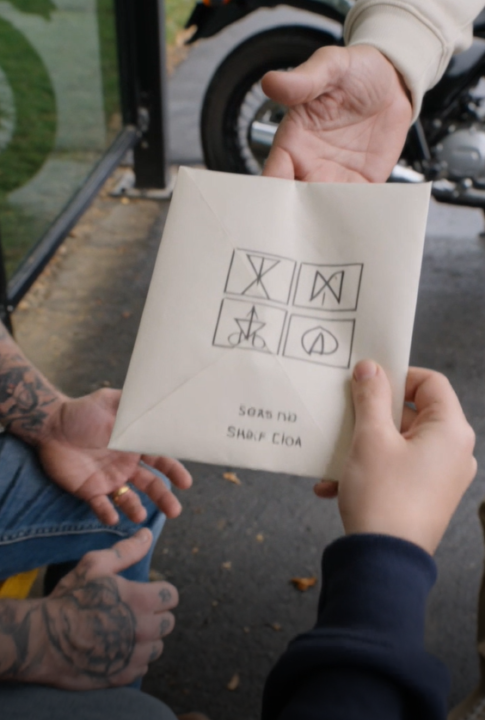
For a second, I considered the easiest explanation.
She volunteered everywhere. Food pantry. School supply drives. The winter coat table at her church. She could have known this boy without knowing anything about me.
Then he said, “She told me not to use your last name.”
I looked at him.
“What name?”
“Rourke.”
The bus shelter smelled of rainwater and warm brakes. Behind us, my partner, Luis, stood beside the van, watching without coming closer.
I took off my watch.
The boy stared at my wrist.
His mouth opened.
“No.”
“Doesn’t prove anything,” I said.
I needed him to hear that.
I needed to hear it myself.
My mother had told me Hannah lost our baby while I was serving my sentence. There had been no funeral I could attend, no hospital visit, no photograph. Just a letter, then my mother’s voice on a recorded prison call.
Some things were beyond fixing, she said.
I had spent sixteen years living inside that sentence.
“What’s your name?”
“Evan Whitcomb.”
“Cole Rourke.”
“I know. On the invoices.”
He had come into my repair shop asking about part-time work. His school’s vocational teacher had suggested us. Luis was finishing a service call when Evan saw my keys on the desk.
I asked whether he knew how to ride.
“A little.”
“Enough to know you could’ve hurt somebody?”
He nodded.
He had made it three blocks before panic overtook whatever plan he thought he had.
We sat with that.
I didn’t tell him taking the motorcycle was understandable. I told him he would have to answer for it.
But first, we needed somewhere safe to talk.
He looked toward the road.
“I can’t go back.”
“What happens if you do?”
He pressed his shoe harder over the grocery bag.
“They’ll find what I copied.”
That was when Garrett Whitcomb arrived.
Clean sweatshirt. Dry hair. Keys clipped to his belt.
He said Evan’s name the way a manager says an employee’s name in front of customers.
“Let’s stop this.”
Evan moved closer to me.
Garrett told the transit employee approaching us that I had interfered with a family matter. He mentioned my motorcycle, my size, and the smell of alcohol.
I hadn’t had a drink.
Luis stepped forward.
“I’ve been with him all afternoon.”
I asked Evan whether he wanted us to call someone who worked with kids.
He nodded before Garrett could answer.
So I called.
I described the theft, the boy’s fear, and the adult standing in front of us. I gave my name.
All of it.
Then Garrett looked at the card in my hand.
His face changed.
How could he recognize my mother’s handwriting before I said her name?
Before prison, Hannah and I lived above a laundromat.
Our kitchen window wouldn’t stay open unless we wedged a spoon beneath it. On Sundays, the dryers downstairs shook the sugar bowl across the table.
She was pregnant when I was arrested.
I wasn’t innocent.
I had helped move stolen vehicle parts because the money came faster than honest work. By the time I admitted what I was doing, other people were already paying for it.
Before sentencing, Hannah started a blue baby quilt.
Three yellow stars.
The middle one sewn backward.
She hid a little pocket behind it, closed with a white snap.
“For letters,” she said. “So the baby gets something from you besides your last name.”
On the kitchen table sat my blue coffee tin, full of quarters. I shook it beside her stomach.
“Bus money,” I said. “For when he gets sick of us.”
Hannah laughed.
Then she took my wrist and kissed the pale notch in my birthmark.
“The little door home.”
That was the last happy afternoon I could remember without something coming after it.
At the bus shelter, Garrett told the responding officer that Evan had a history of stealing and inventing stories.
The officer asked Evan to speak with her away from both of us.
That was a good sign.
I stayed beside Luis.
Garrett didn’t.
He took a step toward them, and the officer’s partner stopped him with a hand held at waist level.
“Give them space.”
Garrett looked offended.
He asked whether they knew who I was.
I told them about my conviction before he finished.
Then I handed over the keys Evan had returned.
The motorcycle was undamaged. Nobody pretended that erased what had happened.
A youth crisis worker arrived. She spoke with Evan, then with Garrett, then asked about another child in the house.
Miles.
Thirteen.
The second ticket.
Garrett said Miles was with his wife, Denise.
The worker made another call.
I watched Garrett’s jaw tighten.
Until then, part of me had still been trying to make him an ordinary frightened parent. A kid steals a motorcycle. A father says terrible things because he is scared.
I understood scared.
Then he said Evan wasn’t allowed to decide which adults could speak to him.
The worker looked up from her notes.
That evening, Evan went to stay temporarily with Denise’s sister, Beth, while the immediate concerns were assessed. He asked whether he could take the grocery bag.
He could.
He asked whether I would still be there when he came out of the interview room.
I said yes.
Only later, after he left, did I call my mother.
She answered on the second ring.
I said the name Evan Whitcomb.
For a long moment, I heard only her television.
Then she said, “Cole, whatever he told you, let me explain first.”
Why hadn’t she needed to ask who he was?
My mother came to the shop the following morning.
She wore her good raincoat and carried a folder pressed flat against her chest.
I had seen that folder before.
After my father died, it held funeral receipts. After my release, it held the paperwork she had saved to help me get an identification card.
I used to think anything inside it was safe.
She sat across from me.
“You need to know Hannah agreed to the adoption.”
I said nothing.
My mother laid down copies of documents carrying Hannah’s signature. There were letters from an agency, dated correspondence, and photographs of Garrett and Denise holding a baby.
A real process.
Real people.
Not the simple story my anger had built overnight.
“Hannah was frightened,” my mother said. “You had years left. She had nobody helping her enough.”
“You were helping her.”
“I tried.”
I asked whether she had told Hannah I wanted our child placed with somebody else.
She looked down.
“Your situation spoke for itself.”
“No. It didn’t.”
She insisted she had not signed away my rights on my behalf. She said there had been lawyers, forms, decisions made by people who knew more than either of us.
I didn’t argue law with her.
I made copies and took them to someone who could explain what needed examining.
The lawyer I met, Andrea Shaw, read slowly.
She asked about the prison where I had been held, my transfers, and which letters I remembered receiving.
She didn’t promise the adoption could be undone.
She didn’t promise I was Evan’s father.
She said those were separate questions from whether he was safe now.
That helped.
It also hurt.
I had wanted the world to move at the speed of my anger.
Instead, Andrea wrote down addresses.
My mother’s folder contained a letter saying I had declined involvement. The signature looked enough like mine to stop my breath.
Enough.
Not right.
I used to pull the last letter of Rourke beneath the whole name. Whoever signed that page had ended neatly at the edge.
Andrea placed it in a clear sleeve.
“We’ll request the records behind this.”
Meanwhile, Beth called with Evan’s permission.
He had slept nearly twelve hours.
Miles was with her too.
Both had eaten breakfast.
I sat down on the shop stairs when she told me that.
Then she asked whether I knew anything about support payments.
“No.”
“Evan says that’s what started it.”
My mother had described Garrett and Denise as stable people who loved children. Beth described a house where groceries ran out while envelopes marked past due accumulated beside expensive betting advertisements.
Those were allegations.
I knew the difference.
Then Beth said she had found her own name on a receipt for counseling she had never provided.
My mother might have helped arrange a lawful adoption, even while lying to me about the baby.
But what had the people she trusted been doing with him since?
The grocery bag contained more than clothes.
Evan had put the clothes on top.
Underneath were folded bank statements, photographs of bills, and a school notebook with dates written in the margin.
He hadn’t hacked anything.
He had taken papers from the kitchen drawer and photographed screens Garrett left open on the family computer.
Some of it proved less than he thought.
A casino advertisement didn’t prove anyone had gambled. A cash withdrawal didn’t explain where the money went. Andrea said that gently when Evan agreed to meet us.
His face closed anyway.
“So it’s nothing.”
“No,” she said. “It means we have to separate what you know from what you suspect.”
He picked at a crack in the notebook cover.
I recognized the effort it took not to leave.
The support paid to Garrett and Denise was intended to help them meet Evan’s care needs. It wasn’t a personal allowance they had to hand him.
Andrea made that clear too.
The concern was what they were claiming to provide, what they actually provided, and whether records supporting additional reimbursements were genuine.
Evan pointed to a page.
“Tuesday.”
A counseling appointment.
He had been at school that afternoon. His teacher remembered keeping him late to finish a welding exercise.
The next page listed another appointment.
He had been helping Beth paint her kitchen.
Beth had photographs.
Then came an invoice carrying the name of a counselor Evan had never met.
The people examining those records contacted the provider directly.
I learned afterward that the office did not recognize the invoice number.
That was the first solid piece that didn’t depend on a frightened boy’s word against Garrett’s.
More followed.
Unpaid school expenses.
Dental appointments repeatedly postponed.
Messages telling Denise to move money before an account review.
Transfers to betting services.
Not every dollar could be followed cleanly. Some of their income was legitimate. Some spending was ordinary.
The pattern still grew ugly.
Evan had been told there was no money for new boots while Garrett borrowed against the next payment to cover losses.
“What happened when you asked about it?” I said.
“He told me I was expensive.”
Evan said it without emotion.
That made it worse.
Beth brought a pair of boots the next day. He asked how much he would owe her.
She went into the bathroom before answering.
I was learning how damage could live in ordinary questions.
At Andrea’s suggestion, I arranged a DNA test through a proper process, with the necessary permissions. Evan agreed but asked whether a result meant he had to move in with me.
“No,” I said.
His shoulders dropped.
I went home and sat at my kitchen table until midnight.
I wanted my son.
I wanted him to choose me.
Those were different wants.
The next morning, Garrett’s statement appeared online beneath a photograph of me outside the prison gate on release day.
Who had given him a picture only my mother had taken?
The caption called me a convicted thief recruiting a troubled teenager.
It said Evan stole the motorcycle at my direction.
That part almost made me laugh.
Then the calls started.
A customer asked whether his bike was safe.
Another canceled a repair already booked.
Somebody left a message saying people like me shouldn’t be allowed around children.
Luis listened to three seconds of it before deleting it from the answering machine.
“Keep the next one,” Andrea told us. “Don’t answer it.”
By lunchtime, Garrett had posted my release photograph again, cropped so my mother’s hand no longer rested on my shoulder.
I called her.
She said he had asked for a picture showing that I had family support.
“And you believed that?”
“He sounded frightened.”
“So did Evan.”
She didn’t answer.
The test result arrived that week.
I was Evan’s biological father.
I read the page twice, then called Andrea to make sure I understood it.
Afterward, I went behind the shop and cried beside the used-tire rack.
Luis found me there.
He didn’t say congratulations.
He leaned against the wall until I could stand straight.
Evan reacted differently.
“Oh.”
One word.
Then he asked whether that meant his birth mother was dead too.
He had been told both parents were gone.
Hannah had died in a road accident several months after the adoption. Andrea helped establish that from records rather than family stories.
I told Evan what I knew.
Not what I wished.
He asked whether I had a picture of her.
I brought six.
He chose one where she was laughing with her eyes almost shut.
He didn’t ask to keep a picture of me.
I tried not to notice.
Garrett’s next move came through a lawyer: claims that I was harassing the family, pressuring Evan, and encouraging him to take documents.
Andrea handled the response.
I stopped visiting Beth’s house without an agreed plan. I didn’t call Evan late at night. When he wanted a ride, we arranged it through the adults responsible for him.
Every sensible boundary felt like another door closing.
Then somebody contacted the people overseeing Evan’s temporary arrangements and said I was planning to leave Ohio with him.
I had bought no tickets.
Made no plans.
Evan thought I had changed my mind about him when a visit was postponed while that claim was checked.
He sent a message.
You said I didn’t have to go anywhere.
I stared at it for ten minutes before calling Andrea.
She helped us arrange a conversation with Beth present.
I told him I wasn’t leaving.
He didn’t look convinced.
Before we hung up, he said there was something in the notebook he hadn’t shown anyone.
Something Garrett could use against him.
Had I been protecting a boy who was still protecting his abuser?
Evan asked to talk at Beth’s kitchen table.
No office.
No glass conference room.
Beth put out crackers and left them untouched between us.
He opened the notebook to a page where several dates had been crossed out.
“I signed some.”
“Signed what?”
“The forms.”
For almost a year, Garrett had asked Evan to confirm that he attended sessions, received equipment, or took part in activities.
At first, Garrett called it household paperwork.
Later, he gave Evan cash.
Twenty dollars.
Sometimes forty.
Evan had used it for food at school and a prepaid phone Garrett didn’t know he had.
Then he kept some.
“I knew we weren’t going to the appointments,” he said.
Beth reached for his hand.
He pulled it back.
“Don’t do that yet.”
The room went quiet.
I asked what he had thought would happen.
“I thought if I had enough, Miles and me could leave.”
The second bus ticket.
There it was again.
He had hidden money behind a loose wall panel. When Garrett found part of it, Evan said he had earned it doing chores for neighbors.
Garrett began checking his bag.
Then Evan started copying records.
“So some of this was before you decided to tell?” I asked.
He nodded.
Andrea needed to know.
So did the people investigating the claims.
Evan looked sick when I said it.
“You’re going to give them the notebook?”
“With you,” I said. “And someone who can help you understand what happens next.”
“You’ll hate me.”
“I stole car parts for money, Evan. I don’t get to pretend I’ve never made an ugly choice.”
“That’s different.”
“Some of it is.”
I waited.
“Some of it isn’t.”
He started crying then, angrily, wiping his face with both sleeves as if that would make us stop seeing it.
Beth moved the crackers away from his elbow.
Nobody touched him until he asked.
His admissions complicated things. They also helped investigators understand how the false records had been assembled and why some signatures were real.
I didn’t tell him honesty would erase consequences.
It didn’t.
But keeping the secret had given Garrett a rope he could pull whenever Evan tried to leave.
My mother came to see me two days later.
She brought the blue quilt.
I knew it before she unfolded it.
Three yellow stars.
The middle one backward.
She said Denise had returned a box of baby things years ago and she hadn’t known what to do with them.
“Why bring it now?”
“Because he should have something.”
I pressed the fabric between my fingers.
The little pocket was empty.
My mother watched me find it.
Then she said she hoped the old letters wouldn’t be brought up when she testified.
I looked at her.
“What old letters?”
She closed the folder she had brought beside the quilt.
What had she taken out of that pocket before I ever knew my son existed?
The public hearing came months later.
By then, the case concerning false claims had grown around records I had never seen and transactions I couldn’t explain without the accountant’s help.
Evan’s living arrangements were handled separately.
He didn’t have to sit in the gallery while adults argued about what they had done to him.
Beth took him and Miles fishing that morning.
Neither boy liked fishing.
They liked Beth’s sandwiches.
I sat beside Luis in a courtroom with scratched benches and lights that hummed above us.
Garrett wore a dark suit.
Denise held a folded tissue without using it.
My mother was called as a witness.
She described helping Hannah find stability. She described the Whitcombs as a family who had looked trustworthy.
Then came questions about what she knew now.
She admitted sending Garrett my release photograph.
She admitted knowing Evan had tried to reach me.
She said she had believed contact would upset him.
Andrea wasn’t the lawyer questioning her. The attorney at the lectern had copies of the documents investigators had gathered, including letters my mother eventually surrendered.
I listened to my mother say she had never hidden anything that would have changed the placement.
The lawyer let her finish.
Then he asked about the quilt.
She looked toward me.
Only for a moment.
Had she received it from Hannah?
Yes.
Had it contained personal correspondence?
She said she couldn’t remember.
The lawyer showed her a photograph of the blue fabric laid flat, the three stars visible.
My mother’s hand moved to her throat.
“That was after,” she said.
“After what?”
“After I’d taken out the letter.”
The words landed softly.
Nobody in the room needed them louder.
The lawyer asked where the letter had been.
“Behind the middle star. The white snap was broken.”
I heard Hannah laughing above the laundromat.
For letters.
My mother had told investigators that the correspondence she kept had arrived separately, among Hannah’s papers after her death.
Now she was describing a pocket she had emptied before the adoption.
The lawyer placed the letter in front of her.
Hannah’s handwriting.
A date before Evan was placed.
She had written that I wanted our son. That I had asked about him in every letter. That she needed help keeping contact open while I served my sentence.
She had enclosed one of my letters.
My actual signature ran beneath it.
The long pull under Rourke.
My mother stared at the page.
“Why didn’t you pass these on?”
“He needed a different life.”
“Who?”
She looked at Garrett.
Then at me.
“The baby.”
The lawyer waited.
My mother began talking faster.
About prison.
About shame.
About how she had already lost a husband and couldn’t keep rescuing a son. About how Hannah cried. About the nice house Garrett and Denise had shown her.
Then she said, “I thought if Cole believed the baby was gone, he would stop asking.”
Luis put a hand against my back.
I hadn’t noticed I was leaning forward.
Across the room, Garrett began whispering urgently to his lawyer.
My mother had not explained away the financial records.
She had exposed the silence that let those records accumulate for years.
When the court recessed, she stood in the aisle beside me.
“I was trying to get you home.”
I looked at the quilt folded over my arm.
“What did you think home meant without him?”
Nothing ended in one afternoon.
The financial case continued.
The documents surrounding the adoption required their own examination. Andrea warned me again that proving deception and changing legal relationships were not the same task.
I stopped asking her to make sixteen years disappear.
I asked what Evan needed next.
Garrett and Denise eventually faced consequences for false claims and money obtained through them. The accounting took longer than any of us expected.
Some money was recovered.
Some was gone.
The sums mattered.
So did a boy finally getting glasses without being told to wait until the next payment.
Evan stayed with Beth while longer-term decisions were made.
That hurt in a place I didn’t like admitting existed.
Her house was familiar.
Her rules were predictable.
He could open the refrigerator without asking.
My place had a motorcycle helmet on every chair and a man who was still learning not to stand in doorways when a teenager wanted space.
We began with Saturday breakfasts.
Then afternoons at the shop.
Luis taught him how to write a proper estimate before letting him near a customer’s bike.
The motorcycle theft didn’t vanish beneath the family story. Evan took part in the process arranged to address it, apologized, and worked through the obligations expected of him.
I accepted the apology.
I didn’t frame it.
He didn’t need his worst afternoon hanging on my wall.
Miles came by sometimes too.
He liked sorting bolts into trays and asking Luis questions Luis pretended to find annoying.
For a while, Evan kept both bus tickets in his wallet.
I never asked him to throw them away.
One evening, he showed me his birth mother’s picture.
He had made a copy for Miles.
“Because he remembers her stories now,” he explained.
Stories I had told him.
Small ones.
The spoon holding up the kitchen window. The laundromat dryers. Hannah putting too much pepper in soup and insisting that was how people in fancy restaurants ate.
He wanted ordinary things.
I had enough to start.
My mother asked to see him.
Evan said not yet.
I passed on those exact words.
I didn’t add soon.
She and I spoke occasionally, usually with long silences between practical questions. I could understand some of her fear without forgiving what she had chosen to do with it.
Evan didn’t need me to settle that before I could be his father.
He needed me to show up on time.
Answer the phone.
Tell him when plans changed.
One Saturday, he arrived carrying the quilt.
Beth had washed it carefully. The fabric had faded almost gray, but the yellow stars still held.
“Can we fix the snap?”
I found my sewing kit.
Motorcycle seats had taught me patience with a needle. Tiny baby quilts were another matter.
Evan sat beside me and held the pocket flat.
Our wrists rested on the table.
Two brown crescents.
Two pale notches.
For once, neither of us stared at them.
I replaced the snap and pushed it closed.
He opened it again.
From his wallet, he took one bus ticket and slid it behind the backward star.
“Keeping it?” I asked.
“Yeah.”
I nodded.
He rubbed the edge of the quilt.
“Not for running.”
Outside, Luis lowered the shop door halfway. Rain began ticking against the metal.
Evan looked at me.
“Can we use it to visit Mom?”