A School Guard Bought a Hungry Boy New Shoes and Lost His Job—Then the Child’s Insurance Records Exposed Why His Stepmother Needed the Biker Gone
Vanessa stopped reaching for the shoe box.
The principal looked from Owen to his father.
“Mr. Price?”
Aaron’s phone was still in his hand.
He put it in his pocket.
“I don’t think he understands what he’s saying.”
Owen lowered his head.
That movement stayed with me longer than anything shouted in the office. Not defiance. Not confusion.
Practice.
Like he already knew the next part.
Principal Park asked the counselor to take him somewhere quiet. Owen looked at the box before he moved.
“Can I keep the shoes?”
Nobody answered fast enough.
“Yes,” Park said.
Vanessa began objecting.
Park held up a hand.
“We’ll discuss the adults’ concerns separately.”
Owen left with Dana Ortiz, the school counselor. She didn’t question him in the corridor. She asked whether he wanted water.
I was grateful for that.
I had already made enough things complicated.
Vanessa repeated that I had been watching her stepson, buying personal gifts, and using my security assignment to get close to him.
Some facts were true.
The story built around them wasn’t.
I’m Gideon Reed. Gus, usually. Rachel was my older sister.
I bought the shoes.
I knew which locker was his.
I had noticed when he arrived without a coat.
But the shoes had gone through the clothing closet. Dana approved the donation. His teacher was present when I placed the box in an unlocked locker.
There was no private note.
No request to keep a secret.
Park asked whether I could produce the receipt.
I could.
Vanessa asked why a security guard was taking such an interest in one particular child.
I looked at Aaron.
He looked away.
“Tell her,” I said.
He didn’t.
So I did.
“His mother was my sister.”
Park set down her pen.
Vanessa had reported a stranger.
She knew I wasn’t one.
That didn’t settle every question about my conduct.
I had applied for the school assignment because Aaron stopped answering my calls and Owen looked thinner every time I saw him at a distance.
I told the security company we were related.
I hadn’t made the same disclosure directly to Park before accepting the placement.
The company said it would handle relevant information.
I let that answer suit me.
Now Park asked why I hadn’t come to her sooner.
“I thought nobody would let me near him if I said I was worried.”
Saying it aloud sounded worse than it had in my head.
She heard it too.
I had wanted a legitimate way to see my nephew.
I had also avoided a conversation that could have stopped the assignment.
Both things could be true.
Park said my access would be suspended while the matter was reviewed. My employer would contact me.
While I waited for someone to walk me out, Park made a call about Owen’s immediate welfare. The employment review wasn’t going to decide whether a child needed help. Hearing her separate those questions steadied me enough to keep my voice down.
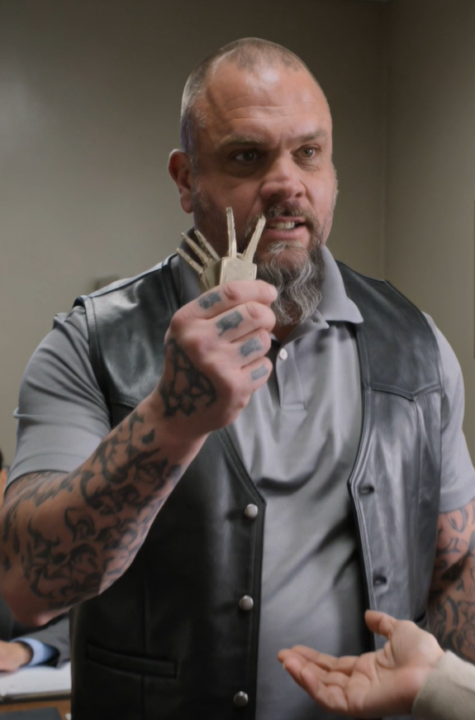
I placed my keys on her desk.
Vanessa watched them land.
Before I left, Dana returned and asked to speak with Park privately.
Her expression had changed.
Owen wasn’t merely afraid of losing a present.
What had he said once the adults defending themselves were out of the room?
My sister Rachel taught Owen to tie his shoes on my kitchen floor.
Two loops.
One tucked beneath the other.
He kept losing the first loop while making the second, so she held one with her little finger and let him finish.
“Nobody gets smaller because they need a hand.”
She said things like that while scraping burnt toast over my sink.
Owen was five.
She was forty-five.
On the counter sat his blue bowl, the one he chose for cereal, grapes, soup, everything.
When it was empty, he tapped the spoon against the rim.
“Refill station,” Rachel said.
Then she filled it again.
I remembered the sound because after she died, Owen stopped asking for seconds when he visited.
He used to apologize for being hungry.
I told myself grief made ordinary things strange.
Sometimes it does.
Sometimes an adult uses grief to hide something else.
Rachel died when Owen was seven. Aaron remarried the following year.
I didn’t expect him to stop living.
I did expect Owen to remain part of my life.
At first there were postponed Saturdays. Then unanswered messages. Then Aaron said Owen needed stability and my motorcycle friends weren’t helping.
I ride a black Harley and look like somebody parents describe when teaching children not to accept rides.
I understand the picture.
I don’t accept every story attached to it.
Before applying for the security post, I had reported my concerns through the channels available to me. I described what I’d actually observed and what I couldn’t confirm.
I was not entitled to every response or every family detail.
That silence frightened me.
It also frustrated me into thinking proximity would solve what reporting hadn’t.
The security company hired me after its normal checks. I completed the training, worked the gates, checked visitor access, and helped with dismissal.
I didn’t open Owen’s school records.
I didn’t take photographs of him.
I watched the public things everyone could see.
Shoes with the soles lifting.
The same sweatshirt through a wet week.
A boy lingering near the breakfast carts.
On the morning I bought the shoes, a teacher had already noticed his socks were wet. Dana told me the clothing closet lacked his size.
I offered to buy a pair.
She logged them.
That was the whole transaction.
Two days after the meeting in Park’s office, my employer ended my assignment and then my employment.
The letter described concerns about judgment and undisclosed personal motives.
It didn’t say an investigation had established that I stalked a child.
That distinction wouldn’t pay my rent.
I called Luis, who owned the repair shop where I sometimes worked weekends.
“You got any hours?”
“Come in tomorrow.”
Then he asked whether Owen was safe.
I didn’t know enough to answer.
For the first time all week, I put my head down on the table.
What was a pair of dry shoes worth if I lost the only place where I could see whether he wore them?
Vanessa brought receipts.
Groceries.
School clothing.
A payment to a meal account.
Aaron sent photographs of a cupboard full of food.
For a day, I wondered whether I had mistaken poverty, grief, and household rules for something uglier.
Dana couldn’t discuss every part of her work with me.
She did tell me concerns about Owen’s welfare had been passed to the appropriate people promptly. His teacher’s observations mattered independently of my complaint.
That helped.
It didn’t give me permission to call every afternoon for updates.
I had to stop treating my fear as a right to information.
Vanessa’s receipts complicated the picture.
She had bought food.
The house wasn’t empty.
There were clothes with tags in a closet.
Aaron said Owen was selective about meals and refused new things because they weren’t what Rachel used to buy.
I knew a grieving child could do that.
I remembered Owen crying once because I cut a sandwich diagonally instead of across.
I didn’t want to turn every painful adjustment into evidence against a woman I disliked.
Then the school meal payment was checked.
It had been made after the complaint.
The cupboard photograph showed food.
It didn’t show who was allowed to eat it.
And the new clothes in the closet weren’t all Owen’s size.
Each explanation answered one narrow question.
None answered the one that mattered.
Was the boy being fed consistently?
The school had records of him asking for extra breakfast. Staff had noticed how carefully he saved food for later.
Those observations weren’t a diagnosis.
They were reasons to keep asking the right questions.
A professional spoke with Owen away from the adults involved. Arrangements were made for him to stay temporarily with his paternal grandmother, Ruth Price, while the immediate safety concerns were assessed.
I learned that through Aaron.
He called because he wanted me to know how much trouble I’d caused.
I listened until he ran out of accusations.
Then I asked whether Owen had eaten dinner.
He hung up.
The following morning, Ruth called.
Owen had asked whether bread at her house cost extra.
She told him no.
He asked again.
She had known Rachel for years. She didn’t need me to explain why that question mattered.
For a while, suspicion shifted toward Aaron.
He controlled the household accounts.
He was responsible for Owen.
His name appeared on approvals and school forms.
Vanessa said she had only managed the budget he gave her.
I couldn’t dismiss that merely because she had started the complaint against me.
Then Ruth found an unopened envelope in the belongings Aaron brought over.
It concerned a trust established with the proceeds of Rachel’s life insurance.
Owen was the beneficiary.
The funds were being used for his support.
Ruth asked whether I had ever received reimbursements for buying him shoes, meals, or clothing.
“Never.”
“Are you sure?”
I looked at the used work boots beside my door.
“Ruth, I’d remember.”
Why did a statement list payments for things I’d bought with my own money?
Rachel hadn’t left Owen a fortune.
She had left enough to help raise him.
Money for a child.
Not a prize for whoever lived nearest his bank statements.
Aaron was responsible for administering the arrangement. Vanessa handled much of the household paperwork with his permission.
That alone wasn’t wrongdoing.
The records had to show what happened after permission became access.
I hired a lawyer named Ben Alvarez to help me respond to the employment allegations and understand how to raise the financial concerns properly.
Ruth sought advice separately.
Neither of us became entitled to raid Aaron’s accounts because we were angry.
Documents came through the people authorized to request them.
Ruth kept Owen’s daily life separate from the paperwork. She took him to school, checked whether his coat dried, and bought the cereal he liked. The adults could argue over accounts elsewhere. He wasn’t going to wake up every morning inside an investigation.
I supplied my own receipts.
The shoes.
A winter coat from the previous year.
Meals during visits before contact stopped.
Small ordinary purchases Rachel would’ve made if she’d been alive.
Some appeared in descriptions used to justify household support payments.
My name wasn’t always there.
The item was.
A coat I’d bought had been presented as a recent household purchase.
A shoe receipt had been reused.
Other transactions involved purchases later refunded, while the original full amounts remained among the supporting expenses.
Not every withdrawal was improper.
Nobody needed every one to be.
A pattern began to emerge.
The trust paid for care.
Vanessa documented care.
Then money moved toward personal debts while Owen wore shoes with holes.
I learned the details gradually, through what could be shared as the review developed.
The numbers hurt less than one line describing nutritional support.
Owen had been saving crackers in his backpack.
Meanwhile, somebody wrote down the cost of feeding him.
The insurance wasn’t a second policy payable if he died.
Nobody had to invent that kind of nightmare.
The scheme worked while he was alive: spend less on him, document more, and treat the difference as available money.
Keeping him quiet helped keep it running.
That was where the blue bowl returned.
Owen told the people helping him that when he asked for more food, Vanessa sometimes turned his bowl upside down.
It meant the meal was finished.
Sometimes it happened before he’d had enough.
Sometimes he was told he could earn another chance by behaving better.
I didn’t hear that account first from Owen.
I heard what Ruth could appropriately tell me afterward.
I sat in Luis’s back office with my hands beneath my legs so I wouldn’t throw something.
Rachel used to fill that bowl.
That was all I could think.
Then Ben showed me the complaint Vanessa had sent.
She claimed I’d been trying to replace Owen’s parents, conceal gifts, and persuade him that home wasn’t safe.
One sentence used a phrase from a message I’d sent only to Aaron.
He needs somebody to notice.
I’d written it months before getting the school job.
Aaron had forwarded it.
He had helped build the complaint.
If Vanessa was merely hiding what she did from her husband, why was he supplying the words used to remove me?
The next accusation arrived before I could ask Aaron that question.
Vanessa said I had approached Owen after being removed from the school.
I hadn’t.
She supplied a photograph of my motorcycle near the playground.
It was real.
It had been taken before my assignment ended.
Ben asked for the original file and the date.
I stopped parking anywhere near the building anyway.
That felt like conceding something I hadn’t done.
It also kept me from giving her another photograph to arrange into a story.
My friends wanted to help.
Luis offered work.
Terry offered to drive me to meetings.
One man suggested we all attend the next dismissal so people could see I wasn’t alone.
“No,” I said.
He looked offended.
“I meant support.”
“I know. Owen doesn’t need motorcycles outside his school turning into another argument.”
He apologized later.
We moved on.
Then the complaint reached Luis’s shop.
Someone asked whether parents should trust a business employing a man removed from a school over concerns involving children.
Luis wrote down the caller’s number.
He didn’t send me home.
“Go finish that brake job.”
I stared at him.
“If there’s something I need to know, you’ll tell me,” he said. “Until then, that customer needs brakes.”
I had forgotten how much dignity could live inside an ordinary instruction.
Ben obtained the full school footage from the morning the shoes were delivered.
The short section Vanessa circulated showed me kneeling at Owen’s locker.
The longer recording showed his teacher beside me, the counselor handing me the logged donation, and other staff using the same corridor.
There was also the entry in the clothing-closet log, written before Vanessa complained. The shoe size, date, and staff initials matched. A quiet act hadn’t meant an undocumented one. I wished I’d been equally clear about the rest of why I was there.
It didn’t turn my motives into a model of professional judgment.
It did remove the secret from the gift.
Park confirmed the approval through the appropriate review.
My former employer still said the personal situation made the assignment unsuitable.
Ben asked it to correct the implication that the footage established stalking.
That process took longer than losing the job.
Meanwhile, Owen stayed with Ruth.
I couldn’t simply collect him because I was his uncle. Contact and any longer-term care arrangements needed to be worked out with the people responsible for his safety.
I agreed.
I hated needing to.
Ruth eventually arranged a short visit.
Owen wore the new shoes.
He sat on the sofa with his feet tucked underneath him so they wouldn’t touch the carpet.
“You can put them down,” she said.
“They’re dirty.”
“They’re shoes.”
He looked unconvinced.
I asked whether they hurt.
He shook his head.
Then he asked whether I had lost my job because of him.
“No.”
“Because you bought them?”
“Adults are sorting out some things. You didn’t make those decisions.”
He looked at my empty shirt pocket.
The old badge had clipped there.
I wished I had worn something else.
When he went to the kitchen with Ruth, Aaron arrived at the door.
He looked older than he had in Park’s office.
“I need to show you what I signed,” he said.
Was he finally bringing evidence against Vanessa, or explaining why the evidence led back to him?
Aaron brought a folder.
He began with the bank authorizations.
I had expected those.
Then he showed me a printed exchange about Owen’s meals.
Vanessa described him as wasteful, demanding, and unwilling to follow household rules. She said giving him more whenever he asked would teach him that complaints worked.
Aaron’s replies were short.
Okay.
I trust you.
He needs to learn.
I read them twice.
“What did you think she meant?”
“Not letting him snack all night.”
“Did you ask Owen?”
Aaron looked toward the kitchen.
“No.”
Ruth came into the hall and closed the door behind her.
She wasn’t going to let us have this conversation where he could hear.
Aaron said Vanessa told him Owen ate at school and rejected dinner because he wanted attention.
The receipts made it easy to believe enough was being provided.
I understood easy.
That didn’t make it sufficient.
Then he showed me something else.
A message from Owen’s teacher months earlier, asking about repeated hunger and clothing concerns.
Aaron had answered that the family was handling it.
He hadn’t told me.
He hadn’t meaningfully checked what happened afterward.
He had been the parent who believed the explanation requiring the least change in his own life.
For weeks, I had imagined him as another person Vanessa deceived.
He was.
He was also a man who had been warned.
Both things stood in the hallway.
“I thought he was trying to make her look bad,” he said.
“He’s nine.”
“I know.”
“He lost his mother. He asked you for food.”
Aaron sat down on the bottom stair.
Ruth asked whether he wanted water. He said no. She brought a glass anyway and left it on the stair beside him. She could care about her son without asking anybody to stop examining what he’d done.
Ruth didn’t comfort him.
Neither did I.
Later, he provided the records to the people reviewing Owen’s care and the trust. His lawyer advised him about his own responsibilities.
Telling the truth did not purchase immediate forgiveness or the right to take Owen home.
He seemed surprised by that.
I was done protecting adults from useful surprises.
That night, I thought about the sentence I’d said in Park’s office.
I thought nobody would let me near him if I said I was worried.
I’d made my own decision to avoid scrutiny.
It hadn’t caused the abuse.
It also wasn’t something I wanted to defend forever because someone else had done worse.
I wrote a full account of why I’d applied for the job and where I had failed to be direct with the school.
Ben reviewed it.
Then I submitted it.
Owen deserved adults who could admit a mistake without placing it beside somebody else’s and asking to be called good.
The next school board meeting included public comments about campus safety and donation procedures.
Vanessa had announced she intended to speak.
Her version of the story was still circulating.
Park had confirmed the clothing donation was approved. The financial and welfare investigations continued separately.
I planned to ask for a correction of the public claim about the shoes, without discussing Owen’s private records.
Aaron said he would attend.
I didn’t ask him to stand beside me.
Would he still tell the truth when Vanessa was in the room?
The board chair explained the rules before public comments.
No discussion of private student records.
No shouting across the room.
Three minutes at the microphone.
I sat beside Luis.
My vest was folded on the chair beneath my coat. I wasn’t ashamed of it.
I was tired of people answering it instead of me.
Vanessa spoke first.
She described a school employee giving personal gifts to her child. She said parents should not have to discover that security staff were watching their children for reasons unrelated to work.
Part of that deserved an answer.
The rest depended on leaving things out.
Park provided a brief correction.
The donation had been approved and logged.
Staff had been present.
The review had not established the private approach described in the circulating account.
She would not discuss an individual pupil.
Vanessa shook her head from her seat.
When my turn came, I asked that the correction be recorded and shared wherever the earlier claim had been officially repeated.
I said I accepted that my personal connection should have been handled more clearly.
I did not mention the trust balance.
I did not describe Owen’s interviews.
Then I put the shoe receipt on the table for the clerk.
“Nobody asked a child to owe me anything.”
That was all I intended to say.
Vanessa stood.
“You don’t know what it was like at home.”
The chair asked her to wait.
She kept speaking.
“He’d ask her for everything. Then it was me. More food. Different food. A different pair of shoes.”
I didn’t answer.
“That little blue bowl,” she said. “I’d turn it over, and he’d turn it back. Then he’d tap it like I was supposed to come running.”
My hands stopped moving.
Rachel on my kitchen floor.
Two loops.
The spoon against the rim.
Refill station.
Vanessa was looking at Aaron now.
“You said we had to stop letting him run the house.”
Aaron stood slowly.
The chair warned them both that this wasn’t a family hearing.
Aaron said, “I told myself that’s what was happening.”
Vanessa stared at him.
“Don’t do this.”
He looked at the board.
“I supported rules I didn’t bother to understand. I have given the people investigating this the messages.”
A few people turned toward me.
I wished they wouldn’t.
There was nothing victorious about that sentence.
Vanessa pointed toward the receipt.
“So now buying him shoes makes you his mother?”
“No,” I said.
“She left him money. He wasn’t going without.”
I kept my voice low.
“What did turning it over mean?”
She answered before she seemed to hear the question.
“It meant he had to stop acting like Rachel was coming back every time he wanted something.”
Silence moved through the room.
The chair ended the exchange.
Nobody applauded.
Luis put one hand on my shoulder.
I sat because standing suddenly felt dangerous to my balance.
Vanessa hadn’t produced a misunderstood budget rule.
She had described punishing a child for reaching toward a dead mother through ordinary needs.
The recording would be preserved. The people already investigating would decide what significance it had beside the records and interviews.
The meeting couldn’t decide custody, repay the trust, or give me back my job.
It could stop calling the shoes a secret.
Outside, Aaron approached me without Vanessa.
“Can he ever forgive me?”
I looked at the school windows.
Why was every adult still asking what Owen could give them?
I told Aaron to ask what he could do for his son tomorrow.
Then do it.
Then repeat it without demanding an answer.
He didn’t like that.
He listened anyway.
The work afterward happened in smaller rooms.
Documents reviewed.
Care arrangements assessed.
Money traced.
Adults answering questions they couldn’t talk their way around.
The financial records showed enough improper claims and diverted support to require repayment and further proceedings. Vanessa faced consequences for her conduct. Aaron faced scrutiny for his approvals and his failure to act on warnings.
I didn’t receive a magic document saying all the good people could stop worrying.
Owen still needed care.
Ruth remained a steady place while longer-term arrangements were worked out.
I completed the checks and requirements for a family member seeking a greater role in his life.
Nobody needed to call that insulting.
They needed to do it properly.
At first, I visited.
Then I took him out for afternoons.
Eventually, I became part of the plan for ordinary school mornings and weekends.
Aaron’s contact and responsibilities were addressed through the appropriate process.
Owen wasn’t asked to choose which adult deserved to feel better.
My employment complaint ended separately.
The record was corrected to reflect that the shoe donation had been approved and the claim of a secret approach wasn’t supported.
The company didn’t offer me the same assignment.
I didn’t ask Park to create one.
Luis had enough repair work to keep me busy.
Some customers returned.
Some never apologized for the questions they’d asked.
I stopped waiting for every person to repair my name before I used it again.
The school improved how personal connections and donations were documented.
Dana kept the clothing closet stocked.
Our club helped buy sizes that always seemed to run out first. We donated through the same process as everyone else.
No names on the boxes.
No photographs of children accepting them.
I didn’t need to be in that picture.
One Saturday, Owen came to my place with an overnight bag.
He placed his shoes neatly beside the door.
Then he checked whether they were in anybody’s way.
“They’re fine.”
He moved them half an inch anyway.
I told him I was sorry I hadn’t understood sooner. He started to tell me it was okay. I shook my head gently.
“You don’t have to make me feel better about it.”
He studied my face, then went to choose a book.
Later, we made soup.
He chose a plain white bowl from my cupboard.
I didn’t offer a blue one.
After he finished, he sat with the spoon in his hand.
I waited long enough to be sure he wasn’t merely resting.
“More?”
He looked at the pot.
“Is there enough?”
“Yes.”
“For tomorrow too?”
“We can make more tomorrow.”
He held out the bowl.
That was all.
No speech.
I filled it.
The new shoes lasted through spring. By summer, his toes pressed against the ends.
He apologized when he told me.
I drove him to the store.
He chose a pair that looked nothing like the ones I’d bought for school. Bright soles. Laces too long.
At home, he sat on the floor trying to make the loops even.
I lowered myself beside him.
One knee complained.
He smiled at the sound.
Then his first loop slipped.
I held it with my little finger, the way Rachel had.
Owen looked at my hand.
For a moment, neither of us moved.
Then he drew the second loop through and tightened the knot.
Before starting the other shoe, he placed it between us.
“Can you hold this bit?”