A Guest Accused Our Oldest Housekeeper of Stealing Her Diamond Ring — Then a Biker Asked One Question Before the Manager Could Take Away Her Name Badge
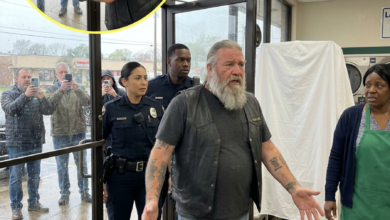
The hotel manager was reaching for our oldest housekeeper’s name badge when a tattooed biker set down his helmet and asked why we were firing someone before checking the camera above her head.
Elena Morales stood beside her cleaning cart with one hand pressed against her apron. She was sixty-seven, and I had never seen her cry until a guest pointed across our lobby and said, “She’s the only one who could have taken it.”
The missing item was a diamond ring.
Three guests had stopped near the elevators. One lowered his coffee without drinking it. Nobody stepped closer to Elena, but nobody went back to what they had been doing either.
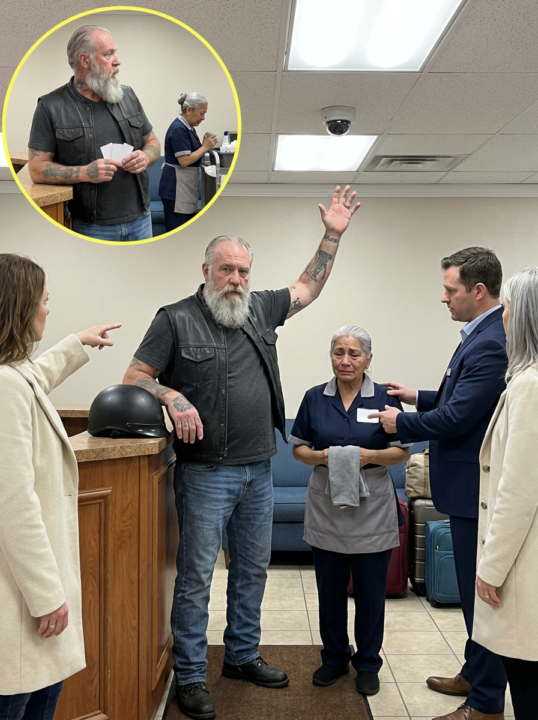
The evidence, so far, was a uniform and an accusation.
My name is Ellie Brooks. I was twenty-nine and working the morning desk at a hotel just off Interstate 40 in Amarillo. I had been there four months. Elena had worked there nineteen years.
Our manager, Derek, told her to hand over her badge and wait while he called the police.
“I didn’t take anything,” she said.
He told her not to make a scene.
She hadn’t raised her voice. That belonged to the guest, a woman in a cream coat who had already told three people how much the ring was worth.
The biker had been waiting to check out with the rest of his riding club. He was huge, with a gray beard, tattooed knuckles, and a black leather vest worn soft at the edges. His boots still carried dust from the road.
Until then, he’d said nothing.
Now he stood between the checkout line and Elena’s cart, careful not to block either.
“Call the police,” he told Derek. “And pull up the footage.”
The guest turned toward him. “This is none of your business.”
He looked at Elena, not at the ringless hand being held up for everyone to inspect.
“She works here. That makes it yours.”
Derek said the guest had left her ring beside the lobby sofa. Elena had cleaned that area. Nobody else had been near it.
“Who checked that?” the biker asked.
There was a pause.
A luggage wheel clicked across the tile. Behind me, the printer finished a receipt nobody reached for. Elena kept her eyes on the folded cloth in her hand.
I knew that cloth. She used blue ones for glass and gray ones for furniture, and she’d corrected me once when I grabbed the wrong stack.
I knew a dozen small things about her work.
Somehow, none of them had seemed to weigh as much as the stranger’s certainty.
The guest said she wouldn’t pay her room bill until we made this right.
That was the second time she’d mentioned her bill. The first had been before she mentioned the ring.
I looked toward my computer.
The biker noticed.
“Something you want to say?”
Derek answered before I could. “We’re handling it.”
Elena finally looked up.
“Then handle it with the camera.”
Not loud. Not brave in a way anyone would put on a poster. Her mouth was trembling, and she had to swallow before finishing the sentence.
But she had asked for evidence too.
The police arrived a few minutes later. The officer spoke to the guest, then asked Elena for her account instead of asking her to empty her pockets.
I found myself breathing again.
The biker gave his name: Cole Rourke. He explained what he’d heard and what he hadn’t seen. He didn’t pretend to know where the ring was.
He just kept asking us not to decide whose hands were guilty before we looked.
Derek opened the security system.
At first, the screen showed nothing remarkable: the guest, the sofa, a handbag, Elena’s cart still nowhere in sight.
Then the guest leaned forward.
“That’s not the part you need.”
The officer asked Derek to leave it playing.
I had spent the morning afraid of what losing that ring would cost our hotel; the next few seconds made me understand what our certainty had already cost Elena.
Part 2 — The Woman Who Fixed Our Lamp
Elena’s shift began before mine, which meant I usually encountered her through evidence: clean glass, dry floor mats, coffee spilled by someone else already gone.
She worked the lobby and public areas four mornings a week. She could have retired completely, she told me once, but she liked having somewhere to go where people expected things of her. She also liked being paid. She saw no reason to make the second part sound less respectable than the first.
“My electric company doesn’t accept purpose,” she said.
She had a grown son in Albuquerque, a sister she argued with about roses, and a habit of buying crossword books she called too easy while leaving half the puzzles unfinished. On her days off, she repaired old lamps. She had fixed the little desk light in our break room without announcing she’d done it.
I knew all that. I didn’t know how readily I could let a stranger’s voice push it aside.
The riders arrived the previous evening, eighteen people on a route west from Oklahoma. They had booked nine rooms and were meeting old friends in New Mexico the next afternoon. There was nothing ceremonial about their trip. Some had saved vacation days for it. One had persuaded a coworker to trade shifts. Another was riding for the first time since knee surgery and complained whenever anyone offered to carry his bag.
Cole checked the group in.
His full name was Calvin Rourke, though nobody called him Calvin unless paperwork required it. He was sixty-one, six feet four, with a beard that had gone almost entirely gray. A narrow scar ran through one eyebrow. His leather vest carried the wear of years, and there were faded tattoos on his forearms, knuckles, and neck.
He asked where the motorcycles could be parked without blocking anyone.
I directed him to the side lot.
He asked where to put wet towels.
“In the bathroom,” I said, smiling.
“Some places get particular.”
That answer made me like him. He wanted the rules before he became somebody else’s problem.
The next morning, Elena found one of the riders trying to wipe a coffee spill with the corner of a travel brochure. She brought him a cloth and told him to move his boots before he spread it farther.
He obeyed.
Cole watched from the breakfast area and laughed into his cup. Elena pointed at him.
“You too, if you walked through it.”
He checked both soles.
That was their first real conversation.
The guest with the ring arrived at my desk soon after breakfast. Her name was Victoria Lane. She wore a cream coat over a pale blouse, carried a structured leather handbag, and placed her room key on the counter as though it had disappointed her.
She wanted the room charge removed.
There had been noise in the corridor, she said. The air conditioner had cycled too often. A car alarm had sounded in the parking lot.
I checked our overnight notes. There had been no recorded call from her room about those issues, which didn’t mean she hadn’t experienced them. I asked whether she’d contacted the desk.
She said she shouldn’t have had to.
I offered to ask Derek to review the complaint. I didn’t promise a refund.
While I called his office, she went to sit on the blue sofa near the elevators. She put her handbag on the cushion beside her and searched through it for something.
I turned away to help a family whose key wouldn’t work.
Elena passed through the seating area, wiping the low table and collecting an abandoned paper cup. Her cart remained near the service corridor. She didn’t linger.
By the time Derek came out, Ms. Lane was standing again.
“My ring is gone.”
We all looked where she was looking: at her left hand.
She described a diamond in a white-gold setting and said she’d placed it on the table while applying hand cream. Then she pointed at Elena.
“She cleaned over there.”
Derek asked Elena if she’d seen a ring.
“No.”
“Are you sure?”
Elena set down the cloth. “I’m sure I didn’t see one.”
The guest said there was no other explanation. She said the ring was worth more than several months of a housekeeper’s wages.
The amount changed Derek’s face.
He stopped asking what anybody had seen and started asking Elena what she’d done. Had she touched the table? Had she picked anything up? Where was her cart? Why hadn’t she reported finding jewelry?
The questions assumed their own answer.
Elena answered each one. Table, yes. Cup, yes. Jewelry, no.
I could have mentioned the refund request then. I could have suggested reviewing the camera. I could have asked whether anybody had looked properly beneath the cushions.
Instead, I waited for someone with a higher title to take charge.
I told myself that was professionalism.
Across the lobby, Cole stopped counting key cards.
Two of his friends were already outside, fastening luggage to their motorcycles. Another stood by the door looking at the time. Their checkout was nearly finished. He could have left before the accusation became anybody’s problem but ours.
Then Derek told Elena to put her badge on the desk.
Cole set his helmet beside the room keys.
It made a small, solid sound.
He asked about the camera.
Part 3 — Why That Order?
Derek didn’t refuse to check the recording. He did something that felt reasonable enough to slow us down: he said we’d review it after Elena surrendered her badge, after the guest completed a statement, after the situation was under control.
Cole looked at Elena’s hand hovering near the clip on her apron.
“Why that order?”
“Because I’m responsible for this property.”
“Then keep the record.”
Derek’s mouth tightened. He didn’t like being corrected by a man in riding boots while guests watched. I could see his attention shifting from the missing ring to the challenge of being questioned.
Elena was becoming a third party to her own firing.
She asked if she could call the housekeeping supervisor, who wasn’t on site yet. Derek told her there would be time for that later.
I moved the desk phone toward her.
That was the first useful thing I did.
She looked surprised enough to make me ashamed, then dialed the number from memory. While it rang, the guest asked whether we were allowing a suspected thief to coordinate her story.
Cole turned toward her.
“She asked for her supervisor.”
The guest said he didn’t understand how much the ring was worth.
“I understand what you said.”
He didn’t claim to know Elena. He didn’t say her age or tears proved she couldn’t steal. He asked for evidence, which was harder to argue against than a speech about kindness.
Derek called the police.
I listened while he described a reported theft, the guest, and the employee she had accused. I was relieved when he didn’t state that he had witnessed anything. It was a small accuracy, but by then I was watching for them.
Ms. Lane pulled a chair closer to the desk and sat, leaving Elena standing beside the cart. Cole’s friend, a woman named Beth with silver hair in a braid, moved another chair toward Elena.
“Here if you want it.”
Elena touched the backrest but didn’t sit.
Nobody needed to make her accept help on command.
A rider came back through the entrance and spoke quietly to Cole. They were going to miss the agreed departure time. The group had another long stretch before their overnight stop, and one member didn’t like riding after dark.
Cole nodded.
“Go ahead if you need to.”
The man looked toward Elena.
“I didn’t say I was leaving you. I’m saying we need a plan.”
I remember that exchange because it wasn’t the instant, unanimous nobility people like to imagine. These were tired travelers with reservations, sore knees, and jobs waiting at home.
Beth said they could split the group. Two people would take the rider who needed daylight, and the rest could decide whether to stay.
They stepped aside to make calls.
Helping required an adjustment, not a dramatic entrance.
While we waited, Ms. Lane told Derek that she would be contacting the hotel owner and posting a review. She wanted her room balance cleared immediately.
Derek said he couldn’t resolve billing until they knew what had happened.
“You know enough.”
I looked at the camera above the elevator again. We had tested it the previous week after a maintenance visit. I remembered watching myself cross the lobby carrying a box of key sleeves.
It worked.
I asked Derek whether he wanted me to open the security system.
He hesitated, then said yes. I used my assigned access and brought up the lobby view on the office computer, leaving the reception screen for checkout. I didn’t invite guests to crowd around the monitor.
Cole waited outside the office.
He had asked us to look. He hadn’t asked to take over.
Officer Harris arrived before we played the footage. She was direct without being loud, introducing herself and asking who had reported the ring missing.
Ms. Lane spoke first.
She said Elena had been the only person near the table after the ring was placed there.
“Did you see her pick it up?” Harris asked.
“I saw her cleaning.”
“Did you see her pick up the ring?”
The guest looked toward Derek.
“I know she took it.”
Harris asked Elena for her account separately. Elena described the cloth, the paper cup, the table. She named the time as closely as she could and admitted when she wasn’t sure.
Uncertainty sounded honest in a room full of certainty.
The officer asked whether the cart had been moved since then. It hadn’t. She asked that we leave things as they were while she reviewed the information.
Nobody was handcuffed. Nobody’s handbag was dumped onto the marble floor. There was no reason for the lobby to become a stage for punishment before anyone understood what had happened.
Elena finally sat in the chair Beth had brought.
I gave her a glass of water. She held it without drinking.
Then I told Harris about the earlier request to remove the room charge.
Ms. Lane interrupted.
“Those are separate issues.”
“They may be,” Harris said. “I’ll hear both.”
Derek stood in the office doorway while I found the time window. Cole remained a few steps back, close enough to answer questions without leaning over anyone’s shoulder.
The first image showed Ms. Lane approaching the sofa. Her left hand rested on the handle of her bag.
Harris asked me to pause.
She compared what she could see with the guest’s description, then asked us to continue from before Elena entered the area.
We watched the woman sit.
She searched inside her bag, brought out a small tube, and rubbed something between her hands. Then she shifted toward the cushion on her right.
The picture wasn’t a movie close-up. We couldn’t read her expression or see every tiny movement. But we could see where her hands went.
Ms. Lane moved nearer the screen.
“That’s not when it happened.”
Harris kept watching.
Behind us, Elena set the water glass on a coaster so it wouldn’t leave a mark on the desk.
Even then, she was protecting the furniture.
The officer asked us to replay ten seconds.
This time, Cole noticed something low beside the sofa cushion.
He didn’t announce a discovery.
He simply said, “Would you look at that seam?”
Part 4 — What Fell Between the Cushions
The small movement on the recording lasted less than a second.
Ms. Lane’s hands separated above the sofa cushion. Something caught the light, dropped beside her thigh, and disappeared into the narrow gap between the seat and the upholstered arm.
Elena wasn’t in the picture.
We watched it again.
There was no magical sharpening of the image, no sudden detail the camera hadn’t captured. The object was too small for the screen alone to establish everything about it. What we could see was the fall, the gap, and the empty space where Elena had not yet been.
Harris asked everyone to step away from the sofa.
Ms. Lane said it could have been anything.
“It could,” the officer answered. “Let’s check.”
Cole took a small flashlight from the outside pocket of his riding bag and offered it to her. She accepted. Derek gave permission for the furniture to be examined, sounding oddly formal about the first sensible thing he’d been asked all morning.
The cushion was attached with a fabric fastener underneath. Cole held it steady at the officer’s request while she looked along the seam. He didn’t push his hand into the gap or rummage ahead of her.
For a few seconds, we heard only the scrape of upholstery and traffic beyond the front doors.
Then Harris stopped moving the light.
“There it is.”
The ring lay where the inner lining sagged toward the sofa frame. Harris retrieved it carefully while Cole kept the cushion out of her way.
A pale stone caught the lobby light.
Ms. Lane stepped forward. The officer asked her to wait while she documented the recovery and confirmed the details.
Elena didn’t move.
That surprised me until I realized everybody else’s problem had just been solved except hers. The ring was back. The guest’s loss had ended. Elena still sat in a lobby where people had watched her nearly lose her job.
I wanted someone to say her name.
Harris did.
“Ms. Morales, this was recovered from the sofa where the recording shows the object falling. Nothing we’ve reviewed shows you taking this ring.”
Elena lowered her eyes, and I couldn’t tell whether she was relieved or exhausted.
Then she asked if she could have her badge.
It was still clipped to her apron. She had forgotten.
Beth touched her own collar to show her where to look. Elena found the badge with two fingers and held it as though checking that it hadn’t changed.
The accusation had unsettled even that small certainty.
Ms. Lane said it had been a misunderstanding.
Harris turned toward her.
“You told us you put the ring on the table.”
“I thought I did.”
“You also said this employee took it.”
“She was the only person cleaning there.”
The officer asked the question again: had she actually seen Elena take the ring?
This time, the answer was no.
Harris asked whether she had any other basis for the accusation. Ms. Lane looked toward Derek, who had stopped meeting her eyes.
I could almost feel the story trying to shrink itself into an innocent mistake.
Then the guest asked about her room bill.
Derek said the charges remained under review for her original complaints, separately from the ring.
“But after all this,” she said, “surely you’re not expecting me to pay.”
Harris asked what she meant.
Ms. Lane rubbed the inside of her bare finger. She had not yet been handed the ring back.
“I was upset. I wanted someone to take the complaint seriously.”
“The complaint about the ring?”
“The room. Everything.”
Nobody answered.
She looked from the uniformed officer to the manager, apparently searching for the person who could still make this easier.
“I thought if the hotel was responsible for losing it, they’d clear the bill.”
There it was.
The camera had shown an accident. Her own words explained what she’d tried to make of it.
She had genuinely misplaced the ring. She hadn’t seen Elena take it. But she had turned suspicion into a confident accusation because a cleaning woman seemed like someone the hotel might sacrifice to settle a guest’s complaint.
I don’t know when that calculation first occurred to her. I won’t claim the recording showed a thought. It showed her hands. The rest came from what she said in front of us.
Harris continued speaking with her away from Elena. There were questions to document and decisions that weren’t mine to make. No one performed an arrest for the lobby’s satisfaction.
Cole returned the cushion to its proper place.
He didn’t hold up the ring. He didn’t smile at the guest or deliver the clever insult everybody might have repeated later.
He went to Elena’s chair.
“Want some room?”
She nodded.
He asked the riders to step back. Beth stayed nearby after Elena reached toward her sleeve.
Derek began apologizing, but he did it in the lowered voice people use when they hope an apology can be smaller than the offense.
Elena looked toward the elevators.
Two of the guests who had heard the accusation were still there. A third had gone upstairs. Our maintenance worker stood beside the service door.
“They heard you say I stole it,” she said.
Derek swallowed.
Then he turned toward the lobby and said clearly that the ring had been recovered from the sofa, that Elena had not taken it, and that his accusation and threat to dismiss her had been wrong.
No “if anyone was offended.” No blaming an unfortunate misunderstanding.
He managed the words.
They didn’t put the morning back the way it had been.
Elena asked him to put the correction in writing and give a copy to her supervisor.
I went behind the desk and opened a new document.
My hands shook harder over the keyboard than hers had around the water glass.
Cole stood at a respectful distance while I typed.
For once, the loudest person in the room had nothing useful left to add.
Part 5 — The Envelope Was Not an Apology
Elena read the written correction twice.
She checked her name. She checked the date. Then she pointed to the sentence saying she remained employed.
“My hours too.”
Derek said of course.
“Then put that.”
I added that her scheduled hours and pay would not be reduced because of the accusation. Derek signed the statement and sent a copy to our general manager and the housekeeping supervisor.
It wasn’t a substitute for everything that needed to happen next. It was something Elena could take home in her own hands.
By then, our housekeeping supervisor, Teresa, had arrived. She sat beside Elena and asked what she wanted for the rest of the morning.
Not what would be convenient for the hotel. Not whether she felt ready to reassure the guest. What she wanted.
Elena wanted to wash her face. She wanted her son to hear about the incident from her if he heard about it at all. She wanted to leave after speaking with the general manager, and she didn’t want the missed hours taken out of her paycheck.
Teresa said they would arrange it.
I watched the two women go toward the staff room and finally understood how many choices we’d taken away from Elena while claiming to handle the situation.
Cole remained at the end of the desk.
“Can you finish our checkout?”
I stared at him, then at the room keys that had been there the whole time.
“Yes. I’m sorry.”
He nodded toward the computer.
“Let’s get that part done.”
The ordinary request steadied me. I checked charges, printed receipts, and asked whether anyone needed a copy emailed. Three riders had left with the member who needed an earlier start. The rest were adjusting their route over paper maps and phones.
One man complained that they’d miss a lunch reservation.
Beth told him they could eat sandwiches.
“I know,” he said. “I can still complain about sandwiches.”
They laughed quietly.
They were people who had chosen to stay, not people without anything else to do.
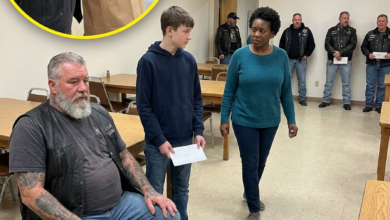
Cole waited until the line had thinned before asking for an envelope.
I handed him a plain one from the drawer.
He took it to the breakfast tables, where his friends were gathering their belongings. I saw wallets open. Somebody counted twenties against a folded map. Another rider asked whether the housekeeping tips they’d left upstairs were still there.
They were. This was separate.
I didn’t hear Cole pitch a fundraiser. There was no demand that everyone match the biggest contribution. People put in what they chose, and Beth wrote down the total so nobody had to guess.
When Elena returned, the envelope was closed.
Cole approached with Beth beside him and asked whether he could give her something from the club.
Elena looked at the envelope and stiffened.
“I didn’t clean all your rooms.”
“You cleaned the place we used,” he said. “And helped us last night and this morning.”
Her eyes moved toward me.
I knew the look. She was wondering whether accepting money might become another thing someone could use against her.
Teresa answered before I found the words.
“Guests can leave you a tip, Elena. This one’s yours.”
Elena still didn’t reach for it.
“I don’t want money for crying.”
Cole lowered the envelope.
“That’s not what we’re paying for.”
He told her the riders had appreciated her work before anything happened that morning. The towels she’d found. The spill she’d cleaned. The directions she’d given the man whose room was on the opposite side of the building.
He didn’t say they were saving her.
He said thank you.
Then he offered the envelope again, without pushing it into her apron or making her take it for everyone else’s comfort.
She held out her hand.
Only then did he place it in her palm.
“The hands that clean a floor are worth no less than the hands that wear diamonds,” he said.
He spoke quietly enough that I heard it because I was close, not because the lobby had been invited to listen.
Elena looked down at the envelope.
There was six hundred and forty dollars inside. Not enough to transform a life. Enough to matter. Enough that she would count it at her kitchen table and decide for herself what it could do.
Beth told her there were no photographs attached to it.
That made Elena laugh once, unexpectedly.
“Good. I look terrible.”
“You look like somebody who had a rough morning,” Beth said.
Elena pressed the envelope between her hands. She didn’t open it there.
When the riders stepped away, she asked Teresa whether she could share some with the woman covering her afternoon tasks. Teresa said that was her decision, but she didn’t owe anyone a portion for needing to leave.
The money belonged to her before she did anything generous with it.
I caught Cole near the entrance while he fastened his jacket.
“Why did you stop?”
He gave me a tired look.
“You heard her.”
“I mean, why did you stay?”
He watched Elena tuck the signed correction into a folder so it wouldn’t crease.
“My mother cleaned rooms,” he said. “I used to tell people she worked in hospitality.”
I waited.
“Thought it sounded better.”
He pulled one glove on, then the other.
“She never needed a better word. I did.”
Outside, one of his friends called his name. Cole lifted a hand to show he’d heard, then waited while Elena walked toward us.
She wanted to thank them before they left.
This time, nobody interrupted her.
Part 6 — What Changed After the Motorcycles Left
The riders left in small groups so they wouldn’t block the entrance. Cole waited until the last motorcycle was ready, then looked back through the glass and raised two fingers to Elena.
She raised her hand.
The sound of the engines moved down the access road and thinned into traffic. Our lobby became a lobby again, with a ringing telephone and a guest asking whether checkout could be extended.
Elena didn’t pick up her cloth.
Teresa took her cart to the service corridor and covered the rest of her shift.
That mattered more than telling her to take care of herself while leaving the work waiting.
Our general manager, Mrs. Shah, arrived before Elena went home. She read the statement, spoke with Harris, and reviewed the recording. She apologized to Elena directly and arranged paid time away while the hotel’s handling of the accusation was reviewed.
Derek wasn’t allowed to make decisions about Elena’s employment during that review. Later, he was moved out of a role supervising staff. I didn’t sit in every meeting, and I won’t invent conversations I never heard. I know what changed at my desk and on our schedules.
The incident was recorded as a false accusation against Elena, not as a theft by an employee that had somehow been resolved.
The wording mattered to her.
She asked for a copy of that record too.
Ms. Lane paid the room charges that remained due after her original complaints were reviewed. The officer dealt with her account of the missing ring separately. I wasn’t entitled to turn the lobby into a courthouse, and I didn’t learn every later decision.
I did hear one last thing the guest said before leaving.
“I didn’t mean for it to become all this.”
Elena wasn’t there to answer. She was in the staff room, calling her son.
For once, the woman’s explanation had no one left to sacrifice to it.
The hotel held a meeting the following week. It could have become the kind of meeting where managers describe a failure so vaguely that nobody can recognize their part in it.
Teresa wouldn’t let that happen.
She asked us to walk through the actual sequence. A guest reported a missing object. A worker was accused. Her job was threatened before the available recording had been reviewed.
At which point could someone have changed the direction?
I raised my hand.
“Before the badge.”
Earlier than that too, I knew. At the first claim that cleaning a table proved stealing from it. At the first question Elena wasn’t allowed to finish answering.
I didn’t need a biker’s permission to ask for evidence.
We changed how reports were documented. Staff were to record what someone said they’d seen separately from what they believed had happened. Available evidence would be preserved and reviewed, and employment decisions would not be improvised in front of a checkout line.
Those were our hotel’s changes after that morning. They weren’t a guarantee we’d never fail somebody again.
Elena returned the following Monday.
She greeted me, put her bag away, and asked whether anyone had ordered the replacement wheels for her cart.
I had expected something solemn. A conversation about forgiveness, maybe, which tells you how much I still wanted her return to organize my own feelings.
She wanted the cart fixed.
I checked the order and made the call.
When the wheels arrived, maintenance installed them before her next shift. She pushed the cart once along the corridor and nodded.
“Finally.”
That afternoon, a guest thanked me for finding a bracelet left in a fitness room.
“Elena found it,” I said.
He asked where she was. I pointed, then stopped myself from calling her over as though gratitude were another assignment she had to complete.
“She’ll be at the desk later if you’d like to leave a note.”
He did.
It was a small correction. So had been the correction I failed to make about the hearing aid.
Elena read the note after finishing her shift and put it in her bag. She didn’t pin it on a board or photograph it.
One Thursday, she mentioned she’d bought a chair with part of the riders’ tip. Green upholstery. Wide arms. Comfortable enough that she had fallen asleep in it before finishing a crossword.
She kept the rest where she wanted it.
I was glad she hadn’t felt obliged to turn every dollar into a sacrifice.
She had bought herself somewhere good to sit.
Part 7 — Her Name, Said Out Loud
Cole came through Amarillo again the next spring.
There were only five riders with him this time, and the weather was bad enough that they arrived in the parking lot under a sky the color of a dirty spoon. They had stopped riding early rather than argue with the wind.
I recognized his voice before I looked up.
“Got rooms without a marching band upstairs?”
I smiled.
“Depends. Are you bringing one?”
“Not that I know of.”
He set his helmet on the counter, and for a moment I heard the same solid sound from the morning of the ring.
Then it was simply a man checking into a hotel.
Elena was changing the flowers near the elevator. She turned when I said his name and came over carrying the empty water jug.
“You still checking your boots?”
He looked down at them.
“Been trained.”
She laughed.
There was no ceremony. He asked how she was. She told him about the cart wheels, then about a lamp she’d repaired that turned out to be worth less than the shade she’d bought for it.
“Bad investment,” he said.
“Pretty lamp.”
“Fair enough.”
I finished his check-in while they talked.
He didn’t ask whether she’d spent the money well. She didn’t have to report what she’d done with his kindness. The envelope had stopped belonging to the club when it entered her hand.
They were allowed to meet again as ordinary people.
At breakfast the next morning, one of the younger riders asked Cole how he knew Elena. He gave the shortest truthful answer available.
“Met her here last year.”
Elena could tell the rest if she wanted. She didn’t.
She told the rider where the good coffee was and warned him that the machine nearest the kitchen tasted like somebody had rinsed a battery in it.
He moved his cup.
Later, when Cole came to check out, he found Elena seated near the blue sofa with Teresa. They were discussing next month’s schedule. Elena wanted a Friday off to visit her sister.
Derek no longer stood over those conversations.
I noticed how unremarkable it felt to see Elena sitting in a lobby chair, talking about her own time. A year earlier, she’d stayed standing while someone else announced what would happen to her.
Now she was choosing a weekend.
Cole waited until they finished.
“I wanted to tell you something,” he said.
Elena looked up.
“Called my sister after that trip. Asked her for a picture of our mom.”
He explained that the photograph showed his mother outside the motel where she’d worked, holding a paper cup of coffee, her work shoes planted wide on the sidewalk.
“I put it in the shop.”
Elena studied his face.
“Good picture?”
“She’s laughing.”
“Then that’s a good picture.”
He nodded.
That was all they said about it.
After the riders checked out, I found their room tips where the cleaning team said guests should leave them. There was no special envelope this time, no need for one. Just payment for service and a short thank-you note that named the people who had helped.
Elena came by the desk carrying a guest’s forgotten scarf.
“Room three fourteen,” she said. “They just left.”
I called the number on the reservation while she folded the scarf carefully, lining up its edges so it wouldn’t snag on the counter.
The guest answered.
“Hello,” I said. “Elena from our housekeeping team found something you left behind.”
Across from me, she checked the folded scarf and gave one satisfied nod.
Her name badge sat straight on her apron.
Nobody asked her to take it off.
Follow our page for more biker stories about quiet courage, second chances, and the people who notice when someone else’s dignity is at stake.