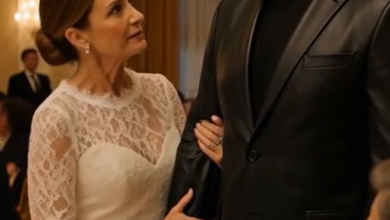
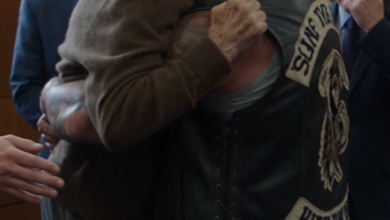
Part 2: A Widow Cut Her Husband’s Biker Vest Apart With Scissors in Front of His Entire Club — Then the Brothers Saw What She Was Sewing for His Final Ride
Part 2 — The Woman Who Counted Every Engine
My name is Luke Mercer, though the Black Pines have called me “Doc” since I treated a compound fracture beside Interstate 17 with a belt, two tire irons, and language no real doctor would use near a patient. I served as the club secretary, which meant I kept meeting minutes, collected dues, arranged hospital visits, and remembered the names of men who pretended they did not need anyone remembering them.
Rook had been my brother for twenty-eight years.
Margaret knew him longer.
They met in 1984 at a laundromat in Cottonwood, when Daniel Hale was a twenty-year-old welder with no clean socks, a split eyebrow, and a motorcycle that leaked oil on whatever surface showed him mercy. Margaret was studying textile design at the community college and had brought three quilts to wash after a roof leak soaked her apartment.
Rook put his greasy work clothes into the machine beside hers.
Blue dye bled across everything.
Margaret’s white quilt came out the color of a storm cloud. She slapped him with a wet pillowcase, then made him help rinse every piece by hand. Rook returned the following morning with coffee, a box of detergent, and a badly sewn cloth raven he had tried to make from the undamaged corner of one quilt.
She kept it for thirty-nine years.
Rook joined the Black Pines later, after a prison term for aggravated assault. That part mattered because we never polished him into someone easier to mourn. At twenty-six, he had been drunk outside a bar when he struck a man during a fight. The man suffered permanent damage to one eye.
Rook served four years.
He did not call himself a victim of bad luck. After release, he mailed part of every paycheck to the injured man’s family until the man died. Then he sent money to the widow for another seven years.
Margaret was the only person who visited him every month.
“She loved me before I deserved the verb,” Rook once told me.
That was as close as he came to poetry.
Their marriage survived prison, layoffs, two miscarriages, a daughter named Rachel, the death of Rook’s younger brother on a mountain road, and three decades of club calls arriving in the middle of dinners, birthdays, holidays, and arguments.
Margaret never hated motorcycles.
She hated the telephone after midnight.
Every late call carried the possibility of gravel, guardrails, police lights, or a voice asking her to come identify someone. When engines gathered outside their house, she counted them. When the Black Pines left on a run, she counted again.
If twelve motorcycles departed and eleven returned, Margaret knew before anyone removed a helmet.
Rook became road captain because he was cautious. Younger riders mocked the way he checked tires, weather, fuel stops, and emergency contacts. He answered by handing them a wrench.
“Fast gets applause,” he said. “Home gets breakfast.”
His Road King carried scratches from thirty states. The windshield was cloudy. One saddlebag never latched unless kicked near the hinge. Margaret had sewn the torn seat seam three times with waxed black thread.
Inside the left bag, Rook kept a red bandanna, a basic trauma kit, rain gloves, and small packets of hard candy for diabetic riders. Inside the right sat a folded square of quilted blue fabric Margaret had made for Rachel when she was a baby.
Rook called it his map.
The pale stitches formed no road anyone recognized, yet whenever the club became lost, he unfolded it across the tank and pretended to consult it. The ritual made irritated men laugh, which was usually more useful than directions.
His cancer appeared as a cough.
Rook dismissed it for months. He blamed shop dust, winter air, and an old respiratory infection. Margaret finally hid the Road King’s keys until he agreed to a scan.
The image showed a mass in his right lung.
Surgery was impossible. Chemotherapy bought time, then stopped buying it. Radiation burned his chest. His beard thinned. He began sleeping upright in a recliner because lying flat felt like drowning beneath a calm surface.
The club responded the only way we knew.
We arrived.
Ox rebuilt the porch ramp. Hawk repaired the roof. Tyler, still a prospect, cleaned gutters and pretended not to notice when Rook needed help standing. I organized medication schedules and sat through appointments with Margaret because medical words often became less honest when spoken quickly.
At first, the visits helped.
Then Rook weakened, and the clubhouse followed him home.
Brothers brought beer he could not drink, smoked outside the window, and told the same stories at a volume meant to defeat death. Every story placed Rook on a motorcycle. Every memory made him younger, louder, and farther from the man struggling to breathe in the next room.
Margaret asked us to shorten the visits.
We nodded.
Then stayed another hour.
One Thursday, Hawk arrived with sixteen bikes for what he called a quiet breakfast. The V-twins rattled the bedroom window. Rook woke gasping and tore the oxygen tube from his nose.
Margaret ran outside.
“Turn them off!”
Hawk killed his engine immediately. The others followed, but the damage was done. Rook refused morphine for six hours afterward because it made him dream that he was trapped beneath an idling motorcycle.
That night, Margaret told me the club was taking more than it gave.
I wanted to defend us.
I could not.
Rook understood her anger, yet he also knew the brothers were afraid. Men who could replace transmissions in gravel, carry injured strangers through rain, or stand against half a bar did not know where to put their hands beside a hospice bed.
So Rook created a job.
He asked Margaret to bring his vest, every old riding shirt, the canvas sewing bag, and a blue tailor’s pencil. She placed the leather across his knees.
He began drawing squares.
“What are you planning?” she asked.
“My last ride.”
“You can’t sit on the bike.”
“Won’t need the bike.”
He asked her to cut every patch from the vest after he died.
Margaret refused.
Rook rested his oxygen mask against his chest. “Leather’s too heavy.”
“For what?”
“You know.”
She did.
Margaret had made blankets for premature babies, wounded veterans, wildfire evacuees, and three Black Pines widows. She knew how fabric could hold pieces of clothing after a body no longer filled them.
Rook wanted one of his own.
Not for the house.
For the casket.
Margaret agreed on one condition: the club would never turn the sewing into a ceremony.
Rook smiled behind the mask.
“That part might be difficult.”
He was right.
Part 3 — The Night the Club Chose Leather
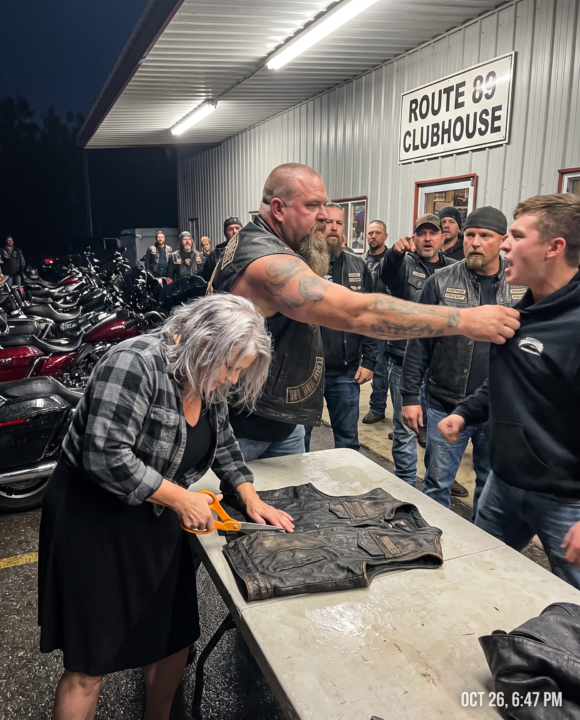
After Margaret made the first cut, the parking lot divided into two groups.
One stood behind Hawk.
The other gathered near Tyler.
The older brothers understood that grief could give a widow temporary ownership over almost any object. The younger members saw the vest as club history and believed history required protection from private anger.
Tyler was the loudest.
He had joined the Black Pines after Rook found him sleeping behind a tire shop in Prescott. Tyler was nineteen then, newly sober, estranged from his mother, and carrying everything he owned in a military surplus bag.
Rook gave him work.
Not charity. Work.
He made Tyler sweep floors, sort bolts, clean carburetors, and redo every careless task. On Tyler’s first sober anniversary, Rook handed him an old denim jacket with a small black raven sewn inside, where nobody else could see it.
“Earn the outside,” he said.
Tyler treated Rook as the father he never called him.
Watching Margaret cut the vest felt like watching her cut that father away.
“That patch should hang over his chair,” Tyler said.
Margaret continued separating the memorial tabs.
“No,” she answered.
“He earned it.”
“That’s why it’s going with him.”
“You said the club took him from you.”
“It took dinners, birthdays, sleep, and thirty-nine years of waiting for engines to return. I gave those things because he loved you.”
Tyler’s face reddened. “Then why keep us out today?”
“Because he asked for quiet.”
“He wouldn’t ask that.”
Margaret finally looked at him.
“You knew my husband on roads. I knew him when roads ended.”
Tyler reached across the table.
Hawk caught his wrist.
The movement was quick enough to lift Tyler onto his toes. Hawk’s skull ring struck the metal table, and the sound made several brothers step forward.
“Release me,” Tyler said.
“When you remember where you are.”
“That vest belongs to all of us.”
Hawk tightened his grip. “It belonged to Rook.”
“Then he should be wearing it Friday.”
Margaret’s scissors stopped.
For one second, I believed Tyler had persuaded her. She touched the empty spaces in the leather, then folded the vest around the remaining raven as if protecting it.
“I need his shirts,” she said. “If you won’t help, move.”
Tyler pulled away from Hawk.
“No patches leave this property.”
That was the point when brotherhood stopped being a word embroidered above a door.
Our bylaws stated that club colors returned to the Black Pines after a patched member died unless his spouse or adult child requested them. Margaret was the spouse. The rule was clear.
Tradition was louder.
Ox wanted a vote. Hawk said grief was not subject to club procedure. Tyler demanded the vest be secured until the officers met.
Men who had ridden together for decades began choosing sides.
Rain tapped the metal roof. Wet leather creaked. Chains rattled as bodies shifted. The air smelled of fuel, old coffee, soaked denim, and the electrical bite of the approaching storm.
Margaret placed the scissors on the table.
“Vote,” she said.
I stared at her. “You don’t have to allow this.”
“I want to know.”
Hawk’s voice dropped. “Know what?”
“Whether he was a brother only while you controlled the pieces.”
Nobody answered.
We entered the clubhouse.
Rook’s chair sat near the far wall, angled toward the door. A coffee mug marked with black fingerprints remained on the shelf above it. His spare helmet hung from one handlebar mounted over the bar.
Hawk called the meeting to order.
Margaret waited outside alone.
The vote should have taken five minutes. It lasted forty-three. Older men told stories about patches recovered from accident scenes, hospital floors, impounded motorcycles, and one flooded ravine. Each patch represented responsibility as much as pride.
Tyler argued that cutting the raven destroyed what Rook had built.
I argued that refusing his final request would destroy more.
Ox asked the question none of us wanted.
“How do we know Rook asked?”
Margaret had shown no letter.
Only blue lines.
Only her word.
Hawk looked at me because I had been in the hospice room the previous evening. Rook had been barely conscious. I had heard him ask Margaret for scissors, but I had not heard the full plan.
“I don’t know,” I admitted.
The room shifted against her.
The vote ended seventeen to twelve in favor of reclaiming the vest until proof could be found.
Hawk refused to announce it.
As president, he could not erase the result. As Rook’s closest brother, he could not carry it to the widow.
So I did.
Margaret listened without interruption. She folded the damaged vest, placed it inside her canvas bag, and held it toward me.
“Take it.”
I did not.
“You won the vote,” she said.
“That doesn’t make it right.”
“It makes it yours.”
She removed Rook’s flannel shirt from her shoulders. Beneath it, the black funeral dress hung loosely from a body that seemed to have aged years since morning.
She laid the shirt beside the vest.
“I needed that for the center,” she said. “You may as well take it too.”
Then she walked into the rain.
Hawk followed.
Margaret reached her pickup before he caught her.
“Wait.”
She opened the driver’s door.
“Rook left something,” Hawk said.
Her face changed, but only slightly. “Where?”
“He called me three nights ago. Told me to check the Road King if the brothers got stupid.”
Despite everything, Margaret almost smiled.
“That sounds like him.”
Rook’s motorcycle stood locked inside his garage. Margaret drove us there, then remained on the porch while thirty bikers crowded the driveway without starting a single engine.
Hawk opened the right saddlebag.
Inside was the old blue baby quilt, Rook’s red bandanna, and a sealed plastic pouch marked with one word:
STITCHING.
Tyler reached it first.
The pouch contained no legal statement and no formal transfer of club property. It held a disposable hospital pillowcase covered in Rook’s handwriting, three spools of black thread, and a list of names.
At the top, Rook had written:
IF THEY CHOOSE THE PATCH OVER MARGARET, MAKE THEM READ THIS OUT LOUD.
Tyler’s hands began to shake.
Hawk gave the pillowcase to him.
“You wanted proof,” he said. “Read.”
Tyler looked toward the widow on the porch.
Then he began.
Part 4 — The Words Inside the Raven
Rook’s handwriting wandered across the pillowcase like a road drawn during an earthquake. Some letters were large. Others disappeared where the pen had failed. We gathered beneath the garage light while Tyler fought to keep his voice steady.
The vest is not the brother.
He stopped.
Hawk nodded for him to continue.
Margaret carried more miles than any of you. She did it from kitchens, waiting rooms, porches, and beside telephones after midnight. If she asks for the patches, give her the patches. If she asks for silence, learn it.
Nobody looked at Margaret.
Tyler read the next line.
She is making the blanket I want over me before the box closes. Every patch means a road. Every piece of cloth means somebody who got me home. Don’t hang my history on a wall where she has to visit it. Let her put it where I’m going.
Ox removed his glasses.
I looked toward the damaged vest in my hands and felt its weight differently.
Rook’s message continued with instructions. The raven patch belonged at the center. The road-captain patch should sit above his heart. The twelve memorial tabs should form a line along the lower edge so the dead brothers appeared to ride beside him.
The blue crescent from Rachel went near the top.
The cloth mattered too.
Rook wanted a square from Margaret’s storm-colored quilt, one from Rachel’s childhood jacket, one from the gray flannel shirt he wore during chemotherapy, and one from the red bandanna carried in his saddlebag.
Then came the list of brothers.
Each man was asked to contribute a piece from the shirt he had worn on a ride when Rook helped him return home. Not the cleanest shirt. Not the most valuable.
The one that remembered.
Hawk’s square came from a white thermal shirt he wore during the Page whiteout. Ox’s came from the mechanic’s coveralls soaked with fuel when Rook pulled him away from a burning workshop. Mine came from an Army-green shirt I wore the night Rook sat outside my motel room after my wife died.
Tyler’s name appeared last.
Beside it, Rook had written:
THE DENIM RAVEN. HE’LL KNOW.
Tyler sat down on the garage floor.
For eight years, he had kept that old denim jacket sealed in a plastic storage bin. It was the first clean clothing Rook gave him. The small raven inside represented a promise that Tyler might become something other than the worst year of his life.
Rook wanted it cut.
Tyler pressed both hands over his face.
“I told her no,” he whispered.
Margaret descended from the porch. She stopped several feet away, leaving him room to choose pride or apology.
Tyler chose neither at first.
He went to his motorcycle.
From the saddlebag, he removed a pocketknife. He cut through the lining of his expensive leather riding jacket and pulled out a wrinkled piece of faded denim he had sewn inside.
The little raven remained there.
“I carried it anyway,” he said.
Margaret took the denim gently.
“He knew.”
“I nearly took the vest from you.”
“He knew that too.”
Tyler’s chin tightened. “How?”
“Because Daniel was young once.”
That should have completed the revelation.
It did not.
Hawk unfolded the final section of the pillowcase. Several lines had been written in darker ink, perhaps earlier, when Rook’s strength held.
ONE EMPTY SQUARE.
Beneath it:
FOR THE MAN I NEVER BROUGHT HOME.
The name had been crossed out.
Hawk knew it.
So did I.
In 1999, Rook had led a night ride through Oak Creek Canyon. A new member named Samuel “Finch” Carver ignored a fuel stop after arguing with his wife. His motorcycle ran dry on a blind curve.
Rook turned around.
A truck crossed the center line before he reached Finch.
Finch died at the scene.
His widow blamed the club, Rook, and herself. She returned his vest without the raven patch, then left Arizona. For twenty-seven years, Rook carried Finch’s memorial tab and mailed a card to the widow every October.
The cards came back unopened.
Rook wanted cloth from Finch’s shirt.
None of us had it.
Margaret did.
She went inside and returned with a narrow parcel tied in kitchen string. A postmark showed it had arrived six days earlier from Spokane, Washington.
Inside lay one sleeve from a red plaid shirt.
Finch’s widow had kept it.
Rook had written to her after receiving his diagnosis. He did not ask forgiveness. He asked whether a piece of Finch could ride once more beside the men who still said his name.
The widow mailed the sleeve with a note:
Do not make him ride behind you this time.
Margaret handed it to Hawk.
He could not take it.
His enormous tattooed hands hovered around that small square of cloth as if touching it might reopen a canyon road.
“You do it,” he said.
Margaret shook her head. “Rook asked for his president.”
Hawk removed his leather cut.
Then he removed the black work shirt beneath it. Rain and cold raised bumps across his scarred arms, but he did not hurry. He cut a square from his own shirt and placed it beside Finch’s sleeve.
“Why yours?” I asked.
“Someone has to ride behind him.”
Margaret studied the two pieces. She understood.
Finch’s cloth would fill the final square. Hawk’s would become its backing, unseen but holding the older fabric in place.
That was what Rook meant by bringing a man home.
Not fixing the past.
Supporting what remained.
We returned to the clubhouse carrying shirts, bandannas, denim, flannel, and the damaged vest. Nobody restarted an engine. For the first time in the Black Pines’ history, thirty bikers walked their motorcycles the final hundred yards so Margaret could hear the scissors and sewing machine without a single V-twin beneath them.
Part 5 — Forty-Eight Hours of Thread
Margaret set up her sewing machine inside the clubhouse because Rook had specified one more thing: no wife should complete a biker’s final blanket alone.
Most of us were useless.
We could rebuild clutches, true wheels, straighten bent frames, weld cracked brackets, and diagnose an engine by listening through a screwdriver. Fabric obeyed different rules. It stretched. It frayed. It exposed impatient hands.
Margaret assigned jobs.
Ox removed old thread from the memorial tabs with a seam ripper. Hawk pressed flannel squares beneath a towel using the clubhouse’s travel iron. I measured backing cloth and misread the ruler twice. Tyler sat near the window hand-stitching the little denim raven onto a square from Rook’s chemotherapy shirt.
Every few minutes, someone began telling a story.
Margaret stopped him.
“Short version.”
Bikers hate short versions.
Still, they learned.
Ox contributed a piece of orange work coverall from the afternoon Rook found him unconscious behind a welding shop. Ox had inhaled fumes after a ventilation fan failed. Rook dragged him outside, called an ambulance, then told everyone Ox slipped because he knew the shop’s insurance might refuse the claim.
That lie cost Rook his job.
Ox never knew until years later.
Little Ray donated a blue shirt from the ride when his daughter disappeared from a campground near Williams. Rook divided the club into search lines and found the child asleep beneath a picnic table two miles away.
He never told the story as a rescue.
He complained that she had eaten his last candy bar.
My square came from the green thermal shirt I wore after my wife, Ellen, died. I had left the funeral, bought a bottle, and driven to a motel off Route 66 because I did not want anyone stopping me from disappearing.
Rook found my truck.
He sat outside the room until dawn. He never knocked. Whenever I looked through the curtain, he was seated on the curb beneath the motel sign, turning a spark plug between his fingers.
At sunrise, I opened the door.
He handed me coffee.
“Engine flooded?” I asked.
“Something like that.”
He drove my truck home while Hawk followed on the Road King.
Margaret placed my green square beside a strip from one of Ellen’s dresses. I had not brought that cloth.
Rook had kept it.
After Ellen’s funeral, he found the dress caught on a nail in our closet while helping my sister clear the house. He saved the torn piece inside his vest lining because, as he later wrote on the pillowcase, “Doc throws away things while hurt.”
The vest held other secrets.
Behind the road-captain patch, we found a ten-dollar bill folded around the name of a waitress in Kingman. Rook had carried it for seventeen years after leaving without a tip during an emergency call.
Behind the Arizona rocker was a photograph of Margaret asleep on the Road King’s seat during a 1991 charity run.
Behind the wrench patch lay the first sober chip Tyler earned.
Behind the Black Pines raven was the original cloth bird Rook made after ruining Margaret’s quilt at the laundromat.
Crude stitches.
Uneven wings.
Storm-colored fabric.
That was the object Margaret had hidden during the confrontation. She feared the brothers would claim it for the clubhouse before Rook’s blanket could be finished.
Hawk held it beneath the light.
“This was his first raven,” he said.
Margaret threaded her needle. “Before your club existed.”
“Then it belongs in the center.”
“The official patch goes there.”
Hawk looked at the large Black Pines raven on the table. It was professionally embroidered, bold, symmetrical, and familiar from thousands of road miles.
He pushed it aside.
“No. That one is who we asked him to be.”
He placed the crooked cloth bird before her.
“This is who he was becoming.”
Margaret’s hands stopped.
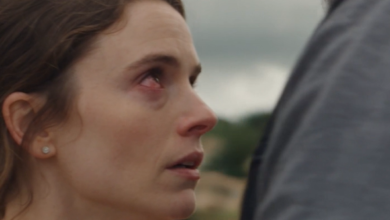
For the first time since Rook died, she cried.
Quietly.
No dramatic collapse. No speech. Her tears struck the storm-colored fabric while thirty men discovered useful reasons to inspect needles, windows, floorboards, and empty coffee cups.
Hawk stepped away rather than embrace her without permission.
Tyler did not.
He knelt beside Margaret and rested his forehead against her shoulder.
“I’m sorry,” he said.
She touched his hair with the hand that still held the thimble.
“Daniel expected better from you.”
Tyler closed his eyes.
“So did I.”
She gave him the crooked raven.
“Then sew.”
The blanket grew through the night.
At midnight, Rachel arrived from Phoenix with her husband and two teenage sons. She carried the childhood jacket bearing the missing piece needed around her blue crescent patch.
She saw the ruined vest and froze.
For one terrible moment, I thought we would repeat the parking-lot confrontation.
Then Rachel laughed.
“That ugly thing.”
Margaret looked offended. “You made it.”
“I was nine.”
“You insisted the moon needed legs.”
“It did.”
Rachel sat beside Tyler and repaired one crooked stitch exactly as Rook had repaired it after every long ride—poorly enough that the original remained visible.
Near dawn, the center was complete. The rough raven sat inside the official club raven, one history nested within another. Memorial tabs ran along the lower edge. Finch’s red plaid occupied the final square, supported by Hawk’s black fabric.
Only one space remained near the top.
Margaret brought out Rook’s gray flannel shirt.
The pocket was still shaped around his cigarettes, though he had not carried a pack in fifteen years. She cut around it carefully, preserving the button and pencil line.
Inside the pocket, she found a final note.
It contained six words:
PUT HER NAME WHERE MINE RESTS.
Margaret refused.
“This is his blanket.”
Rachel understood before we did. She took the storm-colored quilt—the one ruined with blue dye in the laundromat—and cut a square from its least damaged corner.
She embroidered one word:
MARGARET.
They placed it directly beneath the road-captain patch.
Where Rook’s heart would lie.
Part 6 — The Blanket Over the Box
The funeral home closed Rook’s casket at ten Friday morning.
Before it did, Margaret asked the room to clear.
Hawk began guiding the brothers toward the hallway, but she stopped him.
“Family stays.”
All thirty men remained.
Rook wore a clean white shirt, dark jeans, and the heavy motorcycle boots Margaret had spent years asking him not to track across her kitchen floor. His beard had been braided. The oxygen bruises beneath his nose were gone beneath the funeral director’s careful work.
His leather vest was not on him.
The blanket was.
Margaret spread it from his shoulders to his boots. The patches did not look stolen from the cut anymore. Surrounded by faded shirts, work cloth, denim, flannel, and old family fabric, they looked less like insignia and more like miles that had finally stopped moving.
The crooked raven rested over his chest.
The Black Pines raven surrounded it.
The road-captain patch lay above his heart. Margaret’s name rested beneath it. The memorial tabs crossed the lower edge beside Finch’s red plaid square, where Hawk’s black fabric held it from behind.
Tyler placed the denim raven near Rook’s left hand.
Hawk removed the silver skull ring from the chain around his neck. Rook had given it to him during his last clear afternoon.
He tried to place it inside the casket.
Margaret closed his fingers around it.
“He said you’d try.”
Hawk’s face tightened. “What else did he say?”
“That you mistake carrying for keeping.”
Hawk looked at the ring.
Then he put it on.
The funeral director waited near the door. Morning light fell across the blanket, catching different textures without making any piece appear more important than another.
Margaret touched the center raven.
“Close it.”
Nobody moved.
She looked at Hawk.
“You brought him home.”
Hawk signaled the director.
The lid descended slowly.
The last thing visible was not Rook’s face, his boots, or the club patch.
It was Margaret’s name over his heart.
Outside, thirty motorcycles waited in two rows. We expected Hawk to order engines started for the procession.
He did not.
Rook’s Road King stood at the front, secured to a small trailer because nobody would ride his motorcycle that day. The old blue baby quilt remained tucked inside the right saddlebag.
Hawk told us to push.
Thirty bikers walked their machines from the funeral home to the first intersection. Boots scraped pavement. Chains clicked against wallets. Tires whispered across asphalt.
Margaret rode in the hearse.
At the intersection, she lowered the window and raised one hand.
Hawk started his Harley.
The others followed.
Thirty V-twins rolled awake—not with the sharp noise of men demanding attention, but one by one, leaving space between each engine for the next.
Rook’s empty Road King moved behind the hearse.
No rider.
Not abandoned.
Carried.
Part 7 — The Square They Leave Unfinished
One year later, Margaret returned to the Black Pines clubhouse with another canvas bag.
Every conversation stopped.
Tyler looked immediately for scissors.
Margaret noticed and said, “Relax. I’m not cutting yours today.”
The room laughed harder than the joke deserved.
She removed a smaller quilt from the bag. It carried no club raven, no official colors, and no road-captain patch. Instead, it held scraps from Rook’s blanket: gray flannel, green thermal cloth, orange coverall, Rachel’s blue fabric, and a thin strip of red plaid.
One square remained empty.
Margaret hung the quilt above Rook’s chair.
“What goes there?” Hawk asked.
“The next brother who needs bringing home.”
The club adopted a new rule that evening.
Whenever a Black Pines member entered hospice, lost a spouse, buried a child, relapsed, went to prison, or simply reached a night he could not survive alone, the brothers did not arrive as a roaring crowd. One member called first. One brought food. One sat quietly. The rest waited to be invited.
Tyler became road captain three years later.
He still wore Rook’s sober chip behind his wrench patch. Before every group ride, he checked tires, fuel, weather, emergency contacts, and the number of motorcycles leaving the lot.
“Fast gets applause,” he told new prospects. “Home gets breakfast.”
He never claimed the words.
Margaret continued making memorial blankets, though she refused payment. Hawk cut the first shirt square for every one. His hands remained terrible with scissors.
The small unfinished quilt still hangs above Rook’s chair. Eight squares have been added since that first anniversary. Some belong to men who died. Others belong to brothers who survived something the club once would have hidden.
The final square remains empty.
Every October, on the morning Rook died, Margaret brings the orange-handled scissors to the clubhouse. She oils the hinge, sharpens the blades, and places them beneath the quilt.
Then the Black Pines ride to the cemetery.
Rook’s Road King leads on its trailer, the cloudy windshield catching the Arizona sun. At the grave, the engines shut down one by one until only cooling metal, desert wind, and boots on gravel remain.
Margaret lays her hand across the carved raven.
Hawk stands beside her wearing the silver skull ring.
Nobody tells the story loudly anymore.
They just count the engines before riding home.
Follow our page for more biker stories about misunderstood brothers, quiet promises, and the people who carry their final miles beside them.