DISPATCH REPORTED A STOLEN POLICE CRUISER, THEN THE BIKER AT THE WHEEL LIFTED HIS HAND AND A DEPUTY SAW THE ORANGE CLOTH
Part 1
DISPATCH SAID A BIKER STOLE A POLICE CRUISER, BUT WHEN HE STOPPED, A DEPUTY SAW A UNIFORMED MAN IN THE PASSENGER SEAT.
At 4:42 on an October Thursday, Deputy Ana Reyes was headed back toward town on Laurel Gap Road with a paper cup rolling around the passenger footwell. A seam in the lid had leaked coffee onto the cuff of her tan uniform. She was deciding whether the stain would dry before she had to go inside the station when dispatch sent her to the old gravel turnout above Briar Fork, West Virginia.
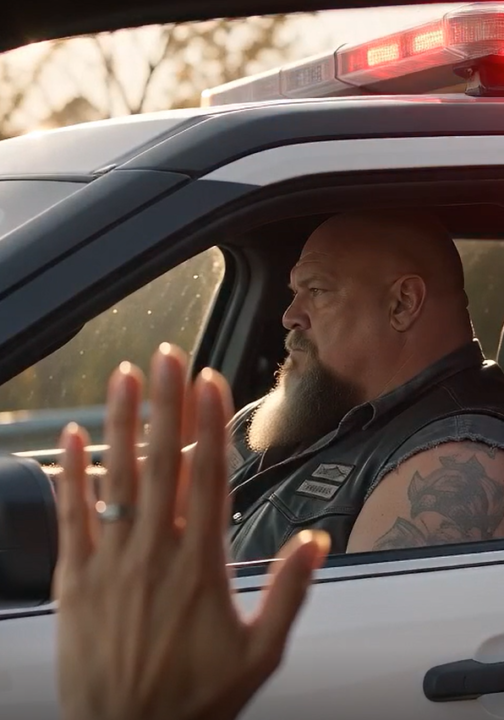
“Possible stolen cruiser,” the dispatcher said. “County unit. Caller saw a man in a biker vest driving.”
Ana put her own cruiser into the turnout and got out. Two people in a pickup had already pulled over. A man in a blue cap raised his phone as soon as he saw the red and blue lights coming downhill.
“Bet he thinks those make him a cop,” he called.
A woman beside him told Ana the driver was heading straight into town. Ana lifted her palm. The cruiser slowed and came to a stop beside her.
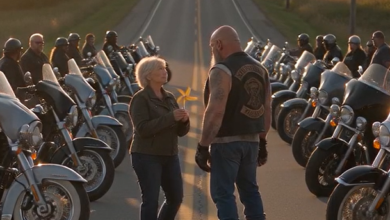
The driver was big enough that the seat looked too far forward even with it all the way back. Shaved head, long gray beard, a black leather cut over a charcoal shirt. Tattoos covered the knuckles wrapped around the wheel. He put the car in park without answering the man with the phone. Ana could smell hot brakes through his open window. A riding glove lay between his boot and the door.
“Don’t let him get back on the road,” the man in the cap said. “I’ll tell them I saw him try to get away.”
“You saw him stop,” the woman said.
Ana had already brought her own radio up. She thought she knew which unit she was looking at, but the glare made the numbers hard to read. A second pair of lights was coming up behind her from town.
The biker turned toward the passenger seat.
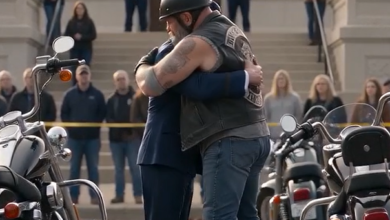
Ana saw him lift his bare right hand a little at a time. Under it was an orange cloth with a crooked blue fish stitched into one corner. It was tucked against the shoulder of a man in a tan uniform. His head rested against the passenger window. The seat belt was buckled.
The woman by the pickup stopped talking. The man in the cap lowered his phone. Ana took one step toward the open window and recognized Ethan Hale’s dark brown hair and the pale spot above his ear where he’d had a mole removed that summer.
She’d seen the biker before, too. He bought bait at the feed store on Saturday mornings and always parked his old black cruiser on the level side of the lot. Ana had watched him hold the door open for a woman who needed both hands for a bag of dog food. She couldn’t place his name.
He reached across the center console for the radio microphone. Ana started to tell him to put it down. Then she saw that he was still looking at Ethan. He brought the microphone close, waited for the first crackle to clear, and spoke into it.
“Officer down.”
Part 2
“I’m taking him to the hospital,” the biker said into the microphone. “Clear the road for me.”
Ana leaned toward the window. Ethan’s eyes moved when she said his name. He’d been on her shift six weeks. In the break room, he always picked the chair that faced the door. Seeing him on the wrong side of the console bothered her almost as much as the color of his face.
“Ethan, can you hear me?”
He moved his lips. She leaned closer and heard air.
“He was answering me at the last bend,” the biker said. “He knew where we were.”
Ana told dispatch she had eyes on Hale and gave the unit number. The nearest available ambulance was coming from the other side of the county. Its initial estimate to the crash site was fifty minutes. Dispatch was checking whether a crew could meet them closer to town. The hospital was down the grade.
“Get the ER on the phone,” Ana said. “Tell them who we’re bringing.”
The second cruiser pulled in, and Sergeant Paul Mercer got out. Ana told him where Ethan was. The biker looked from her to Mercer.
“Want to drive?” he asked. “I’ll get out.”
Mercer opened the passenger door far enough to speak to Ethan and see where the cloth was tucked. His hand went still on the door frame. He asked dispatch for the hospital on the line and spoke briefly to the charge nurse. Then he looked at the man behind the wheel.
“Can you follow her all the way down?”
“Yes.”
“Then stay where you are.”
Ana took the lead. Mercer followed Ethan’s cruiser, and dispatch had the intersection by the feed store cleared before they reached it. In her mirror, Ana watched the biker leave more room than she’d expected him to. At the bottom of the grade a delivery van eased partway out of a drive. The biker slowed before Ana had a chance to warn him. He kept both hands on the wheel.
She remembered the man in the blue cap saying he’d tell people the driver had tried to get away. All the way down the mountain, Ana had the uncomfortable feeling that she could remember why she’d been ready to believe him.
The hospital team met them under the ambulance canopy. One nurse climbed in on the passenger side while the others brought the stretcher up. The biker stayed in his seat until a nurse asked whether he’d been in the crash, too. He said Ethan needed her and moved out of the doorway. Ana saw him turn his right hand over as if he’d forgotten he had it.
“What’s your name?” she asked.
“Dean Walker.”
“You’re the man who comes in for bait on Saturdays.”
“Sometimes Sundays.”
The nurse carrying the orange cloth laid it on a tray and asked Dean how long Ethan had been bleeding before he found him. He looked past her toward the stretcher. For the first time since he’d stopped at the turnout, he seemed unsure what to do with his hands.
“He was on his feet when it happened,” he said.
The nurse stopped long enough to ask if he meant Ethan had been outside the cruiser.
“He’d just told me to stay behind the guardrail.”
Part 3
The emergency department had a chair with one short leg beside the vending machine. Dean sat in it while Ana called Ethan’s wife. When she came back, he was holding the chair steady with the toe of one brown boot. His other boot was wet halfway up the leather. She offered him a cup of water. He drank a little and asked if they’d reached Ethan’s family.
“His wife’s on her way. Tell me about the guardrail.”
“There was a pickup down in the bend. Deputy stopped to help.”
“Was there anybody else there?”
“Just us.”
Dean said he’d heard something in the brush on the uphill side. Ethan had turned toward it. A deer came out fast, clipped him as it crossed the shoulder, and sent him sideways into the guardrail. Dean remembered the hollow sound the rail made. He’d expected Ethan to swear or get up. Instead, the deputy tried to brace himself and couldn’t keep his arm under him.
“Did he hit his head?”
“I saw his shoulder hit. I was looking at his shoulder when he went down.”
Dean had tried his phone. Then Ethan’s. The first displayed an emergency-call screen without connecting. The cruiser radio gave him static in the bend. He had no way of knowing how far down the road an ambulance might be. The only running vehicle there with a passenger seat was Ethan’s.
“Where was your bike?” Ana asked.
“By the rail.”
“Could you get back to it?”
“Sure. Couldn’t get him on it.”
He explained that he’d used the orange cloth because it was in his vest pocket. Ethan had been able to help a little getting to the car. Dean remembered him trying to take his own weight and saying the same word twice. Wait. Then he stopped saying much at all.
Ana heard the vending machine cycle behind them. She had driven through the bend where the pickup went off the road dozens of times. She’d lost radio contact there herself and gotten it back at the turnout. When a call dropped, she was usually on her way to somewhere else. She’d never had to decide what to do while the radio kept answering with static.
Ethan’s wife, Kelly, came in wearing one hospital scrub top over another. She’d pulled the second one on because she’d grabbed it instead of a jacket when she left her shift at a dental office. She asked Ana where he was and whether he’d been able to talk. Ana told her what she’d heard and offered to walk her to the desk.
Dean stood.
“I’ve got somebody to call,” he said. “You go with her.”
Later that evening, Kelly told Ana the surgeon had controlled the bleeding. Ethan had a broken collarbone and a deep shoulder injury. The surgeon had told her that another half hour of blood loss could have made the situation much more dangerous. Ana had written the dispatch estimate on a scrap of paper in her pocket. She folded it so the number was on the inside.
Before she left, she called the deputy who’d gone back up to secure the original crash scene. He’d found the pickup, a small trailer twisted against the rail, and a black motorcycle above the drop.
He had a question for her.
“Did Walker tell you whose name was on the pickup registration?”
Part 4
“The pickup’s registered to Dean Walker,” the deputy said.
Ana looked through the glass doors. Dean was out by the hospital bench with his phone to his ear, rubbing a thumb over the leather cuff of his one remaining glove. When he came inside, she asked him if he wanted to add anything about the crash before the tow company moved the truck.
“I put two wheels in the gravel,” he said. “Trailer came around. I thought I could straighten it.”
“You were pulling your motorcycle?”
“Taking it in for a rear tire. Shop’s in town.”
“Why didn’t you tell me the truck was yours?”
Dean looked down at the cup of water he’d left beside the vending machine.
“You asked what happened to him.”
Ana had treated the pickup and the biker as separate facts because he’d given them to her that way. She’d imagined him arriving after the truck slid. Now she could picture Ethan stepping out of the cruiser to see whether Dean was hurt. The man in the passenger seat had been the first person to stop.
Two days later Ethan was awake long enough to ask for Ana. Kelly said he’d wanted to make the call himself but couldn’t hold the phone comfortably. Ana went over after her shift and found him drinking juice with his left hand. He took a sip between sentences.
“The trailer was bent,” he said. “His bike had shifted. We got it upright and pushed it to the wider part of the shoulder. He kept looking at the drop, so I told him I’d stay until the tow got there.”
“Do you remember the deer?”
“I remember the leaves moving. Then I was looking under his truck at the other side of the road.” Ethan rested the juice cup on the tray. “He kept asking me what my name was. The third time, I told him he was starting to get on my nerves.”
“That sounds like you.”
“He said, ‘Good.’ Then he asked again.”
Ana let Ethan catch his breath. In her jacket pocket she had a copy of the initial call summary. It was the only paperwork she’d brought, and she’d decided on the drive over that she wouldn’t show it to him unless he asked. He noticed the folded corner anyway.
“They’re saying he stole it?”
“Some people are. Dispatch flagged it as possible theft when a caller saw someone else driving and couldn’t reach you. The watch commander knows what we found.”
Ethan tried to pick up his juice, missed the cup, and let his hand rest.
“I told him to take it.”
“You remember saying that?”
“I said, ‘Take my car. Get us up to the turnout.’ He said he wasn’t leaving me.” Ethan looked at her. “I told him that was the idea.”
Ana asked why Dean hadn’t mentioned getting permission. Ethan gave her a look that said she could ask Dean herself.
Before she left, he pointed to a small paper sack on the windowsill. Kelly had brought it in after the hospital released his uniform and personal things. The orange cloth was folded inside, the blue fish turned inward.
“I want him to have that back,” Ethan said.
“He might tell you to throw it out.”
“He told me who made it. I don’t think he will.”
Part 5
Dean’s address was on a narrow street behind the feed store. Ana knocked with the paper sack under her arm. A girl in socks opened the door just far enough to look at Ana’s uniform and then at her face.
“Are you the one from the road?”
“I was at the turnout. Is your dad home?”
“Yeah. You can come in. He’s making grilled cheese and he’s burning the first one.”
Dean set a plate on the kitchen table and scraped the dark side of the sandwich over the sink. He introduced the girl as Maggie, eleven. She asked whether the deputy was going to be able to use his arm. Ana told her he’d started moving his fingers again and that he’d asked for the cloth to go home with them.
Maggie opened the sack. She took the cloth out by the corner where the fish was.
“I told you the tail would come loose,” she said to her father.
“It held.”
“Where it mattered?”
Dean glanced at Ana. “Yeah.”
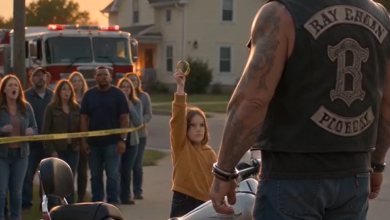
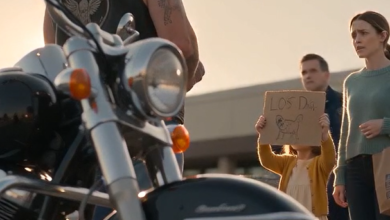
Maggie had made it for their first fishing trip after he started working Saturdays at the machine shop. She’d sewn the fish herself with a blue thread too thick for the needle and pushed so hard that her grandmother had taken the needle away twice. Dean told Ana he’d put it in his riding vest that morning and kept it there. The silver trout emblem on his back had come later. The riders he went out with knew him as Creek because he always wanted to know where a road crossed water.
“Can I fix the tail?” Maggie asked.
“When it’s dry.”
She took the cloth to the laundry room without asking what had gotten it wet. Ana watched Dean put the second sandwich on the plate and leave it where Maggie’s would go.
“The video from the turnout is going around,” Ana told him. “The short one.”
“I heard.”
“It starts with you in the driver’s seat and ends before you say anything.”
“Does it show him?”
“Only if you know where to look.”
Dean took the skillet off the burner. “Then people who know him are seeing it.”
Ana had come prepared to tell him the department would correct the story. It hadn’t occurred to her that he might be thinking about Ethan’s daughter seeing her father slumped against the glass.
“I’ll talk to the man who filmed it,” she said.
“He had a woman with him. She saw me stop.”
“His wife, June.”
“She saw the truck, too.” Dean rested a hand on the counter. “Ask her what she heard before her husband called.”
Ana called June from her car. June said she’d tried the emergency number from the bend after the pickup went off. It had rung once and gone silent. Her husband, Ron, drove on until he got a signal. When the marked cruiser came out behind them with Dean driving, Ron made the second call. That was the one dispatch had received clearly.
“Did he tell them you’d already tried to report a crash?” Ana asked.
“He thought they had it. I thought they had it.”
Ana could see both calls listed on the department’s printout. The second had a time, a location, and a case number. The first had a time and a single word beside it.
Disconnected.
Part 6
Ana met Ron and June Dyer at the feed store on Monday. Ron wore the same blue cap he’d had at the turnout. He picked up a bag of sunflower seeds, read the back, and put it down when June asked if he planned to hold it through the whole conversation.
“I saw the vest and the lights,” he told Ana. “I knew which one of those usually goes with the person driving.”
“You also saw him stop.”
Ron nodded.
“Why’d you say he tried to get away?”
For a while he watched the clerk ring up a woman with two bags of dog food. Then he looked at Ana.
“I’d said it loud enough for everybody to hear. When he stopped, I wanted there to be another thing he’d done that made the first thing I said make sense.”
June turned her keys over in her palm. “You could’ve just said you got it wrong.”
Ron took out his phone. The clip he’d posted was short, but he’d kept recording even after he lowered the camera. Most of the rest was pointed at the gravel. The sound caught the cruiser idling, Ana taking a step, and Dean asking dispatch to clear the road to the hospital.
“Can you use that?” he asked.
“The investigator can. Let Ethan’s family decide how much of it they want in public.”
Ron wrote his own correction at the feed counter. June read it once and handed the phone back. He posted it without an image. Ana saw it later that night. The first sentence was plain enough that she read it twice. I saw him stop, and I told people he tried to run.
The sheriff closed the suspected theft report after taking both men’s statements and reviewing the recordings. The alert was canceled. The department’s public correction said Dean had driven the cruiser with Ethan’s permission and that two deputies had escorted him to the hospital. Ethan and Kelly approved that wording. Dean asked Ana if the department could leave Maggie’s cloth out of it. Ana said the correction didn’t mention it.
Then she asked if Dean had seen the bike yet.
The county recovery crew had brought it up the morning after the crash. It had tipped against the rail after Dean left, putting a crease in the tank and bending a foot control. The rear tire he’d planned to replace was still on it. The sheriff’s employee association had offered to pay for parts, and the independent shop Dean had been headed to that day donated the labor. Dean had accepted the tire and the repair after they let him pay for the coffee.
“Guess I’ll get there eventually,” he said.
“You will. I’m taking Ethan over when it’s ready.”
Dean considered that. “Tell him to wear something he can get oil on.”
Before she hung up, Ana told him the county was holding a meeting about the emergency radio gap. She’d found earlier complaints on file for the same stretch of road. Some were years old.
“Mine should be in there,” Dean said.
“You reported it before?”
“I reported it the last time I couldn’t get a call out.”
Ana waited for him to tell her who’d needed help that time.
Dean said, “Ask Ethan. He had to come find me then, too.”
Part 7
Ethan remembered the earlier call when Ana asked. A few years before, Dean had found a stranded driver with a flat tire and a young boy in the back seat. The man was short of breath from trying to change the tire himself. Dean had gone up to the turnout to get a signal while a passerby stayed with the family. Ethan had met him there and followed him down. By the time another unit arrived, the man was sitting up and talking.
“You didn’t recognize Dean on Thursday?” Ana asked.
“I recognized the voice when he told me to sit still,” Ethan said. “The first time we met, I was the one saying it to somebody.”
At the county meeting, Ana found the old complaint tucked between two maintenance requests. It named the bend and the turnout and gave the difference between where the caller had needed help and where he’d finally been able to reach someone. The name at the bottom was Dean Walker. A line in the margin indicated that the service problem had been referred to another office.
The county radio technician brought a printed coverage map. The dip in the road was blank where the ridge cut off the signal. He’d driven it again the week after Ethan was hurt and had lost contact in the same place. A state communications engineer explained what two small public-safety relay sites could cover and where a roadside emergency call point could be installed. Ana listened to a commissioner ask how many times people had complained about the road.
The technician answered carefully. “We can count the people who got through.”
Ana looked over at Dean. He was sitting near the aisle in his leather cut, his arms folded. Maggie was beside him, drawing something on the back of the meeting agenda. Ethan sat on her other side, his left elbow tucked in close. Nobody in that row turned around when the photographer came in.
When the meeting opened for public questions, Ethan stood. He told the room he’d stopped because he saw a truck against the rail and didn’t know if the driver was hurt. He’d done it before and expected to do it again. Then he pointed to the map where the signal disappeared.
“The man I stopped for tried two phones and my radio,” he said. “If there’d been a way to reach us from that bend, he’d have used it.”
Afterward they went to the shop to see the repaired bike. Ana had expected new paint over the whole tank. The mechanic had pulled the crease out and left a narrow scuff near the bottom where Dean had asked him to stop. Maggie ran her fingers just above it.
“You can still tell,” she said.
“Only if you know where it was.”
Ethan walked around the motorcycle once, looking down at the rear tire. Then he set a paper bag on the bench. Inside were two spools of fishing line and a small red bobber.
“Didn’t know what you use,” he said.
Dean rolled the bobber across his palm. “You fish?”
“I know how to get a line in the water.”
Maggie leaned over to look into the bag. “Do you know where to stand?”
Ethan glanced at Dean. “I was hoping one of you would show me.”
Part 8
By the following fall, the state had activated the new relay sites along Laurel Gap Road. There was a roadside emergency call point near the turnout, where a driver could pull well clear of traffic. Ana went along on one of the coverage checks. At the bend, where the old guardrail still held a shallow dent, she heard dispatch read her unit number back on the first try.
“Say the location again,” the technician beside her asked.
She gave it to him. He made a mark on the test sheet and asked her to try once more from farther down. Nothing in the cruiser looked different from the last time she’d driven the road. She remembered the spilled coffee, the gravel under her boots, and how ready she’d been to tell Dean to leave the microphone alone.
On the first cold Saturday that October, Ana drove down to the river with a thermos and a bag of breakfast sandwiches. Dean and Ethan had gone fishing together once the previous fall, before Ethan’s arm could manage much more than holding a rod. Maggie had done most of the casting that day. This year Ethan had brought his own gear, and Dean had called Ana to say they’d saved her a folding chair if she wanted it.
She found the black motorcycle parked on a level patch above the bank. Ethan’s pickup was beside it. Two rods leaned against the tailgate, and a third was in the hands of a girl in rubber boots that looked a size too big.
“You bring gloves?” Dean asked Ana.
“In the car.”
“You’ll want them.”
He handed her his anyway. They smelled faintly of leather and motor oil, and the right thumb had been restitched with a heavier thread than the rest. Ana sat in the folding chair and watched Ethan spend several minutes trying to untangle a line. He waved Dean off the first time Dean offered. On the second pass he handed him the whole rod.
“Same time next fall?” Ethan asked.
Dean looked at Maggie. “Depends if she’ll have us.”
“You have to bring your own breakfast,” Maggie said.
Ana held up the bag. “Then I guess I’m invited.”
Maggie caught the first fish. It was small enough that Ethan could have covered it with one hand. He crouched beside her and waited while she got over the surprise of having it there. Dean steadied the rod. Maggie put the fish back herself and stood watching the shallow water until the movement faded.
On the walk up to the vehicles, Ana noticed the orange cloth sticking out of the front pocket of Dean’s vest. The fish had a new tail. The two halves of it were slightly different shades of blue.
“Maggie fixed it,” Dean said when he saw Ana looking.
“Does it stay in there all the time?”
“Most days.”
At the tailgate, Ethan held out his hand for the cloth. Ana thought he wanted it to dry his fingers. He wiped the mud off Maggie’s red bobber and wrapped it so it wouldn’t rattle against the rest of the tackle. Then he handed the little bundle to Dean.
Dean tucked it back into his vest. Maggie got one finger around the loose orange corner and pushed it safely inside.
Follow the page for more stories like Dean’s.