A Biker Ran Onto a Little League Field and Hugged the Left-Handed Pitcher—Then the Boy’s Coach Told Him He Had Already Signed Away His Son
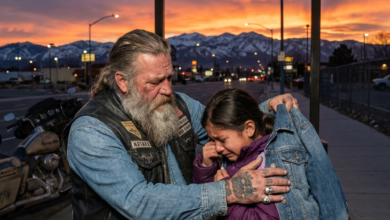
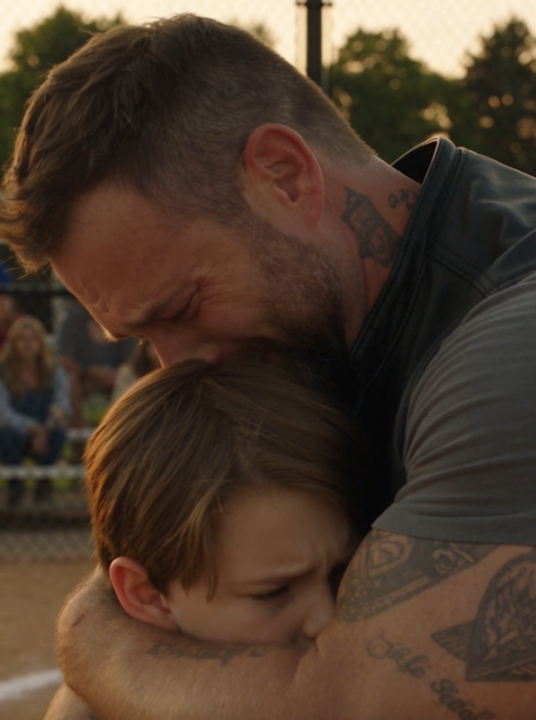
I let go of the boy so fast my left hand struck the dirt.
For one second, all I could see was the black grease beneath my thumbnail. I had scrubbed before leaving the shop. There was always a little left.
“Signed what?” Mara asked.
Ben didn’t answer her. He watched me.
“You remember the papers.”
Behind him, Owen held his glove against his stomach. He looked twelve and six at the same time.
I remembered plenty of papers.
Hospital discharge forms. A divorce packet. The sale of my half of a machine shop after a loading rack crushed my hip. Twelve years earlier, there had been months when every envelope felt like another thing I couldn’t fix.
But a child?
“I never signed anything about a child.”
Ben’s mouth tightened with something almost like pity.
“You were taking a lot of medication.”
That landed.
Because I had been.
For a few weeks after the surgery, I’d lost whole afternoons. I remembered my sister removing the kitchen clock because its ticking made me sick. I remembered Ben bringing soup in the good containers Mara used to save for Christmas.
I remembered trusting him.
A league volunteer approached with his phone in his hand.
“Sir, we need you off the field.”
“He’s coming,” Mara said.
Her voice was steady. Her fingers weren’t. She kept trying to fasten a bracelet that was already closed.
Owen looked up at her.
“Is he somebody we know?”
Nobody answered quickly enough.
I stood. The boy stepped back when my shadow crossed his shoes, and the shame of frightening him cut through everything else.
“I’m sorry,” I told him. “I should’ve asked before I hugged you.”
“Did I do something?”
“No.”
That came out too hard. I softened it.
“No, buddy. You didn’t.”
Ben touched Owen’s shoulder.
“Go get some water.”
The boy stayed where he was.
For the first time, I noticed his name stitched into his glove. OWEN, in pale blue thread.
I had repaired my old glove with thread that color because Mara couldn’t find brown.
It meant nothing.
I told myself that twice.
A deputy working traffic near the park came through the gate. He asked me to wait beside the concession stand while he spoke to the adults separately.
I went.
No argument. No sudden moves. My Harley remained cooling beyond the fence, ticking softly beneath the sounds of a game that nobody seemed willing to restart.
Mara joined me ten minutes later.
“Is he yours?” I asked.
She stared at the gravel.
“He’s mine.”
“You know what I’m asking.”
“Yes.”
“Then answer.”
Her eyes filled, but she didn’t reach for me.
“I don’t know what Ben told you.”
“He said you lost the baby.”
She covered her mouth.
The deputy called her name. She turned, then stopped.
“Luke. Whatever happens next, don’t let him tell you I said that.”
I watched her walk back toward the man who had once carried me up three flights of stairs after surgery.
If Ben had lied about a baby dying, what exactly had I signed?
Before everything broke, Ben kept score for our Tuesday softball games in a red spiral notebook.
He wrote his sevens with a line through them and his nines backward. He said his fourth-grade teacher had surrendered.
Mara used to steal the notebook to write grocery lists.
That summer, she repaired the split pocket of my first baseman’s glove with blue upholstery thread. Ben watched from our porch steps while I taught him my pitching routine.
Two taps. Scrape backward. Throw.
“Mine now,” he said.
“Then pay for it.”
He tossed me a quarter.
Later, Mara told me she was pregnant while I was washing that glove in the kitchen sink. I dried my hands on my jeans before touching her stomach.
Ben was the first person we called.
That was the happy part.
It lasted another nine weeks.
The rack fell in October. By Christmas, I couldn’t stand long enough to make coffee. Mara and I fought over bills, pain pills, my temper, her exhaustion.
We separated in January.
Ben became the person carrying information between two people too proud and frightened to sit in the same room.
Looking back, that was the door we opened.
After the game, my sister Denise met me at my house with a grocery bag and the expression she used when something had to be handled without letting me take it apart first.
“Eat.”
“I’m not hungry.”
“Then hold it.”
She put a sandwich in my hand.
I told her about Owen. The pitch. Mara. Ben’s sentence on the mound.
Denise sat down.
“You called the hospital back then,” she said.
“I know.”
“They couldn’t tell you anything because you were separated. You remember?”
I remembered a woman asking whether I was an authorized contact. I remembered hanging up and calling Ben.
He had said Mara couldn’t bear another conversation.
Then he had brought me a folded note.
Mara needs this to be over. Please let her heal.
No signature.
I had kept it anyway.
Denise went to the closet where I stored the metal document box she’d packed when I moved. We spread envelopes across the table between a mustard jar and an unpaid electric bill.
There was no relinquishment document.
There was a letter from an attorney about the divorce. A shop valuation. A copy of my signed agreement authorizing Ben to coordinate the sale of equipment while I recovered.
Then Denise found the photograph.
Me on the porch, glove balanced on my knee, Mara laughing outside the frame.
My left thumb was bandaged.
I had cut it replacing the kitchen screen.
“Owen recognized this,” I said.
Denise turned the photograph over.
There was a second print stuck to its back, showing Ben holding that same glove.
He had his hand inside it.
“He could’ve taught the kid everything,” she said gently.
The pitch wasn’t proof.
Neither was a face.
For the first time since the mound, I felt the floor settle beneath me—and then shift again.
What if I had frightened a boy because grief had finally taught me to see myself in strangers?
Mara called the next afternoon.
“Ben has the papers,” she said. “He wants to show you.”
I almost said no.
Denise took the phone from me, asked whether Owen would be present, and arranged a meeting at a coffee shop instead of their house.
My sister came.
So did a folder with my name printed across its tab.
Ben looked exhausted. I hated how familiar that made him.
He pushed a photocopy across the table.
It was a letter addressed to Mara, supposedly from me, dated three weeks before Owen’s birth.
I accept that your child is not mine. I will not seek contact.
Beneath it was something close to my signature.
Close enough that I turned the page over as though the back might explain the front.
“You gave me that,” Ben said. “You asked me to deliver it.”
Mara sat rigid beside him.
“I believed it,” she told me.
Then Ben produced another page: an old message printout in which Mara appeared to say the pregnancy had ended.
He spread both hands.
“I was trying to keep you two from hurting each other.”
For a minute, he looked like the only person at the table who had done a difficult, decent thing.
Mara shook her head.
“That message isn’t mine.”
“It came from your account.”
“We shared that computer.”
Ben didn’t raise his voice.
“Luke, she was angry. So were you. I can’t explain every conversation you had.”
He had given us somewhere else to look.
At each other.
I remembered Mara refusing my calls. She remembered money stopping. Neither memory was invented, which made his version more dangerous than a clean lie.
Denise asked for copies.
Ben said of course.
Too quickly.
Before leaving, he touched my shoulder.
“You’ve built a good life. Don’t wreck theirs because of a pitching motion.”
I removed his hand.
That evening, Mara sent a photograph of Owen’s original birth certificate.
The father’s space was blank.
Ben had never adopted him.
She followed it with one sentence.
He told me you wouldn’t consent, even after saying you weren’t the father.
I stared at those words until Denise asked to see.
Then we compared the old letter with the equipment-sale agreement.
The signatures were identical.
Not similar.
The same small ink blot touched the bottom of the L. The same faint horizontal line crossed the final stroke.
Denise enlarged both images on her laptop.
“That could be a copied signature,” she said. “We need somebody qualified to look.”
She knew an attorney from a dispute over our mother’s estate. His office gave us an appointment for Thursday.
Before we went, I called the retired bookkeeper who had handled the machine shop’s accounts.
Ruth Bell listened without interrupting.
Then she asked one question.
“Did Ben ever give you the final buyer’s statement?”
“He said there wasn’t much left after the debt.”
A long silence followed.
“Luke,” Ruth said, “I kept the closing file.”
If Ben had only been passing messages, why was his name on the account that received the rest of my money?
Ruth’s records smelled like basement cardboard.
She laid them on her dining table beneath a plastic cover printed with lemons. Her husband turned off the television without being asked.
The shop sale had brought in more than I’d been told.
After debts and legitimate expenses, my share should have been eighty-six thousand dollars larger.
There were transfers labeled rehabilitation coordination and temporary operating reimbursement.
Ben’s business had received them.
I rubbed the edge of one page until Ruth placed a paperweight on it.
“Keep the originals flat.”
That ordinary instruction nearly undid me.
Somebody was still worrying about paper while my life was changing shape.
Our attorney, Priya Shah, asked Ruth to preserve everything. She told me discrepancies weren’t a verdict and a familiar-looking signature wasn’t an expert conclusion.
Then she asked what contact I had tried to make with Mara.
Denise brought the canceled checks.
There had been six.
I had sent money through Ben because Mara’s address changed after the separation and he told me direct contact upset her. When Ben said the baby had died, I stopped writing checks and started paying down my hospital debt.
Mara had received none of them.
Copies later obtained through the proper requests showed deposits into an account she said she had never opened.
There were still questions.
Who controlled it? Which signatures were genuine? What had the bank retained?
But the story Ben had told at the coffee shop was coming apart in places he couldn’t smooth with his voice.
Priya also arranged a lawful, consented paternity test. Mara agreed.
I did not tell Owen what result I wanted.
He had enough adults wanting things.
We met him at a counseling office with Mara present. He sat backward in an upholstered chair until the counselor asked him to turn around.
“Am I in trouble?” he asked.
“No,” I said.
“Is Coach?”
“That’s adult stuff.”
“He says you get confused.”
I put both feet flat on the floor.
“Sometimes I do. That doesn’t mean you have to choose who to believe today.”
He studied my hands.
“You really fixed that screen?”
I looked at Mara.
She nodded once.
“I kept the picture,” she said.
The laboratory report arrived the following week.
Priya called before emailing it.
I sat down on the shop floor between a floor jack and a stack of winter tires.
Owen was my son.
The report could establish that.
It couldn’t tell me how to meet him.
An hour later, Mara called. Ben had seen the notification from the testing service on her phone.
“He’s furious,” she whispered.
“Are you safe?”
“Yes. Owen’s at my sister’s.”
“Go there.”
She said she would.
That night, a league administrator emailed me an instruction not to attend games while they reviewed a complaint.
Attached was a message apparently sent from my old email address.
Bring my boy to the field Friday, or I’ll take him myself.
I hadn’t used that account in years.
But the address was mine.
And Ben had helped set it up during my recovery.
How was I supposed to prove I wanted to be Owen’s father when somebody was making me look like the reason he needed protection?
The photograph from the mound reached the local parents’ group before breakfast.
Somebody cropped out my open hands.
Somebody else found an old picture of me outside a bar with three men in leather vests.
By noon, the story had become a biker trying to snatch a coach’s son.
A customer canceled a brake job.
Another stood in my shop doorway and asked whether the police were coming.
I told him I didn’t know.
That was the worst part. I had learned that twelve years of not knowing could be made to look like guilt from almost any angle.
Priya told me to keep the messages and stay away from the park.
“No answering posts. No visits to explain yourself.”
“I’m his father.”
“And right now, the best thing you can do for him is give us something calm and consistent to show.”
So I went to work.
I changed oil. Ordered a replacement caliper. Ate lunch beside the parts washer because I couldn’t stand another room with nothing to do in it.
My friends asked whether I wanted company.
I asked Denise to come instead.
She brought the same sandwiches and made me sit where customers could see me.
The deputy from the park called that afternoon. There was a complaint. He wanted my account of the email.
I gave it with Priya present.
We preserved my devices. We submitted account-recovery requests and the old records showing Ben had managed that inbox when I was hospitalized.
None of it cleared me that day.
I slept with my phone on the kitchen table because checking it beside the bed had become its own kind of injury.
On Wednesday, Priya called with something smaller than a rescue.
“The league has the full game recording.”
One parent routinely filmed from behind home plate. Their video showed the umpire calling time before I entered. It showed me releasing Owen, stepping away, apologizing.
It also recorded Ben speaking to the volunteer before the deputy arrived.
Tell them he threatened us.
Not I feel threatened.
Not he’s frightening my son.
An instruction.
The board kept the recording private and asked Ben for an explanation.
He said he meant the way I had approached.
I listened to the audio three times.
Then Priya stopped it.
“Don’t make this the only thing you hear today.”
That evening, I received a voice message from Owen through his aunt’s phone.
“Mom says I can ask you something.”
A scrape of fabric.
“Did you know my birthday?”
I had imagined questions about motorcycles. Baseball. Why I hadn’t come sooner.
I sat with the phone in both hands.
“No,” I recorded. “I’m sorry. I should have known more than I did.”
He replied eleven minutes later.
“Then why does Mom have a birthday card from you?”
I called Mara.
She answered on the first ring.
“I was going to tell you.”
The woman who had wept over twelve stolen years had been keeping something too.
What had she known while I was still mourning a child I thought had never taken a breath?
We met at her sister’s kitchen table.
No Ben. No Owen. No excuses made easier by an audience.
Mara placed a birthday card between us.
There was a cartoon dog holding a cake. I recognized it before she opened it.
Five years after the divorce, I had heard a rumor from a former supplier that Mara had a little boy.
I’d called Ben.
He told me she’d had a child after our separation and didn’t want questions. I had bought a card anyway, then written a clumsy note inside.
If there’s anything I should know, please tell me. I would show up.
I mailed it to an address I found through an old acquaintance.
Ben later said it came back undeliverable.
It hadn’t.
“You got this.”
“Yes.”
“Five years.”
She looked at the card.
“Yes.”
I stood because sitting had become impossible.
Mara didn’t follow.
“I asked Ben about it. He said you were starting again. That you’d seen a photograph and decided to claim somebody else’s child.”
“And you believed him.”
“I wanted to.”
There it was.
No forged page.
No medication.
A choice.
She told me Ben had been paying the mortgage. He handled school enrollment, medical forms, the things she’d once done while I lay awake in pain.
By then, Owen called him Dad.
She had a letter saying I rejected the child, a husband saying I was unstable, and one card offering a version of the past that would tear the household apart.
“So you put it in a box.”
“I put it in a box.”
I looked toward the hallway. Her sister had taken Owen to the library. His shoes were lined neatly beside the door.
“You don’t get to say you knew nothing.”
“I know.”
“Does he?”
“Not yet.”
“He needs to hear it from you.”
Her face changed then. Not because she disagreed. Because she understood I wasn’t offering to carry her part of the story.
She called the counselor before I left.
For the next several weeks, everything moved at the speed of people trying to do it without breaking a child.
Mara separated from Ben.
Priya started the family-court process. I asked for contact that Owen could manage, with professional support at first.
The account investigation continued.
A document examiner found evidence that my signature had been reproduced on the letter. Financial records contradicted Ben’s description of the equipment sale.
Still, he told the league board he was the victim of a bitter former husband and a wife trying to rewrite her marriage.
He requested a hearing on his coaching suspension.
Mara agreed to attend.
So did Ruth.
I brought the red scorebook Denise had found among my softball things, and Priya brought the original envelope from the birthday card.
Ben had claimed he never saw it.
Mara had never told him where she kept it.
As we waited outside the meeting room, he looked at the envelope in Priya’s hand.
For the first time, he stopped smiling.
What was he afraid we might find beneath the stamp?
The hearing took place in a municipal meeting room that smelled of floor cleaner and burnt coffee.
It wasn’t a trial.
The league president said that twice. The board was deciding whether Ben could remain around children in a position of authority, not determining every allegation in our family.
Owen stayed with his aunt.
There were no cameras. The board asked the few parents present to put their phones away.
I sat beside Priya in a clean work shirt. My vest was folded across my knees.
Ben wore his coaching polo.
Until that day, I hadn’t understood how much a collar and a familiar logo could do for a man.
The board played the unedited field recording.
Ben repeated that I had frightened him.
Then they showed the threatening email and the documentation we had submitted about the compromised account. The investigation was ongoing; nobody claimed otherwise.
Ben leaned forward.
“Luke always needed help with computers.”
Priya made a note.
Mara spoke next.
She admitted keeping my card. She admitted letting Owen grow up with a story she had stopped examining because examining it threatened everything comfortable in her life.
Ben stared at her.
“You’re going to destroy his childhood over a man who wasn’t there?”
“No,” she said. “We already damaged it. I’m trying to stop.”
Nobody clapped.
A woman in the back shifted her purse off the empty chair beside her.
Ruth described the sale records. She stayed within what she could document. When Ben interrupted, the president told him he would have a chance to respond.
Then Priya placed the birthday card and envelope on the table.
“This is material Mr. Harlan sent years ago asking for direct contact.”
“I never saw that,” Ben said.
Priya turned the card over.
On its lower corner was a tiny pencil notation: 7/9, followed by a slash.
A crossed seven.
A backward nine.
Mara had found it inside the envelope, beneath the card, when she retrieved it from her sewing box.
I opened the red scorebook to an old game.
The same marks ran down every page.
Handwriting alone wasn’t going to settle it.
Ben settled something himself.
“Mara wrote that,” he said. “She was tracking when she got it.”
Mara lifted her eyes.
“I didn’t.”
“The envelope was torn. You told me.”
Priya paused.
“I haven’t shown the envelope’s opening.”
Ben looked at the table.
Its torn edge was underneath.
He could have stopped there.
Instead, he reached.
“That doesn’t prove anything. I taped it because the flap—”
His hand froze halfway across the table.
Nobody had mentioned tape.
Nobody had accused him of opening the mail.
The board president looked at the envelope, then at Ben.
“You told us you never saw it.”
Ben withdrew his hand.
For twelve years, he had survived by being the person who explained what everybody else meant.
What would happen now that the room had heard him explain something he could only have known by being there?
Ben didn’t confess.
That matters.
People expect a man like that to stand up, turn a chair over, and announce the whole thing because the story has reached the place where he ought to.
He asked for a break.
Then he left with his attorney.
The board removed him from coaching. Its written decision cited his conduct, conflicting statements, and the safeguarding concerns it had reviewed.
It didn’t call me a hero.
I hadn’t behaved perfectly on the mound. Crossing a field and embracing a child I didn’t know was something I needed to answer for, even if the feeling behind it had been real.
I wrote the league an apology.
The president accepted it and asked me to keep attending only when Owen was ready.
The rest took months.
The financial case moved through records, interviews, and deadlines. The copied documents became part of a wider investigation. Some money was recovered through a negotiated agreement; the remainder became another process with another file number.
I stopped asking Priya to predict the ending.
Family court established my paternity and put a schedule in place that could grow with Owen’s comfort.
That sentence sounds tidy.
The first visit wasn’t.
He sat at the far end of a counseling-office sofa and asked whether he had to call me Dad.
“No.”
“Even if the test says?”
“Even then.”
He picked at a loose thread.
“Can I call you Luke?”
“Sure.”
On the third visit, he asked why I rode a motorcycle with a bad hip.
“Because it feels better than standing in the parts line.”
He laughed before he remembered things were complicated.
I laughed too.
Mara brought him to every appointment. Sometimes we spoke about school. Sometimes only about arrival times.
Once she started saying she wished she could go back.
I told her I couldn’t keep living in that sentence.
She nodded and handed me Owen’s inhaler, explaining when he used it. It was the first useful thing we had done together in years.
Ben remained part of Owen’s past.
We didn’t demand that the boy stop loving someone who had packed his lunches and taught him to ride a bicycle. His counselor helped him hold the good memories beside the new facts.
Some evenings, he was angry at all of us.
He was allowed.
One Saturday, he asked whether I had my old blue-stitched glove.
I brought it to our next visit.
The leather had gone flat in places. One lace was stiff with age. He pressed his fingers into the pocket, then held it beside his own.
“Coach copied yours.”
“Looks like it.”
“Did he copy the pitching thing too?”
“Yeah.”
Owen rubbed his thumb over the stitches.
“I thought that was ours.”
I waited.
He shut both gloves and set them on the table.
When somebody has used an ordinary thing to build a lie around you, how do you decide which parts you’re still allowed to keep?
Spring came before Owen asked me to throw with him.
By then, I knew his birthday.
I knew he hated sliced tomatoes but liked salsa. I knew his math teacher allowed test corrections and that he pretended not to care when somebody forgot to save him a seat.
I knew he went quiet before asking for something important.
So when he stood in my shop doorway with a baseball, I put down the invoice.
“Where?”
“Park’s empty.”
“Okay.”
I locked the office. He waited while I checked the side door, something he had already learned I did twice.
We took my truck.
He wasn’t ready for the motorcycle, and I had stopped imagining fatherhood as a series of things he ought to want from me.
At the park, he walked toward the mound, then changed his mind and stopped halfway across the grass.
“Here’s good.”
I stayed where he put me.
That felt like the right place to begin.
For a while, we threw without talking. His first ball landed short. Mine pulled him a step to the left.
He grinned.
“Thought you were supposed to be good.”
“Twelve years of shop work. Different strike zone.”
The next one hit the pocket clean.
A father and daughter crossed the far end of the park carrying folding chairs. Somewhere beyond the trees, a lawn mower started and stalled.
Nothing announced itself.
Owen caught another ball and held it.
“Do you think Mom’s a bad person?”
I took my time.
“I think she did something that hurt us.”
“That’s not what I asked.”
“I know.”
He turned the ball in his fingers.
“I still love her.”
“You don’t need my permission.”
“What about him?”
I knew who he meant.
The answer cost more.
“You don’t need mine for that either.”
He watched me for a moment, checking whether I had left a trap inside it.
Then he nodded.
We kept throwing.
A week later, he asked me to come to a game. I sat near the end of the bleachers with Denise, away from the dugout.
Mara sat two rows down.
She offered us sunflower seeds. Denise took some. I did too.
When Owen came out to pitch, his new coach gave him room to settle.
Two taps against his thigh.
A backward scrape.
For a second, I wanted him to do something different. Something Ben had never touched.
Then Owen looked toward the bleachers and lifted his glove.
My glove.
We had repaired its loose lace together at my kitchen table. He had chosen blue thread from the little sewing kit Denise kept in her car.
The motion belonged to his arm now.
Whatever Ben had done with it, he didn’t get to keep it.
Owen threw.
The umpire called a ball.
Denise groaned softly.
I laughed.
After the inning, Owen came to the fence. He didn’t ask whether I had seen his strikeout.
He pointed at the glove on my knee.
“Still got room for one?”
I opened the pocket toward him.
“Want to find out?”
Follow this page for more biker stories about family secrets, difficult truths, and the quiet work of finding your way back to the people you love.