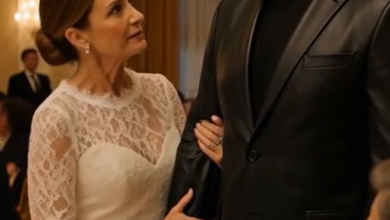
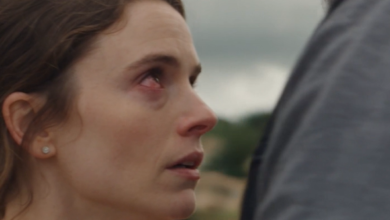
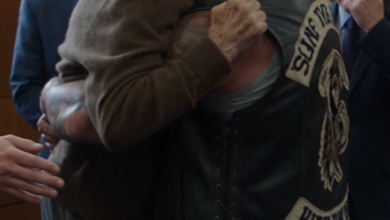
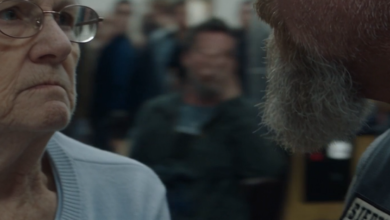
Part 2: The Toughest Biker in the Club Was Found Crying Outside His Daughter’s School — Because He Wasn’t “Appropriate” for Parent Day
Part 2
My name is Rachel Walker, and I was the woman who handed him the keys.
For years, people thought I must have left Mason because he was dangerous, but that was never the real story. We separated because grief, work, money, pride, and bad communication can make two decent people hurt each other without anyone becoming the villain.
Mason was not easy to live with.
He kept too much inside. He answered pain with silence. He disappeared into long rides when conversations became too close to old wounds. After his younger brother died in a highway accident, something in him went quiet and stayed that way for years.
But he loved Emma.
That part was never complicated.
He showed up for dentist appointments. He learned how to braid her hair from a YouTube video and practiced on strips of rope at the motorcycle shop. He changed his work schedule to pick her up every other Wednesday. He built her a bookshelf shaped like a castle because she liked stories about girls who rescued themselves.
Still, the world saw the vest first.
It always did.
Brookside Elementary had sent home the Parent Day invitation three weeks earlier. Emma came into my kitchen waving the paper like a winning lottery ticket, her brown curls bouncing, her cheeks flushed with hope.
“Mom, Dad can come, right?”
I looked at the form.
Parents and guardians are invited to share their work, hobbies, family traditions, or special skills with students.
“Mason can come,” I said.
Emma’s whole body relaxed.
That told me how badly she wanted it.
When I called Mason, he answered on the third ring from the repair garage. I could hear an air compressor in the background and men laughing somewhere behind him.
“Parent Day?” he repeated.
“Yes.”
“For school?”
“Yes, Mason. For her class.”
There was a pause.
Then his voice changed.
“She asked for me?”
“She did.”
He went quiet so long I thought the call had dropped.
Finally, he said, “What do I wear?”
That question broke my heart more than it should have.
Because the hardest-looking man I knew was not afraid of engines, fights, storms, or being judged by strangers at a red light.
He was afraid of embarrassing his daughter.
Part 3
The week before Parent Day, Mason became a man preparing for trial.
He bought a new white button-down shirt from a department store and called me from the dressing room to ask if it looked “too funeral.” He cleaned his boots until the leather shone. He trimmed his beard shorter than usual, then worried Emma would think he looked strange. He asked if he should cover his tattoos, remove his rings, or leave the club vest at home.
I told him to wear what made him feel like her father.
That was my mistake, maybe.
Or maybe it was the school’s.
Mason chose the vest.
Not because he wanted to intimidate anyone, but because Emma had drawn it on every picture of him since kindergarten. To her, that vest did not mean danger. It meant the smell of engine oil, the sound of him pulling into the driveway, and the big safe shadow that appeared whenever she needed help opening a stuck jar, fixing a bike chain, or facing a thunderstorm.
The morning of Parent Day, he arrived early.
I saw him in the parking lot before Emma did. He stood beside his motorcycle holding a small cardboard box filled with safe things he wanted to show her class: a spark plug, a tiny wrench set, a clean motorcycle glove, a laminated photo of a charity toy ride, and one pink helmet covered in butterfly stickers that belonged to Emma.
He looked ridiculous and tender.
A huge biker holding a child’s helmet like it was made of glass.
Emma ran to him from my car.
“Dad!”
He crouched to hug her.
For one second, the whole morning was perfect.
Then Mrs. Calder stepped between Mason and the front doors.
She was not the principal. That matters. She was the parent committee chair, a polished white American woman in her early forties with pearl earrings, bright lipstick, and the kind of confidence some people mistake for authority.
Her eyes moved over Mason’s shaved head, beard, tattoos, boots, and vest.
Then they stopped on the skull patch.
“Good morning,” she said carefully.
Mason nodded.
“Morning, ma’am.”
Emma grabbed his hand.
“This is my dad.”
Mrs. Calder’s smile held, but her body did not move away from the entrance.
“Emma, sweetheart, why don’t you go inside with your mother for a moment?”
Emma’s fingers tightened around Mason’s.
“Why?”
Mrs. Calder looked at me.
That was when I knew.
Not because she said anything cruel yet, but because some people can reject you politely enough to make everyone else wonder if you imagined it.
Part 4
The false climax happened right there under the school banner that said All Families Welcome.
Mason did not raise his voice.
That may be the detail I want people to remember most. He did not curse, threaten, push forward, or make the scene everyone secretly expected from a man who looked like him. He simply stood there holding his daughter’s pink helmet and waited for the woman to say clearly what her face had already said.
Mrs. Calder lowered her voice.
“Mr. Walker, this is a children’s event, and we’re trying to maintain a comfortable environment.”
Mason looked at the open doors behind her.
“I’m Emma’s father.”
“Of course,” she said quickly. “No one is questioning that.”
But she was.
Not legally.
Socially.
The cruelest exclusions often hide inside words like comfortable.
Emma looked from Mrs. Calder to me, then to Mason.
“Dad is coming to my table,” she said.
Mrs. Calder glanced around, noticing other parents slowing down.
“Maybe he could join later, after the main classroom rotation.”
Mason’s jaw tightened once.
“Did Emma ask me to be here?”
I answered before Mrs. Calder could.
“Yes.”
He nodded, like that was enough.
Then he looked at Emma.
“Bug, go in with your mom for a second.”
“No.”
His face softened.
“Please.”
Emma’s eyes filled, but she let me guide her toward the hallway. I thought Mason was right behind us. Then I turned and saw him still outside, standing perfectly still while Mrs. Calder spoke with the principal’s assistant near the door.
Two minutes later, Mason walked to my car.
He did not slam the door when he got in.
He did not peel out.
He did not scare anyone.
He just sat in the passenger seat, placed Emma’s pink helmet on his lap, and folded over it like something inside him had finally gone too heavy to carry standing up.
I followed him and opened the driver’s door.
“Mason.”
He wiped his face fast.
“I’m good.”
“You’re not.”
He looked toward the school entrance.
“She made a poster about me.”
“I know.”
“She spelled motorcycles wrong,” he said, trying to smile.
Then his face broke again.
“I practiced, Rach.”
That was when I handed him the keys, even though he was already in the car.
“Take a minute.”
Inside the school, Emma stood beside her poster, waiting for the father everyone had decided looked wrong.
Part 5
Mrs. Alvarez found him first.
She was Emma’s teacher, a thirty-eight-year-old Latina American woman with kind eyes, dark hair in a low bun, and a classroom voice that could calm twenty children without raising itself. She had stepped outside to ask why Emma kept staring at the door instead of presenting her poster.
What she found was Mason Walker in my passenger seat, crying silently with both hands over his face.
The sight stopped her in the parking lot.
Not because men should not cry.
Because some men are only allowed to be frightening until they become human, and once they become human, everyone has to reconsider what they were comfortable believing.
She tapped gently on the window.
Mason sat up immediately, embarrassed, wiping his cheeks with the heel of his hand.
“Sorry,” he said through the glass.
Mrs. Alvarez opened the door a little.
“You don’t have to apologize.”
“I’m not trying to cause trouble.”
“I know.”
That answer surprised him.
She pointed toward the school.
“Emma has been waiting by her poster for twenty minutes.”
His eyes closed.
“I know.”
“Then why are you out here?”
He looked at the pink helmet in his lap, then at the cardboard box on the floor.
“Because I was told I don’t fit the room.”
Mrs. Alvarez’s face changed.
She did not ask who said it. That was teacher intelligence. She already knew enough.
“What were you going to show the class?” she asked.
Mason hesitated, then lifted the spark plug.
“How engines need the right spark. How you fix little things before they become big things. How you wear helmets because being tough doesn’t make you unbreakable.”
Mrs. Alvarez stared at him.
Then she looked toward the school doors where Mrs. Calder stood with folded arms.
“Mr. Walker,” she said, “that sounds exactly like something children should hear.”
Mason shook his head.
“I don’t want Emma paying for my face.”
“She already is.”
That sentence landed hard.
He looked up.
Mrs. Alvarez continued more gently.
“Not because of you. Because adults are teaching her that love has to look acceptable before it gets invited inside.”
Mason did not answer.
Across the parking lot, Emma appeared behind the glass doors, holding her poster with both hands. On it was a crayon drawing of Mason in his vest beside a tiny girl on a purple bicycle. Above them, in uneven letters, she had written:
My dad fixes broken things, even me when I feel sad.
Mason saw it.
His hand went to his mouth.
And Mrs. Alvarez walked back inside with the kind of calm that usually means trouble is about to meet someone prepared.
Part 6
The principal, Dr. Elaine Brooks, arrived three minutes later.
She was a Black American woman in her fifties, small, composed, and impossible to ignore. She listened to Mrs. Alvarez. Then she listened to Mrs. Calder. Then she looked through the glass at Mason sitting in the car with his daughter’s helmet in his lap.
Her face did not reveal much.
That made Mrs. Calder confident.
“We just want to avoid making families uncomfortable,” Mrs. Calder said.
Dr. Brooks turned to her.
“Which families?”
Mrs. Calder blinked.
“I mean, some parents may have concerns about the appearance of—”
“Emma’s father?”
“Well, the vest, the patches, the overall image.”
Dr. Brooks looked down at the Parent Day invitation in her hand.
“Did we specify a dress code?”
“No, but—”
“Did he threaten anyone?”
“No.”
“Did he bring anything unsafe?”
“I don’t know.”
“I do,” Mrs. Alvarez said. “A spark plug, tools, a helmet, and a lesson plan about safety.”
Dr. Brooks’s expression sharpened.
Then she did something that shifted the entire morning. She walked outside herself.
Mason stepped out of the car when he saw her coming.
Old habits.
Respectful habits.
“Ma’am, I can go,” he said immediately.
Dr. Brooks held up one hand.
“Mr. Walker, your daughter invited you here.”
“Yes, ma’am.”
“Do you want to be here?”
His throat moved.
“Yes, ma’am.”
“Then come inside.”
Mason looked past her at the parents in the doorway.
“I don’t want to make problems for Emma.”
Dr. Brooks’s voice softened.
“Mr. Walker, the problem is not a father showing up for his child. The problem is adults deciding a child should be ashamed of the father who showed up.”
That sentence traveled through the doorway.
Even Mrs. Calder heard it.
Mason stood there for a second, as if permission was harder to accept than rejection. Then he picked up the box, tucked Emma’s pink helmet under one arm, and followed Dr. Brooks toward the school.
The hallway went quiet when he entered.
Parents stared.
Children stared too, but children stare differently. They were not afraid of the vest. They were interested in the helmet.
Emma saw him first.
“Dad!”
She ran across the classroom so fast her poster bent in half.
Mason knelt before she reached him, and she crashed into his chest with both arms around his neck.
“I thought you left,” she whispered.
He closed his eyes.
“Never on purpose, Bug.”
That was when the room understood the whole shape of what almost happened.
Part 7
Mason’s presentation lasted twelve minutes.
It should have lasted five, but children ask honest questions and adults often need to hear the answers.
He showed them the spark plug first.
“This little thing makes the engine start,” he said, holding it between two tattooed fingers. “Small parts matter. People too.”
A boy raised his hand and asked if motorcycles were dangerous.
Mason nodded.
“They can be. That’s why you respect them, wear safety gear, and never pretend being brave means being careless.”
A girl asked if his tattoos hurt.
He smiled.
“Some did.”
Another child asked why his vest had patches.
Emma answered before he could.
“Because those are his friends.”
Mason looked at her with the softest expression I had ever seen on his face.
“Yeah,” he said. “Some of them are.”
Then he showed them the pink helmet.
“This belongs to Emma,” he said. “It’s the most important thing I brought.”
Emma stood beside him, glowing.
Not because her father was perfect.
Because he was present.
That is what children remember.
At the end, Mrs. Alvarez asked if anyone had learned something new. One little boy raised his hand and said, “Bikers can be dads.” Another said, “You shouldn’t judge people’s clothes.” Dr. Brooks did not turn that into a moral lesson. She simply let the children say what the adults had needed to learn.
Mrs. Calder avoided me afterward.
Later, she sent an apology through email, the kind that uses many careful words and still cannot undo the first one. Mason read it once and shrugged.
“I didn’t need her to like me,” he said. “I needed Emma not to think I left.”
That was enough for him.
But it was not the end.
The following spring, Brookside Elementary held Career and Family Day again. This time, the invitation included a line that said: All parents and guardians are welcome as themselves.
Mason came back.
So did twelve members of his club, not roaring in or making a scene, but parking quietly at the far edge of the lot with boxes of donated bike helmets for children who needed them.
Mrs. Calder was there too.
She handed out name tags.
When Mason reached the table, she paused, looked at his vest, then at his daughter holding his hand.
“Good morning, Mr. Walker,” she said.
Mason nodded.
“Morning, ma’am.”
Emma squeezed his fingers and pulled him toward the classroom.
On her new poster, she had drawn him again, only this time she spelled motorcycles correctly.
Under the picture, she wrote one sentence in purple marker:
My dad looks scary to some people, but he always comes when I need him.
And that was the truth no committee could improve.
Follow the page for more stories about the people we almost judged before we finally saw them.