Part 2: A 55-Year-Old Biker Let His Daughter Paint Every Fingernail a Different Color—Then One Sentence Silenced His Entire Motorcycle Club
The men in my motorcycle club laughed when I placed ten rainbow-painted fingernails on the meeting table, but my eight-year-old daughter had spent twenty-three minutes coloring them—and I was finished apologizing for arriving as her father.
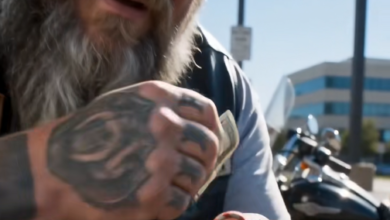
My name is Ray Dawson, though nearly everyone who has ridden beside me calls me Hammer. At fifty-five, I stood six feet four, weighed close to two hundred eighty pounds, wore a beard the color of dirty snow, and had enough black ink running down my arms to make strangers pull their children closer in grocery-store aisles. My knuckles were scarred from thirty years of repairing engines, my hearing was damaged from unmuffled pipes, and my leather vest smelled permanently of gasoline, rain, and old road dust. Nobody looking at me would have guessed that underneath my fingerless gloves, every one of my nails was painted a different color: fire-engine red, bubble-gum pink, sunflower yellow, glittering purple, sky blue, and five other shades my daughter Ruby insisted had important names I kept forgetting.
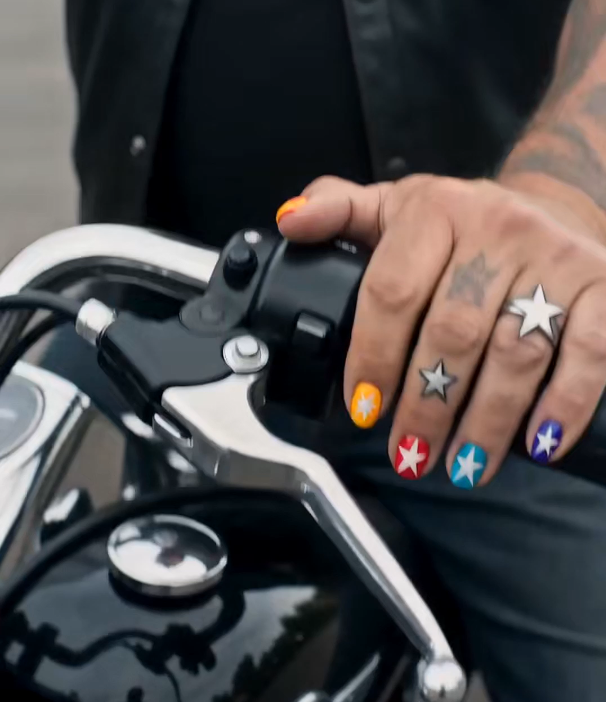
That Thursday evening, I rode my black Harley toward the Iron Lanterns clubhouse with those colors flashing against the handlebars. The polish was uneven. Some had bled into the cuticles. My left thumbnail had a lopsided silver star because Ruby’s hand slipped when I sneezed. She had gasped as if she had scratched the paint on a new Cadillac, but I told her the star made the whole thing look faster. That earned me the small, careful smile she had been rationing around me for months.
I could have removed the polish at any gas station before reaching the clubhouse. Ruby had left the bottle of remover beside the kitchen sink, and the thought crossed my mind twice while I waited at a red light. Inside that clubhouse were men who had watched me stitch my own arm after a wreck, ride four hundred miles with a cracked rib, and stand between frightened families and trouble without asking how many people stood on the other side. Men like that could turn ten colored fingernails into a nickname that followed you for twenty years. But before I left home, Ruby had wrapped both hands around my wrist and asked, “You’re not going to wipe them off, are you?”
There had been more fear than playfulness in her voice.
“No,” I had promised. “Not until they come off by themselves.”
She studied my face because children who have been disappointed learn to inspect promises before trusting them. Then she nodded and whispered, “Okay. Because it took a long time.”
That was why the polish remained when I pushed open the clubhouse door at 7:06 p.m., six minutes late for our monthly officers’ meeting. A dozen heads turned toward me. Pool balls clicked near the back wall. A ceiling fan pushed cigarette smoke left and right without clearing any of it. Clay Mercer, our sergeant-at-arms, looked down at my hands and froze with a beer halfway to his mouth.
“Well, hell,” he said. “Hammer finally lost a fight.”
Laughter rolled across the room. Deacon slapped the table. Moose asked whether I had joined a beauty club. Somebody near the jukebox called me Princess, and another man wanted to know if the Harley came with a matching purse. None of it was cruel at first. That kind of ridicule was how we greeted new haircuts, clean boots, and any evidence that one of us possessed a life outside engines. Normally, I would have fired back twice as hard. Instead, I removed my gloves slowly and rested both hands on the scarred oak table.
The colors looked almost electric beneath the hanging lamp.
Clay whistled. “Seriously, brother. What happened to you?”
I looked around at men I had known through divorces, funerals, layoffs, heart attacks, and roads that seemed determined to kill us. Then I raised my hands high enough for every color to show.
“This isn’t nail polish,” I said. “This is a family appointment.”
The room changed.
Not dramatically. Nobody dropped a glass. Nobody started applauding. Real silence does not announce itself; it simply arrives when laughter discovers it has stepped somewhere sacred. Clay lowered his beer. Deacon stopped smiling. Even the pool game behind me went still.
I told them Ruby had painted my nails because Thursday afternoon belonged to her. I said she had put the date on a paper calendar in her bedroom, drawn a red circle around it, and written “DAD AND ME” in letters large enough to read from the hallway. I explained that I had nearly missed it because Clay had called about a supplier dispute at the garage and Deacon wanted me early at the clubhouse to discuss Saturday’s charity ride.
“What kind of appointment?” Moose asked, quieter now.
“Tea, cookies, and these.” I wiggled my fingers. “Twenty-three minutes. Ten colors. No emergency room, no lawyers, no engine on fire. So I stayed.”
A few men smiled, but nobody laughed.
What I did not tell them was that Ruby had not invented our appointment for fun. She had created it because, six days earlier, I had forgotten to attend her school’s Family Reading Night. She had sat on a beanbag with an empty chair beside her while other children listened to their parents read. Her mother, Jenna, was working an overnight nursing shift and had trusted me to be there. I had intended to go. I had even placed Ruby’s favorite book in the saddlebag of my motorcycle. Then a club member’s transmission failed outside town, the repair took three hours, and by the time I remembered the school, the parking lot was empty.
When I reached Jenna’s apartment, Ruby was already asleep.
The book was still in my saddlebag.
The next morning she did not cry or accuse me. She simply asked whether club business was always more important than kid business. I had answered too quickly. I told her the stranded bike was a responsibility, that people depended on me, and that adults sometimes had to make difficult choices. She listened with her eyes fixed on her cereal until I heard how much I sounded like my own father, a man who had missed every birthday I could remember and called his absence “providing.”
Ruby finished breakfast, carried her bowl to the sink, and said, “Then I need an appointment, so I can depend on you too.”
Those words struck harder than any fist ever had.
So we chose Thursday at four. She made a card with crayons, wrote our names on it, and placed it beside the garage calendar where I kept deadlines for customers. When Thursday came, I almost broke the promise within the first week. That was the truth behind my ridiculous hands. The polish was not decoration. It was evidence that I had finally stayed.
I told the club only part of that story. Perhaps I was not yet brave enough for the rest. But I noticed something while the men looked at my hands: several of them were no longer looking amused. They were looking guilty.
Clay stared at the floor.
Deacon rubbed the pale strip where his wedding ring had once been.
Moose quietly turned his phone face down, though it had buzzed three times since I entered.
I opened the meeting ledger and began discussing road permits, fuel stops, and volunteer assignments. Yet something had shifted beneath every ordinary word. Ten chipped colors sat on the table between us like questions no man wanted to answer.
Twenty minutes later, Clay’s phone lit up again. He glanced at the screen, silenced it, and tried to slide it into his pocket before I could see the caller’s name.
I saw it anyway.
MIA — SCHOOL CONCERT.
I closed the ledger.
“Meeting’s over for you,” I said.
Clay looked up sharply. “What?”
“Go.”
“We haven’t covered security for Saturday.”
“We’ll cover it.”
His jaw tightened. “Hammer, I’m sergeant-at-arms.”
“And tonight you’re a father with somewhere else to be.”
No one moved. Clay’s face reddened, whether from embarrassment or anger I could not tell. Then his eyes dropped once more to my painted hands.
The phone began vibrating again.
This time, he answered.
And before that night ended, one of the hardest men I knew would confess why he had been avoiding his twelve-year-old daughter’s calls—and why a crooked silver star on my thumbnail had frightened him more than any threat on the road.
Part 2 — The Chair Beside My Daughter
Clay did not leave immediately. He stood beside the table with his phone pressed to his ear, saying nothing while the faint sound of children singing leaked through the speaker. His daughter’s concert had already started. I could see the calculation in his eyes: twenty minutes to the middle school if traffic was light, perhaps fifteen if he ignored every speed limit, and a lifetime of reasons to convince himself it was already too late.
“Dad?” a girl’s voice asked through the phone.
Clay swallowed. “I’m here, Mia.”
There was a pause. “Are you coming?”
Every man in the room suddenly found something else to study. Boots. Bottles. The grain of the table. We had stood together in hospital waiting rooms and at gravesides, but we had never learned where to look when another man’s child asked whether she mattered.
Clay glanced at me. I tapped the face of my watch.
“I’m on my way,” he said.
He grabbed his jacket and left so fast the clubhouse door slammed into the wall. Through the windows, we watched his taillight disappear down the street. Nobody joked about him abandoning his post. Nobody suggested the concert was less important than our meeting. The silence that followed was no longer aimed at my nails. It belonged to all the empty chairs we had created while telling ourselves that responsibility was the same thing as love.
I had created too many.
Ruby was born when I was forty-seven, old enough to believe experience would make fatherhood easy. I knew how to rebuild a carburetor blindfolded, how to read weather in the movement of clouds, and how to keep twenty motorcycles together through mountain fog. I assumed raising a daughter would be another system I could learn through patience and good tools. Feed her. Protect her. Pay bills. Check locks. Fix what broke.
But children are not engines. They do not always make noise when something is failing.
For Ruby’s first few years, I was physically present and emotionally somewhere else. I changed diapers with one hand while answering garage calls with the other. I built her a bed shaped like a castle but missed the first night she slept in it because a club member needed help two counties away. I bought expensive birthday gifts, then arrived late enough to watch other people help her open them. Each time, I carried in something shiny and expected it to fill the shape of my absence.
Jenna saw the pattern long before I did. Our marriage did not end because of one betrayal or one dramatic argument. It ended through a thousand small departures. My boots by the door. My helmet already in my hand. My eyes shifting toward the phone while she tried to speak. She once told me she felt like a roadside stop between rides. I accused her of not understanding brotherhood. She answered that brotherhood had never once been asked to wait for me.
When Ruby was six, Jenna moved into an apartment across town. We split custody without turning the courtroom into a battlefield, mostly because we both loved our daughter more than we disliked each other. Ruby stayed with me three nights a week and every other weekend. I converted the spare room into a bright bedroom, painted the walls pale yellow, and filled the shelves with books and stuffed animals. I thought that proved she had a place in my home.
But a room can say you belong here, while a father’s calendar says only when nothing else happens.
Family Reading Night had exposed that truth. When Ruby asked for an appointment, she was not being cute. She was negotiating for a protected place in my life.
The first Thursday, she arrived carrying a pink plastic case filled with nail polish bottles Jenna had bought at a discount store. I had expected a board game or a movie. Ruby climbed onto a kitchen chair, opened the case with ceremonial seriousness, and told me to place both hands on an old towel.
“You might want newspaper too,” I said.
“I know what I’m doing.”
She did not.
She flooded my right thumbnail with green polish, wiped it with a tissue, smeared green across two fingers, and then blamed my hands for being too large. I sat still while she concentrated, her tongue pressed against one corner of her mouth. Every few minutes she asked whether the polish stung my scars. I told her my hands had survived worse.
“How much worse?”
“Your mother once made me help assemble a dresser with instructions in Swedish.”
Ruby laughed so suddenly that she painted a purple line across my knuckle. The sound filled the kitchen in a way the television never could. I realized I had heard her laugh hundreds of times without remembering the last occasion when I had caused it simply by being there.
She assigned meaning to each color. Red was for the motorcycle she wanted to own when she grew up. Blue was for the lake where I had taught her to skip stones. Yellow was for pancakes because mine came out the same color, though that was apparently not a compliment. Pink was her favorite that week. Green represented the dinosaur she had played in a school performance, another event I had missed. She mentioned that detail casually, but my chest tightened.
The silver star was supposed to sit on top of the blue thumbnail. When I sneezed, her brush jumped, leaving one bent point and a streak toward the cuticle.
“It’s ruined,” she whispered.
“Looks like it’s moving.”
“It looks crooked.”
“Everything worth following takes a crooked road.”
She examined me suspiciously, uncertain whether I was making fun of her. Then she added a second streak deliberately. “Now it’s faster.”
By the time she finished, twenty-three minutes had passed. Then came ten more minutes of sitting with our hands under a desk fan because she refused to let me touch anything. We ate cookies without using our fingers, bending over the plate like animals, and laughed until crumbs covered the table.
That was our first real appointment.
At the clubhouse, after Clay left, we continued the meeting with less noise than usual. When my phone buzzed, every man looked at it. The message was from Ruby.
DID THEY LIKE THE COLORS?
I typed slowly with both thumbs.
THEY COULDN’T STOP LOOKING.
She replied with six laughing faces and a heart.
An hour later, Clay returned. His eyes were red from the cold, he claimed, though the night was warm. He placed a folded concert program on the table and sat down without removing his jacket.
“I made the last two songs,” he said.
Nobody asked whether Mia had noticed him enter.
Clay answered anyway. “She saw me.”
His voice broke on the final word.
He told us that he and Mia’s mother had separated the previous year. He believed his daughter blamed him, so he avoided school events where he might meet his former wife. Each missed call made the next call harder to answer. Eventually, shame became easier to protect than the relationship. Tonight, Mia had kept looking at the auditorium doors between songs. When Clay stepped inside, she lost her place in the music and smiled anyway.
“She saved me a seat afterward,” he said. “Had my name written on it.”
No one teased him for crying. Deacon pushed a clean bandanna across the table without speaking.
Clay looked at my nails again. “Your kid do those?”
“Every one.”
He reached across the table, pointed to the crooked silver star, and asked, “Think she takes appointments?”
I laughed. “She charges cookies.”
“I can afford cookies.”
The following Thursday, Clay arrived at my house carrying two packages from a bakery and apologizing to Ruby as if he had requested an audience with royalty. Ruby painted one of his thumbnails bright orange. He refused the other nine because, according to him, a man had to retain some mystery. She added black dots and turned the thumbnail into a tiny ladybug.
At our next meeting, Clay entered the clubhouse with that orange ladybug exposed.
Nobody laughed.
That was the first sign that the colors were becoming more than a story about me. The second came when Deacon placed a handwritten proposal before the club: routine meetings, rides, and garage work would never again override a promised family event. Only a true emergency could do that, and an emergency had to involve blood, fire, or someone stranded in actual danger—not a shipment, a late customer, or an argument that could wait.
We called it the Hard Stop Rule.
We pretended it was simply club policy.
But every man in that room knew it had been written by an eight-year-old girl who had once sat beside an empty chair.
Part 3 — What Men Call Strength
The Hard Stop Rule sounded simple until we tried to live by it. Men are remarkably skilled at promising to change while continuing to organize their lives around the same old excuses. For the first month, members left meetings to attend birthdays, school plays, and medical appointments. By the second month, old habits began creeping back through the clubhouse door wearing practical names: deadlines, loyalty, duty, and just this once.
I understood because I nearly failed first.
Ruby’s second appointment was supposed to be a backyard picnic. She had drawn a menu consisting of cheese crackers, apple slices, and chocolate milk. At three forty-five, fifteen minutes before she arrived, my phone rang. One of our newer riders, Luis, had broken down on the interstate. He was safe, his motorcycle was well off the road, and a towing service could reach him within an hour. But I was road captain. My instincts told me to grab my tools.
I had one boot on when I saw the nail polish case waiting on the kitchen table.
A week earlier I would have left without recognizing that I was making a choice. That afternoon, I took off the boot, called Luis, arranged the tow, and sent Deacon to make sure he got home safely. Then I placed a blanket in the backyard.
When Ruby arrived, she noticed the tool bag by the door.
“Did somebody need you?” she asked.
“Yes.”
Her smile faded. “Are you going?”
“No.”
“Why?”
“Because he is safe, someone else can help him, and I already have somewhere to be.”
Ruby stared at me for several seconds. Children hear promises, but they trust patterns. One kept appointment could be luck. Two might be a beginning.
She set down her backpack and asked, “Can we eat outside even if there are ants?”
“We can invite the ants.”
That day she painted only my little fingernails, both blue, because she wanted the rest of the original colors to last. The polish had already chipped around the edges from garage work. I had begun wearing gloves more carefully, not to conceal it but to preserve it.
At the shop, customers reacted in predictable ways. Some smiled. Some stared. One older man asked if I had lost a bet. I told him I had won an afternoon with my daughter. A young mechanic named Noah heard me and later asked if it was difficult being laughed at.
“Not especially,” I said. “What’s difficult is realizing your kid stopped expecting you to show up.”
He did not understand then. He was twenty-three and believed time arrived in unlimited quantities.
Our club had been built around a particular kind of masculinity: keep your word, protect the vulnerable, carry your own weight, and never expose pain unless it had already turned into a scar. Those principles were not entirely bad. They had kept some of us alive. But we often confused silence with control and distance with strength. We could pull a motorcycle from a ditch at midnight, yet many of us could not sit through a daughter’s dance recital without checking our phones.
Ruby’s colors became an uncomfortable mirror.
At first, the men asked about them only as a joke. Then questions began arriving privately. Moose wanted to know how to speak with his adult son after two years of silence. Deacon asked whether apologizing after ten years would sound selfish. A probationary member named Evan admitted he had missed his boy’s baseball games because he hated sitting near his ex-wife’s new husband.
I was not qualified to answer any of them. My own record contained more empty chairs than theirs. So I told the truth.
“Show up before you feel ready. Apologize without explaining why you deserve forgiveness. Then show up again.”
The club gradually filled with unexpected evidence of men trying. Clay displayed Mia’s latest report card beside our route maps. Deacon began leaving early on Wednesdays to have dinner with his mother. Moose traveled five hours to attend his grandson’s kindergarten graduation, though the entire ceremony lasted nineteen minutes. He returned with a photograph of himself sitting in a folding chair designed for someone half his size, tears running into his mustache.
Ruby heard about these changes because the men began visiting during our Thursday appointments. They never came empty-handed. Cookies were the official fee, but some brought stickers, colored polish, glitter pens, or plastic gems. My kitchen table, once buried beneath carburetor catalogs, became a strange little salon for men who still smelled like gasoline.
Ruby enforced strict rules. Nobody could swear. Nobody could complain about a color after choosing “surprise me.” Hands had to remain still. If a biker damaged wet polish by answering his phone, he went to the end of the line.
There was something almost holy about watching men accustomed to commanding rooms sit quietly while an eight-year-old girl held their fingers. Their scars remained visible. So did the grime beneath nails that no brush could fully clean. She did not ask where the scars came from. She simply painted around them.
One Thursday, Moose requested black polish because he considered it dignified. Ruby painted nine nails black and the final one bright pink.
“That’s a mistake,” he said.
“No, that’s balance.”
He wore the pink nail for three weeks.
The ritual might have remained a private joke if not for a charity event at Ruby’s school. The PTA organized a fundraising fair to replace damaged playground equipment. Jenna volunteered me and several club members to assemble booths, move tables, and supervise parking. By then, the sight of bikers around the school no longer alarmed the staff, though parents who did not know us still watched carefully.
Ruby operated a nail-painting booth with two classmates. A handmade sign offered one painted nail for one dollar. The children earned twelve dollars in the first hour. Then Clay sat down in front of the booth, laid a twenty-dollar bill on the table, and requested orange.
The other bikers formed a line behind him.
Within minutes, half the schoolyard was watching. Large men in leather vests waited patiently while children selected colors. Fathers joined them. Then teachers. A police officer assigned to traffic control chose blue. The principal chose gold. Someone took a photograph of twelve tattooed hands drying in the sun.
The booth raised more money than any other attraction.
A local social-media page posted the photograph that evening. Most comments were kind, but some strangers wrote what strangers often write when they can judge lives without entering them. They mocked the men. They questioned whether bikers belonged at an elementary school. One comment claimed “real men” would never allow children to make them look foolish.
Ruby saw it on Jenna’s phone.
The next Thursday, she did not bring the polish case.
I found her sitting at the kitchen table with both hands in her lap.
“Where are the colors?” I asked.
She shrugged. “We don’t have to do that anymore.”
“Why not?”
“People are laughing at you.”
“People have laughed at me before.”
“But it’s because of me.”
There it was—the danger I had not considered. What began as proof that I would carry her love proudly had made her believe she had placed a target on my back. I pulled out a chair, but she would not look at me.
“Ruby,” I said, “do you know what scares me?”
She shook her head.
“Not colored nails. Not strangers. What scares me is you learning to make yourself smaller because someone else might laugh.”
She finally raised her eyes.
I placed both hands on the table. Only traces of polish remained, little islands of color inside the cracks of my nails.
“You didn’t embarrass me,” I said. “You reminded me who I am when nobody is watching.”
She opened the pink case slowly.
That afternoon, she painted every nail again. This time she chose the colors without explaining them. On my right thumbnail, she drew another silver star—straighter than the first but, in my opinion, not nearly as fast.
The following morning, a package arrived at the garage. Inside were thirty small bottles of nail polish and a handwritten note from an elderly woman whose husband had belonged to our club before his death.
The note said her husband had been a wonderful rider and a terrible father until it was almost too late. She had seen the school photograph online.
“Keep letting that little girl mark the appointments you cannot afford to miss,” she wrote. “Some stains should never be washed off.”
I carried the note to the clubhouse that night.
For the first time, the Iron Lanterns did not begin a meeting with the pledge, the ride calendar, or the treasurer’s report.
We began by putting thirty bottles of color on the table.
Part 4 — The Appointment We Almost Lost
By Ruby’s ninth birthday, Thursday appointments had become the strongest point in my week. That did not mean every one was magical. Some afternoons she was tired, impatient, or more interested in a tablet than in me. Sometimes she painted two nails, ate half a cookie, and asked to go home early. I learned that presence did not guarantee a perfect memory. Presence merely created the chance for one.
That distinction mattered because I had spent most of my life treating special occasions like transactions. I believed that if I showed up once with a sufficiently impressive gift, I could compensate for ten ordinary absences. Ruby taught me that children build trust differently. They stack small moments: a packed lunch, an answered question, a chair occupied when the lights dim, a father who arrives when he said he would.
The biggest test came during the autumn charity ride.
Each year, the Iron Lanterns raised money for families of injured workers. Hundreds of riders gathered at our garage, followed a route through three counties, and ended at the fairgrounds. I had organized the event for eleven years. Everything carried my fingerprints—permits, fuel stops, volunteer teams, emergency plans, and the timing required to move that many motorcycles without creating chaos.
The ride was scheduled for Saturday. Ruby’s school talent show was Friday night. There should have been no conflict.
Then heavy storms forced the school to postpone the performance until Saturday afternoon, exactly when I was supposed to lead the final segment of the ride. Ruby had rehearsed a short piano piece for two months. She claimed she did not care whether I attended, but I recognized the false casualness. It sounded like the morning after Family Reading Night.
I considered every possible compromise. I could attend the beginning of the ride, leave before the final segment, race across town, and perhaps arrive before Ruby’s turn. I could ask the school to move her later in the program. I could record a message for her. Every solution preserved my appearance of trying while placing the risk of disappointment on an eight-year-old child.
At the clubhouse planning meeting, I announced that Clay would lead the final segment.
A few newer members objected. The event was my responsibility. Sponsors expected me. Local reporters knew my name. One man said changing road captains days before the ride made the club look unreliable.
He was right about the inconvenience.
He was wrong about unreliability.
“I gave my daughter my word,” I said.
The member glanced at my nails, which were painted dark blue with tiny white dots. “This is bigger than a manicure, Hammer.”
“Exactly.”
The room went quiet.
I explained the talent show. Before I could finish, Clay stood and accepted the route assignment. Deacon took over sponsor interviews. Moose volunteered to coordinate the final checkpoint. Within ten minutes, every responsibility had another name beside it.
That was when I understood the Hard Stop Rule was no longer symbolic. Brotherhood was not demanding that a man sacrifice his family to prove loyalty. Brotherhood was carrying his load long enough for him to keep a promise at home.
Saturday arrived beneath a washed-clean sky. I rode the first half of the charity route, handed leadership to Clay at the north checkpoint, and reached the school auditorium twenty minutes early. I still wore my vest, boots, and road clothes. My beard was wind-tangled, and the smell of exhaust followed me down the aisle.
Ruby stood behind the curtain when I arrived. Jenna spotted me first. She had saved a seat but admitted she was not certain I would use it.
“That makes two of us,” I said.
She looked at my hands. Ruby had painted one nail like a piano keyboard, with tiny uneven black and white lines.
“You let her do that before the ride?”
“I requested it.”
Jenna smiled, but sadness touched her face. “I wish you’d figured this out sooner.”
“So do I.”
That was all. No dramatic reconciliation, no convenient erasure of what I had broken. Some consequences remain even after a man changes. Jenna and I had become better parents than spouses, and learning to accept that was part of growing honest.
When Ruby walked onto the stage, she looked small beneath the lights. Her shoes barely reached the pedals. She placed her hands on the keys, then searched the audience.
The old version of me might have believed she was checking whether I approved.
I knew better.
She was checking whether the chair was occupied.
Our eyes met. I raised the hand with the piano-key nail.
Ruby smiled.
She began beautifully, stumbled in the middle, stopped, and looked close to tears. The auditorium tightened around her silence. I wanted to stand, but Jenna touched my arm.
“Let her find it,” she whispered.
Ruby placed her hands back on the keyboard and started from the measure before the mistake. The second attempt was slower but steady. When she finished, I applauded so loudly several parents turned around. I did not care.
Afterward, Ruby ran into my arms in the hallway.
“You came.”
“I said I would.”
“You had the big ride.”
“And I had your song.”
She pulled back and inspected my face. “Did the bikers get lost without you?”
“Probably. Clay has no sense of direction.”
Clay would later claim that insult was slander. In truth, the ride finished without trouble and raised more money than the previous year. My absence from the final segment harmed nothing except the belief that I had to control everything.
That evening, the club gathered at the fairgrounds. Ruby and Jenna joined us. Several riders still had polish from the school fundraiser. Others had asked their children or grandchildren to paint one nail before the ride. The colors flashed as men passed plates, counted donations, and packed equipment.
A reporter asked Clay whether the painted nails represented a charity campaign.
Clay looked toward me. I shook my head, letting him answer.
“They represent appointments,” he said.
“What kind?”
“The ones men used to think made them less important.”
The reporter appeared confused, which pleased Clay.
Later, Ruby sat on the edge of the outdoor stage while I packed cables. She asked why adults laughed at things they did not understand.
“Sometimes laughter is how people hide discomfort,” I said.
“What are they uncomfortable about?”
“Maybe seeing a big ugly biker wearing pink.”
“You’re not ugly.”
“I appreciate your professional opinion.”
She kicked her heels against the stage. “Maybe they think fathers aren’t supposed to paint their nails.”
“Maybe.”
“But fathers are supposed to keep promises.”
“Yes.”
“So the nails tell them you’re a father.”
“They tell me.”
That answer seemed to satisfy her.
Before leaving, Ruby slipped a folded piece of paper into my vest pocket. I did not read it until I reached home. It was another appointment card, but this one was dated three months away. Her school was hosting a father-daughter dance.
At the bottom, she had written:
PLEASE WEAR THE COLORS.
I pinned the card above my garage workbench.
Then I discovered there was one promise I still had not kept—one that began decades before Ruby was born, with a boy waiting beside a window for a father who never arrived.
Part 5 — The Father I Carried With Me
My father’s name was Walter Dawson. He worked at a steel mill, drank coffee black, and considered tenderness a defect found in men who had not worked hard enough. He never struck me, which allowed him to believe he had been a good father. But absence has more than one form. A man can live in the same house, eat at the same table, and remain unreachable for an entire childhood.
Walter attended none of my school events. When I played baseball, he asked whether we won but never learned my position. When I graduated high school, he worked overtime voluntarily because ceremonies bored him. The first time I rode a motorcycle, I circled our block six times hoping he would step outside. He watched television behind closed curtains.
At eighteen, I stopped asking.
Years later, when Walter was dying, I visited him in a hospital that smelled of disinfectant and wilted flowers. We spoke about weather, machines, and the steel mill. Safe subjects. He asked about my garage and nodded when I told him business was good. Ruby had not yet been born.
Near midnight, he said, “I worked all those hours for you.”
I knew what he wanted. Forgiveness packaged as recognition.
“I know,” I said.
He died before either of us found the courage to discuss what work had cost.
For decades, I told myself I was different because I hugged Ruby, bought her toys, and said I loved her. Yet after Family Reading Night, I recognized Walter’s inheritance inside me. I had changed the language, not the pattern. He had chosen the mill. I chose the garage and the club. Both of us called it duty. Both expected our children to translate absence into love.
Ruby’s appointments became my attempt to end that inheritance.
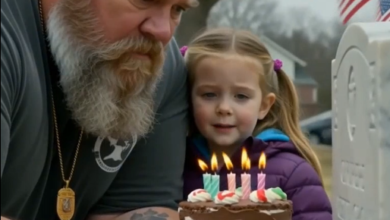
Before the father-daughter dance, I visited Walter’s grave for the first time in almost seven years. The cemetery lay beneath bare oak trees, the grass brown from winter. I parked the Harley near the gate and walked to the stone carrying the pink polish bottle Ruby had chosen for the dance.
“This is ridiculous,” I told the grave.
The wind offered no disagreement.
I sat on the cold ground and painted one thumbnail. My hand shook more than Ruby’s ever had. The polish pooled along the cuticle and ran into an old scar.
“I spent half my life proving I didn’t need what you never gave me,” I said. “Then I nearly taught my daughter not to need me.”
Those words had waited forty years to be spoken.
I did not pretend Walter could hear them or that death had transformed him into a wiser man. The visit was not for him. It was for the boy I had been and the father I still had time to become. I stayed until the polish dried.
At the dance, I wore a clean black shirt beneath my leather vest. Ruby wore a dark blue dress with silver stars. Every nail on my hands matched a color somewhere in her outfit. When we entered the school gym, paper lanterns hung from the ceiling, pop music echoed off concrete walls, and fathers stood near the refreshments pretending they were not terrified of dancing.
Ruby was delighted by my discomfort.
“You can ride a motorcycle in the rain,” she said. “But you’re scared of dancing?”
“Motorcycles do not judge rhythm.”
“I’ll teach you.”
She placed my hands where she wanted them and counted steps. I stepped on her shoe twice. She laughed, corrected me, and continued. Around us, fathers spun daughters beneath strings of cheap lights. Some were young. Some were grandfathers or uncles filling an empty place. One man wore a warehouse uniform because he had come directly from work. Another kept checking a medical pager but never left the floor.
I understood then that showing up did not require perfection. It required a decision repeated whenever another demand claimed to be more urgent.
Halfway through the dance, Ruby rested her head against my chest.
“Dad?”
“Yes?”
“Will we still have appointments when I’m old?”
“How old?”
“Like fifteen.”
I smiled above her hair. “If you want them.”
“What if I don’t want nail polish anymore?”
“We’ll find something else.”
“What if I’m busy?”
“I’ll make an appointment.”
She considered this. “What if you’re busy?”
“I’ll remember the chair.”
She did not ask which chair. She knew.
The Hard Stop Rule spread beyond our club without anyone planning it. Riders from neighboring clubs heard the story. A mechanic printed small appointment cards and left them beside the register. Parents began writing family commitments on the garage calendar alongside repair deadlines. One customer asked why “Ella—science fair” had been written in red marker across a blocked afternoon.
“Because Noah won’t be here,” I said.
“But I booked him to service my bike.”
“We’ll give you another mechanic.”
The customer complained. Years earlier, I would have pressured Noah to stay. Instead, I moved the appointment and accepted the man’s irritation.
That night, Noah sent me a photograph of his daughter beside a baking-soda volcano. Blue foam covered the table. Her smile was enormous.
Beneath the photograph, he wrote: FIRST ONE I DIDN’T MISS.
Not every story ended so neatly. Moose’s son did not answer his first six calls. Deacon’s former wife refused to let him appear suddenly in his grown daughter’s life without explanation. Clay attended Mia’s events, but rebuilding trust required more than showing up in the doorway. There were arguments, boundaries, counseling sessions, and apologies that received silence in return.
The club learned that keeping today’s promise does not erase yesterday’s absence.
It simply prevents another one.
On Ruby’s tenth birthday, she asked every attending biker to arrive with at least one painted nail. Thirty-two motorcycles rolled into the park. Thirty-two large men climbed off wearing shades of red, gold, purple, silver, green, and blue. Parents stared. Children pointed. Ruby inspected every hand as if conducting a military review.
Clay brought Mia, who had painted his nails herself. Their relationship remained complicated, but she stood beside him without looking toward the exits. Moose wore a single pink nail painted by his grandson. Deacon had black nails with one white stripe, done by the daughter who had finally agreed to meet him for coffee.
Ruby saved my hands for last.
She painted nine nails different colors. On the tenth, she used clear polish.
“Did you forget this one?” I asked.
“No. That one is for the appointment we haven’t had yet.”
I thought it was another child’s invention and kissed her forehead.
Years later, I would understand that clear nail was the most honest one she ever painted, because families are shaped not only by moments remembered but by the time still waiting to be chosen.
Part 6 — When the Colors Began to Fade
Children do not remain eight because their fathers finally learn the lesson. Ruby grew. Her interests changed, her friends became central, and our Thursday appointments evolved. At eleven, she stopped painting every nail and chose one accent color. At twelve, she preferred milkshakes at a diner. At thirteen, some appointments consisted of driving in silence while she stared through the passenger window.
I worried that silence meant I was losing her.
Jenna reminded me that growing was not leaving.
“Don’t demand that she perform closeness just because you finally learned to offer it,” she said.
That sentence hurt because it was accurate. I had begun treating appointments like proof of my improvement, and Ruby could feel the weight. Love that demands constant reassurance becomes another burden placed on the child.
So I learned to sit inside the silence.
At fourteen, Ruby told me a friend had betrayed her confidence. I listened without offering to confront anyone. At fifteen, she admitted she was embarrassed by the motorcycle’s noise outside school. I began parking half a block away. At sixteen, she asked to learn to ride. Jenna objected, and for once I did not turn disagreement into war. We agreed on a safety course, protective gear, and supervised practice in an empty parking lot.
Ruby chose a small red motorcycle.
“Red was the first color,” she reminded me.
I remembered.
Our appointments became rides along quiet roads. We used hand signals, stopped at roadside diners, and talked beside our parked motorcycles where eye contact was optional. I discovered that teenagers sometimes reveal more while staring at a horizon.
The Iron Lanterns changed too. Men aged. Knees failed. Beards whitened. New riders joined and heard the story of the Hard Stop Rule as if it had always existed. Painted nails appeared at meetings less often, but the calendar remained filled with protected family dates. Nobody scheduled votes on recital nights. Riders covered shifts for custody hearings, school pickups, and anniversaries. The policy born from Ruby’s disappointment became a culture of making room.
Clay eventually reconciled with Mia enough to help her move into college. He carried boxes up four flights of stairs and complained theatrically about the absence of an elevator. Before he left, Mia painted his thumbnail orange with black dots.
The ladybug had returned.
Deacon’s daughter invited him to her wedding but not to walk her down the aisle. He accepted both the invitation and the boundary. “Showing up means going where you’re invited,” he told me, “not demanding the place you wish you had earned.”
Moose died at sixty-eight after a sudden heart attack. At his funeral, his grandson placed a bottle of pink polish beside the urn. Half the club wore one pink nail during the memorial ride. The color flashed over throttles beneath a gray sky.
Ruby stood beside me at the cemetery.
“Did I start all this?” she asked.
“You started something.”
“I was just painting nails.”
“You were asking your father to stay.”
She slipped her hand into mine. “And you did.”
Not always, I thought. I still made mistakes. I forgot smaller commitments. I sometimes answered calls during dinner or arrived distracted. But I stopped defending those failures as inevitable. I apologized, corrected the pattern, and returned. Consistency was not never failing. It was refusing to turn failure into identity.
When Ruby graduated high school, she asked me to attend without my vest because the ceremony had strict rules about clothing with symbols. I agreed. Years before, I might have treated the request as rejection. Now I understood that a father’s love should not force his child to manage his pride.
The morning of graduation, she arrived at my house carrying the old pink nail-polish case. Its latch was cracked and several bottles inside had dried solid.
“You kept it?” I asked.
“Mom did.”
She selected a bottle of blue polish and shook it.
“This one still works.”
Ruby painted my right thumbnail at the kitchen table. Her strokes were steady now. No flooded cuticles, no accidental streaks. Then she opened a silver bottle and drew a small star.
The star came out perfectly symmetrical.
I stared at it and shook my head.
“What?” she asked.
“Too straight. Won’t go fast.”
She laughed, then dragged the brush through one point, making it crooked.
“Better?”
“Much.”
At the ceremony, I sat between Jenna and Ruby’s grandmother. When Ruby crossed the stage, she searched the crowd, just as she had during the piano performance years earlier.
I raised my blue thumbnail.
She saw the silver star and smiled.
Afterward, while families filled the football field, Ruby gave me a framed photograph. It showed my hands from that first Thursday—ten uneven colors, polish on the skin, the original crooked star. I did not remember anyone taking the picture.
“Mom took it when she picked me up,” Ruby explained. “She said it was the first time she believed you might actually change.”
The words could have wounded me. Instead, they felt like truth offered without cruelty.
On the back, Ruby had written: THE FIRST APPOINTMENT YOU KEPT.
I hung the photograph inside the clubhouse above the meeting table.
New members often asked why ten painted fingernails occupied the place normally reserved for club founders or ride photographs. Clay would point to the Hard Stop Rule framed beside it.
“That girl founded something bigger,” he would say.
Years passed. Ruby attended college two states away. Thursday afternoons no longer belonged to me automatically. Sometimes weeks passed without a call. I missed her, but I did not use my loneliness to make her feel guilty. We scheduled appointments around classes and work. Some happened by video. On one call, she painted my nail through instructions while I struggled to angle the phone correctly.
At twenty-six, Ruby called and said she was engaged.
The young man’s name was Daniel. I liked him, though I made him nervous, which I considered a healthy beginning. He had attended family dinners, helped at charity rides, and once spent three hours beside me repairing a lawn mower without pretending he knew what he was doing.
Ruby asked me to meet her at the old diner.
She arrived carrying the pink case.
“I have an appointment for you,” she said.
The wedding was six months away. She wanted me to walk her down the aisle. But before I could answer, she placed a bottle of clear polish between us—the same kind she had used on my tenth nail at her birthday years ago.
“Remember what I said?” she asked.
“The appointment we hadn’t had yet.”
She nodded. “This is it.”
That afternoon, she painted nine nails in soft colors matching her wedding flowers. The tenth remained clear.
“What’s that one for now?” I asked.
Ruby closed the bottle.
“For whatever comes after.”
Part 7 — This Was Never About Nail Polish
On Ruby’s wedding day, I stood in a small room behind the chapel wearing a black suit, polished boots, and ten painted nails. The colors were softer than those from her childhood, but the silver star on my thumbnail remained crooked by request. My leather vest hung over a chair. Pinned inside it was the original appointment card she had made at eight years old.
DAD AND ME.
The paper had faded. The promise had not.
Before the ceremony, Daniel entered carrying a small bottle of pink polish. He looked almost as frightened as he had during our first dinner.
“Ruby said I should ask you about this,” he said.
I examined the bottle. “You know how to use it?”
“No, sir.”
“Then sit down.”
I painted one of his thumbnails. The result was terrible—thick in the middle, bare near the edge, and streaked across his skin. Daniel studied it without complaint.
“What does it mean?” he asked.
“It means when she asks for your time, don’t make her prove it’s important.”
He nodded.
“And if you promise to be somewhere?”
“I go.”
“If you fail?”
“I apologize and go next time.”
I capped the bottle. “You’ll do.”
When the music began, Ruby met me outside the chapel doors. Her white dress brushed the floor, and for one breath I saw every age she had ever been: the toddler reaching for my beard, the six-year-old waiting beside birthday candles, the eight-year-old negotiating for a place on my calendar, the teenager riding a red motorcycle, and the woman standing before me now.
She looked down at my hands.
“You kept the colors.”
“I said I would.”
“For today?”
“For as long as they last.”
She linked her arm through mine. “They’re supposed to chip.”
“I know.”
The chapel doors opened.
Members of the Iron Lanterns occupied three rows near the back. Clay, Deacon, Noah, and men too young to remember when the Hard Stop Rule began sat beside wives, children, and grandchildren. As Ruby and I entered, they raised their hands quietly.
Every biker had one painted nail.
Pink. Blue. Orange. Gold. Purple. Green.
No cheering. No joke. Just a room full of appointments kept.
Halfway down the aisle, Ruby stopped. The guests looked toward us, uncertain. She turned and saw the raised hands. Her breath caught.
“You did that?” she whispered.
“No.”
That mattered. I had not ordered it, organized it, or even known. The men had chosen the colors themselves. Some nails had been painted by daughters. Some by sons, wives, nephews, foster children, and grandchildren. Clay’s orange ladybug was visible from the aisle.
Ruby began crying.
“Your makeup,” I warned gently.
She laughed through the tears. “Dad.”
We continued.
At the front, I placed Ruby’s hand into Daniel’s, but before stepping away I raised my painted fingers between them.
“This isn’t nail polish,” I said softly.
Ruby finished the words with me.
“This is a family appointment.”
After the wedding, the club gathered outside near our motorcycles. Daniel still wore the badly painted pink thumbnail. Ruby asked why nobody had warned her about the raised hands.
Clay answered, “Appointments can be surprises too.”
We took a photograph beneath the afternoon sun: Ruby in her wedding dress, Daniel beside her, and more than forty bikers extending painted hands toward the camera. I stood in the center, no longer hiding the scars, age spots, or crooked streaks.
The original polish from Ruby’s childhood had vanished years earlier. That is what polish does. It chips when hands work. It fades beneath sunlight, gasoline, soap, and time. But the appointments remained—in school auditoriums, diner booths, garage calendars, phone calls, hospital rooms, weddings, and silent drives when words were not required.
A father cannot preserve childhood by holding it too tightly. He can only be present while it passes.
Months after the wedding, I returned to the clubhouse for our officers’ meeting. A new prospect noticed the framed photograph above the table and asked why so many men had colored nails.
Before I could answer, Clay raised his orange ladybug.
“Because the toughest promise a man makes,” he said, “is sometimes the one that nobody outside his family will ever hear.”
I looked at my hands. The wedding polish was almost gone. Only a thin line of blue remained near the base of my thumbnail, and one silver point from the crooked star clung stubbornly to the edge.
My phone buzzed.
Ruby had sent a photograph of two coffee cups and a message.
THURSDAY. FOUR O’CLOCK. DINER?
I closed the meeting ledger.
“Gentlemen,” I said, reaching for my jacket, “I have an appointment.”
Nobody laughed.
Follow our page for more unforgettable biker stories about quiet promises, unlikely tenderness, and the families waiting beyond every clubhouse door.