I Shoved a Ten-Year-Old Boy to the Mall Floor, and His Parents Ran at Me—Then We Heard Glass Break Where He Had Been Standing
I shoved a ten-year-old boy onto the mall floor in front of his parents, and his father came at me before the child had even stopped sliding. I didn’t blame him; from where he stood, I looked like a grown man who had attacked his son.
The boy landed on his side, one hand under him, the other reaching for the ear defenders that had slipped off his head. His mother called his name. A woman near the bookstore screamed at me to get away from him.
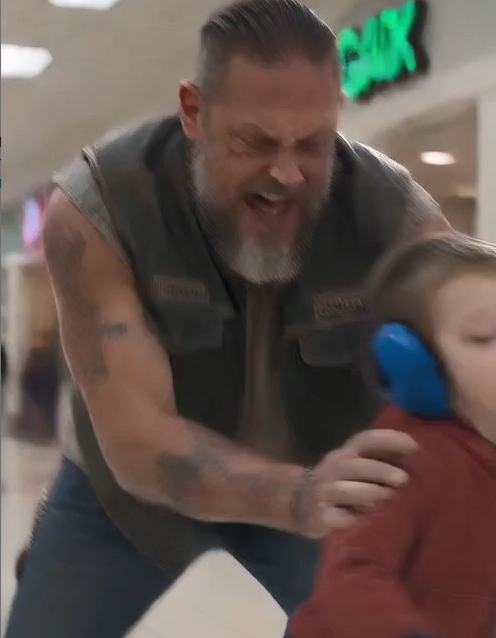
I backed up. My boots squeaked against the polished tile.
“My name’s Cal,” I told the boy’s father. “I’m not going to touch him again.”
That did not answer his question. He wanted to know why I had touched him the first time.
The mall outside Knoxville was busy that Saturday. Music played faintly from a clothing store, and a cleaning cart rattled somewhere behind us. I had come to collect a birthday gift for my niece before meeting my club for lunch. My Harley was parked three rows from the entrance. I was fifty-four, broad-shouldered, gray-bearded, and wearing a leather vest over a shirt with engine grease near one cuff. I knew what the people gathering around us saw.
They saw a biker. They saw a child on the floor. Nothing else seemed necessary.
The boy’s name was Noah. I knew it because his mother kept saying it while she knelt beside him. He did not answer at first. He looked at the missing ear defenders, then at me, then away. His father moved between us with one arm out.
“Stay back.”
“I will.”
“Why did you push him?”
I looked up. From this angle I could no longer see the part of the ceiling I had been watching. A row of decorative panels hung above the open walkway, catching the mall lights in their pale glass. A moment earlier, one of them had made a sound so slight that I first mistook it for somebody dropping a coin.
I opened my mouth, but the boy’s mother raised a hand without looking at me.
“Not now,” she said.
She was right. Noah was breathing fast. He had scraped his palm, and the ear defenders lay a few feet away where passing shoppers might step on them. His mother asked him whether he wanted her to pick them up. He nodded once.
I remained where I was.
A security guard pushed through the crowd and told us all to make space. Somebody had a phone pointed at me. I heard a man say he had seen the whole thing, though he had been facing the bookstore when I moved. I looked up again, trying to find the line of metal that had caught my eye.
The father saw me looking away from his son.
“Look at me,” he said.
I did. His hands were shaking. Mine were, too.
“I’m sorry he hit the floor,” I said. “I saw something above—”
A sound cut across my words. A sharp metal tick.
The guard turned his head. Noah’s father followed his gaze. Beyond them, shoppers still crossed the open floor, unaware of the sound. I pointed toward the ceiling and asked the guard to move people away from that section of the walkway.
He hesitated for only a second. Then he stepped back and called for everyone to clear the area.
The father took Noah’s hand. His mother gathered the ear defenders. I saw the panel shift again, a movement small enough to miss if you were watching faces instead of what hung above them.
I wanted to explain. There wasn’t time.
The first crack came from overhead, and Noah’s father pulled his son close.
Part 2
People later asked how I spotted the panel. They expected some story about special training. I had none. For twenty-eight years I had repaired motorcycles, and I’d learned that a machine often made a small wrong sound before it made a large one. That afternoon, I heard metal tick above the mall music and looked up.
My name is Cal Mercer. I own a garage on a side road outside Knoxville and ride a Harley-Davidson touring bike that needs more attention than I care to admit to Boone, my closest friend in the club. People assume I like noise because of the motorcycle. I do like its rumble. I also notice when another sound cuts through it.
I was at the mall because my niece Maya wanted a particular sketchbook for her thirteenth birthday. I had promised to get it. The bookstore had held one behind the counter, and I was walking toward it when I first saw Noah with his parents.
He wore blue ear defenders and a red jacket. He was showing his father a box through a toy-store window, pointing at one part of it with careful concentration. His mother stood beside them holding two shopping bags. I did not know his name then. I knew only that he was excited about something and that his family had stopped to let him finish telling them.
The noise came while I was passing behind them.
I looked up. A pale decorative glass panel hung within a metal frame over the walkway. I saw it move in a way the others did not. For a moment I thought it might be an effect of the lights or my own position beneath it. Then I heard the faint click again.
I called out. In the mall noise, I’m not sure anyone heard me.
The panel shifted. Noah had stepped forward and stood beneath it. His father was a little farther away, still looking at the box in the window. I covered the distance between us and pushed Noah sideways. I had meant to move him past the display stand. I pushed too hard, and he fell.
That is the whole of what I did. I had seen danger, moved a child out of its path, and hurt him in the process. Both things were true.
I have replayed the few seconds many times. I remember the sound of Noah’s ear defenders striking the tile more clearly than the sound of my own voice. I remember his mother reaching for him and his father turning toward me. I remember knowing, as soon as Noah landed, that I had frightened him badly.
I did not know then that he was autistic. His mother told the security guard while asking people to stop crowding him. She explained that the sudden touch and the noise were overwhelming. Noah could tell her what he needed, she said, if everyone gave him a little room and time.
The guard relayed that request to the crowd. Most people backed away. A few kept watching from beyond the bookstore entrance.
Before the panel fell, there was a narrow stretch when nobody believed me yet. I understood why Noah’s parents were angry. I would have gone toward my child, too. What troubled me was that the walkway remained open while I tried to explain. Once the guard heard the second tick and looked up himself, he moved fast.
Afterward, Boone said I should have shouted louder. I told him I had shouted. He said he knew. We were both trying to find a version of the afternoon in which Noah never hit the floor. There wasn’t one I could prove would have happened.
The people who had been there would remember what they had seen. Noah would remember what he had felt. I had to live with both.
Part 3
When the glass came down, it struck the tile where Noah had been standing. The panel broke within its frame and scattered pieces across the walkway. The crash was loud enough to drown out the music. The security guard shouted for everyone to keep back.
I moved toward a woman near the display stand who had frozen in place, then stopped when the guard reached her first. He guided her away. Two store employees pulled their customers inside and lowered a gate partway. Someone called for mall management and emergency services.
Noah was several yards from the fallen panel, held between his parents. His mother kept her body close to his without forcing him to look up. His father stared at the broken glass, then at the spot where Noah’s ear defenders had landed. I could see him work out the distance.
He turned to me. His anger had not vanished. The new fear had arrived beside it.
“Was that what you saw?” he asked.
“Yes.”
He looked up at the remaining panels. “Is another one coming?”
“I don’t know.”
I wanted to give him more. I could not. Mall staff were closing the walkway, and I went with the guard when he asked me to describe what I had noticed. We spoke from a safe distance, where I could point without walking beneath the installation again. He took my name and number for the incident report.
A first-aid worker checked Noah’s scraped palm with his mother beside him. She asked before coming closer and waited while he answered. Noah allowed her to look at the scrape. He wanted a bandage from his mother afterward, not from the worker, and his mother helped him put it on.
I had a cut on the side of one hand. I hadn’t noticed it until a guard pointed it out. Someone offered me supplies to clean it. I accepted and sat on a bench well away from Noah’s family.
Noah’s father came over after a while. He stood at the end of the bench rather than sitting. His name was Marcus.
“I thought you were hurting him,” he said.
“I know.”
“I was going to hit you.”
“I know that, too.”
He looked at my hand, then toward Noah. “You pushed him hard.”
“I did. I’m sorry he fell.”
Marcus nodded, but he did not thank me. I did not expect him to. His son was still frightened, and the sight of broken glass had given him something new to carry.
A mall manager arrived and began asking questions. Had anybody touched the panel? Had there been work above it recently? The guard said maintenance and the appropriate safety personnel would need to examine it. I told them what I heard and where I stood. I did not guess why it failed.
Across the walkway, Noah’s mother, Elise, sat with him on a bench. She had returned the ear defenders to him. He held them in his lap rather than wearing them. She was speaking quietly, pausing often so he could answer. Marcus rejoined them.
Then somebody nearby raised a phone again.
Elise saw it. She stood and asked the person to stop filming her son. The person lowered the phone, but I could see another screen farther back. The clip some of them had recorded began with me pushing Noah. Anyone watching it without the next few seconds would think exactly what Marcus first thought.
I stood up and asked the guard whether he could help give the family privacy while they left. He and another staff member cleared a path. Noah chose to walk holding his mother’s hand. When I stepped farther back, his shoulders lowered a little.
I stayed to give my account, then went home. I believed the falling glass would explain my push to the adults who had been there. I hoped that would be enough to let the family put the afternoon behind them.
The next morning, Boone called.
“The video is going around,” he said. “It ends before the glass falls.”
Part 4
Boone came to the garage with his phone in his hand. I watched the clip once. It began with Noah at the toy-store window. I entered from the left and shoved him. Marcus moved toward me. The recording stopped there.
A stranger had written that I attacked a child. Other people had already added details they could not know. One claimed Noah had been alone. Another said I had been thrown out of the mall. Neither was true.
Boone wanted to post an explanation immediately. Our club had a page with enough local followers that people would see it. He could ask the security guard to confirm what happened.
“Don’t post Noah’s face,” I said.
“I can crop it.”
“We should speak to his parents first.”
Boone stared at the clip. “They’re letting people say you hurt their kid for no reason.”
“They just had a panel fall near him yesterday.”
He put the phone away. He was angry on my behalf, and I trusted him enough to say no. He said he would tell the other riders not to pile into the comments or contact the family. I could hear how much he disliked leaving the false story unanswered.
By afternoon, a longer recording surfaced. It showed the glass falling after the first clip ended. The mall also confirmed that part of a decorative installation had fallen and that the walkway was closed while it was examined. I gave the manager permission to share my account of what I had seen. I still asked that any public explanation leave Noah’s name and image out of it.
The longer recording changed what strangers said about me. Some called me a hero. Others examined the push frame by frame and argued that I could have moved Noah more gently. I did not watch it again. The security footage and the people who were there would be more useful to those reviewing the incident than strangers replaying a child’s fall.
Elise called two days later. The mall had given her my number after I agreed they could pass it on.
“Noah’s okay,” she said first. “His palm is healing.”
“I’m glad.”
“He knows the glass fell. We watched enough of the longer video to show him where it landed. He doesn’t want to watch it again.”
“Neither do I.”
“He has a question for you.”
I waited. She checked with him; I heard his voice farther from the phone. Then she asked it for him.
“Why didn’t you say you were going to push him?”
“Because I didn’t know I was going to until I saw it move,” I said. “I called out, but I don’t think anyone heard.”
Elise repeated my answer to Noah. There was a pause.
“He says you could have told him afterward.”
“He’s right. I tried to explain to the guard. I didn’t explain it to Noah.”
I remembered looking up while Marcus asked me what I’d done. I had been frightened the panel would keep moving, but Noah had seen only a large man staring away from him.
Elise asked if I would meet them somewhere quiet. Noah wanted to ask me something himself. We chose a library room with a door and agreed the visit could be short. I told Boone I would go alone.
At the library, Noah sat beside his parents with a folded paper in his hands. He had his ear defenders on. I stood by the doorway until Elise showed me a chair across the room. He looked at me, then at his paper.
“You pushed me before it broke,” he said.
“Yes.”
“So you were sure.”
“No. I saw it move, and I thought you might be hurt if you stayed there.”
He thought about that. “I was hurt when I fell.”
“Yes. I’m sorry.”
He unfolded the paper. It was a drawing of the walkway, with the shop window, the glass panel, and three people marked by colored circles. He pointed to the circle nearest the glass.
“That was me,” he said. “Mom says I can be mad about the push and glad I wasn’t there when it fell.”
“Your mom’s right.”
He folded the paper again and slipped it into his bag. We talked for only a few more minutes. Marcus thanked me for coming. Noah did not thank me, and nobody asked him to.
Part 5
The mall remained in the news locally while the installation was inspected. I gave the same account more than once: the metal tick, the movement, the spot where Noah stood. I had no special knowledge of how the glass had been mounted, and I would not say what had caused it to fall. The people examining the site could answer that.
Back at the garage, customers kept bringing it up. A few meant well when they asked for a photograph with me. I said no. One man wanted to know whether I had met “the autistic kid” again, as if Noah were the surprise ending to my story. I told him the boy’s name was Noah and that his family deserved some space.
Boone heard me and waited until the customer left.
“You could be less polite,” he said.
“I’m working on it.”
“You could also let me be less polite.”
“That’s why you’re doing the parts inventory this afternoon.”
He laughed and went back to work.
The longer video drew attention to the falling panel. It also kept showing Noah being pushed, over and over. Elise told me that friends had sent it to her without asking whether she wanted to see it. She was glad people understood I hadn’t attacked him. She wished they would stop forwarding the moment he hit the floor.
I asked what I could do. She said I had already answered Noah’s question. The rest was for her and Marcus to handle with him.
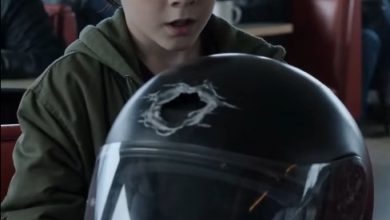
A week after the library meeting, she sent me a short message. Noah wanted to know whether I had been afraid when I heard the glass move. I wrote back that I had. He asked whether adults could be afraid and still do something useful. I told him yes, but sometimes we also made mistakes while we did it. He sent back a drawing of a helmet, because Elise had told him I rode a motorcycle.
I put the drawing on the wall beside my desk. I did not show it to customers.
Over the next month, our club had planned a ride to deliver supplies to a youth center. A few riders suggested inviting Noah’s family because people might like to see us together. Boone shut that down before I had to.
“The kid isn’t part of the event,” he told them. “Leave him be.”
Later he told me he understood why I had asked him to hold off posting. I said I knew how hard that had been for him. He had spent years looking out for me, and in the first angry hours after the clip spread, defending me had felt like his job.
We could talk about it because we were friends, not because either of us had behaved perfectly. He had stopped when I asked. I had needed him to stop.
Elise and Marcus sent one more message after the mall completed its initial review and reopened the walkway. They had taken Noah there on a quiet weekday, after checking what had changed. He had wanted to stand at a distance and look up. He did not want to walk under the new installation that day. They respected that.
I understood. I still looked up at fixtures when I entered unfamiliar places. Noah and I had heard the same crash from very different positions. We would each find our own way past it.
Part 6
In early fall, I ran into the family at a small bookstore across town. I was there for a repair manual; Noah was choosing a book about planets. He saw me before his parents did and stopped in the aisle.
“Hi, Cal,” he said.
“Hi, Noah.”
His ear defenders rested around his neck. He showed me the cover of his book without coming any closer. I asked which planet he liked best. He told me, then explained at considerable length why a picture on the back cover had been labeled poorly. I listened while Marcus found the section he wanted.
Before they left, Noah pointed at my motorcycle helmet under my arm. “You didn’t bring the bike inside.”
“Store rules,” I said.
He smiled. Then he asked whether I always looked at the ceiling now.
“More than I used to.”
“Me too.”
Elise thanked me quietly for answering him that day at the library. I thanked her for calling. Marcus shook my hand. We did not make plans to meet again. It was a good encounter partly because it could end there, with Noah taking his new book home.
The photograph Boone had taken of our club at the youth center went onto the garage wall. Noah’s helmet drawing stayed by my desk, where only I usually saw it. Those were different parts of my life, and I liked them in their places.
Sometimes, closing the shop, I heard a loose chain or an exhaust bracket make a sound it shouldn’t. I still stopped to find it before sending a bike back onto the road. Boone teased me for listening to machines as though they were trying to speak. I told him he had been doing it just as long.
One afternoon I found a small screw under the workbench and spent too much time working out where it belonged. Boone took it from me, checked the jobs we had finished, and found the empty place. Then we got back to work.
I thought about the mall while I rode home. Not every time. Mostly when something made me slow down and listen. I remembered the glass and the awful first sight of Noah on the floor. I also remembered him in the bookstore, dissatisfied with a planet picture and entirely willing to tell me why.
Part 7
Nearly a year after the panel fell, Noah mailed me a drawing through the garage. It showed three figures outside a bookstore: his parents, himself, and a large man holding a motorcycle helmet. He had drawn the storefront carefully, down to the uneven row of books in the window.
On the back, Elise had written that Noah wanted me to have it. I called to thank him. He asked whether the helmet in his picture looked large enough. I said it did.
“How many people can ride your motorcycle?” he asked.
“Two, with the right gear and preparation.”
“I don’t want to ride it.”
“That’s all right.”
“I just wanted the drawing to be correct.”
“It is.”
He said goodbye and returned the phone to his mother. I could hear him telling her he had another book to finish. Elise and I spoke briefly, then I hung up and put the drawing on the wall beside the first one.
That evening Boone came by to collect a tool he’d left behind. He noticed the new picture. “That’s a good likeness,” he said.
“He got the helmet right.”
“Got your beard right, too.”
Boone left, and I closed the garage. The two drawings stayed above my desk: one helmet by itself, the other carried through a bookstore. I looked at them while the last motorcycle outside ticked softly as its engine cooled.
I had pushed Noah out from under falling glass. I was grateful I had seen it move. I was also grateful his parents had come toward him so fast, that the guard had cleared the floor, and that Noah had been allowed to ask me why I’d hurt him. None of those moments canceled another.
I turned off the lights. Beyond the garage door, the road was quiet. I listened for a moment, then went home.
Follow our page for more biker stories about misunderstood moments, hard conversations, and the small acts of care that continue afterward.