She Was Forced Out of a Funeral — Until a Biker Stood Beside the Casket and Froze the Room
They shoved her away from the casket at her own brother’s funeral, while strangers watched—and a biker stepped out of the back row, saying nothing at all.
The chapel smelled of lilies and cold polish. Folding chairs scraped the floor as people shifted, whispering. The woman—mid-forties, black coat buttoned wrong, hands trembling—tried to step forward one last time. She wanted to touch the wood, to say goodbye. Someone blocked her. Another voice snapped that she didn’t belong here.
Her breath came shallow. Grief folded her inward, but the room pressed back. Family members who hadn’t spoken to her in years stared as if she were a stain. An usher reached for his radio. A cousin hissed, loud enough to hear, that she’d “made her choices.”
The crowd didn’t protect the vulnerable; it protected comfort.
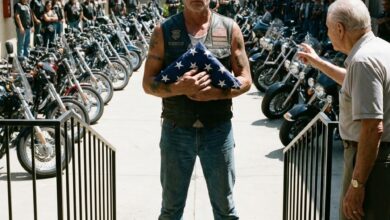
Then the murmurs shifted. A chair creaked behind the last row. A man rose slowly—leather vest, boots dulled by road dust, eyes steady. A biker stepped into the aisle, uninvited, unreadable. No one knew why he was there. No one knew what he would do.
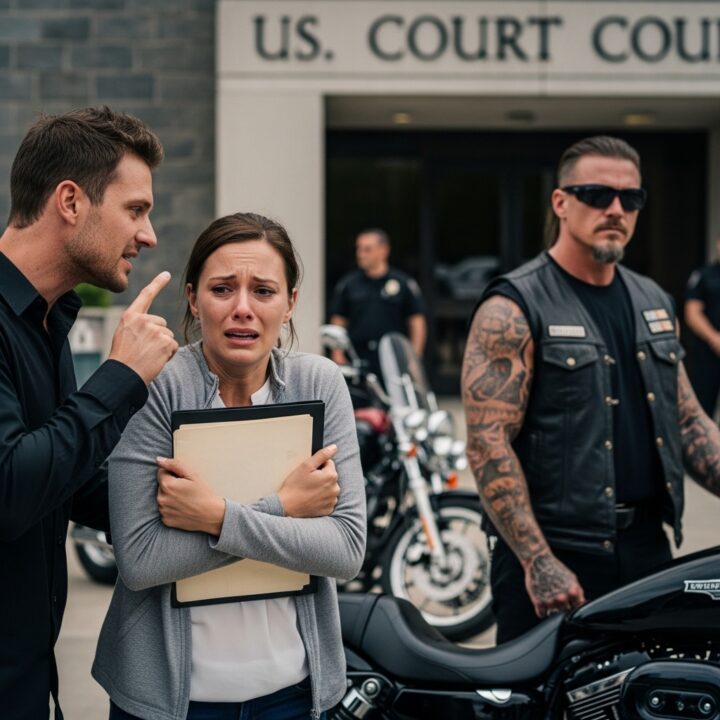
He moved with measured, disciplined steps, not rushing, not apologizing. When he reached the front, he didn’t look at the woman first. He placed himself between her and the casket, just enough to stop the hands that had been pushing her back.
Gasps rippled. A voice barked, “Hey!” Someone muttered about calling security. Leather and silence became a threat in their minds.
The biker raised one palm—not in surrender, not in warning. Just stillness. He didn’t explain. He didn’t smile. He stood there like a wall that wouldn’t argue.
People filled the silence with their fears. “Who let him in?” “Is he with her?” “This is a funeral.” Phones came out. A deacon whispered to an usher. Someone said the word police like it was a match.
The woman stared at the floor, shoulders shaking. Her shame felt public, rehearsed, permanent.
The biker finally spoke, one sentence, low and calm: “She’s staying.”
That was enough to tip the room. Anger sharpened. Fear dressed itself as authority. A man in a suit stepped forward, red-faced, demanding names. The biker gave none.
Security arrived at the doorway, hesitant. The usher’s radio crackled. The deacon cleared his throat and said something about decorum. Every second stretched like wire.
The woman swayed. If she was forced out now, it would finish her. Grief would break into something worse.
The biker felt the shift before anyone said it. He reached into his pocket, pulled out his phone, and typed with one thumb. No theatrics. No eye contact. A small action in a room craving drama.
Someone scoffed. “Who are you calling?”
He didn’t answer. He didn’t need to. He took one step closer to the casket, not touching it, just guarding the space. His presence narrowed the chaos.
The room waited—tight, electric, ready to snap.
Before the doors opened, soundarrived first—a distant rumble, then another. Engines settling outside, cut cleanly. Boots on gravel. The doors swung wide.
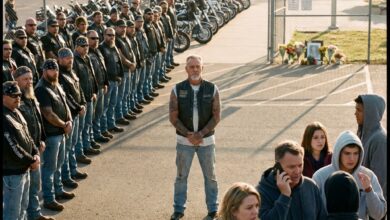
They didn’t flood the room. They entered in order, removing helmets, voices low. Men and women, different ages, the same posture. Respect without ceremony. They lined the walls, leaving the aisle clear.
The security guards froze. The deacon fell silent. Power moved without a fight.
One older man stepped forward from the group, gray beard, eyes kind. He nodded to the biker at the front. Nothing else needed saying. The room exhaled, confused, chastened.
The older man spoke gently, to the deacon, to the family, to the room. He didn’t preach. He told a simple truth.
Years ago, the deceased had ridden with them—briefly, quietly. When addiction took hold, this woman didn’t abandon him; she followed him into the dark to pull him back. She paid for treatment. She slept in her car outside clinics. She made calls no one else would make. When he relapsed, she kept showing up.
She wasn’t erased from the family because she failed. She was erased because she refused to quit.
The biker at the casket was the man her brother called the night he finally asked for help. The last voice he trusted. The club had brought him home when the family wouldn’t answer. They were here because he had asked—specifically—that she not be turned away.
Silence fell, heavier than before. Faces reddened. Eyes dropped. Judgment collapsed into embarrassment.
The biker stepped aside. He didn’t gesture. He didn’t wait. The woman moved forward, hands shaking, and laid her palm on the casket. A goodbye that arrived just in time.
When it was over, the bikers left as they came—quiet, orderly. The man at the front lingered a moment longer, straightened a fallen program, and followed them out.
Outside, engines turned once. Then the sound was gone.
Inside, the room sat with what it had done—and what it had nearly done again.